Phone Guys: Bird Omens

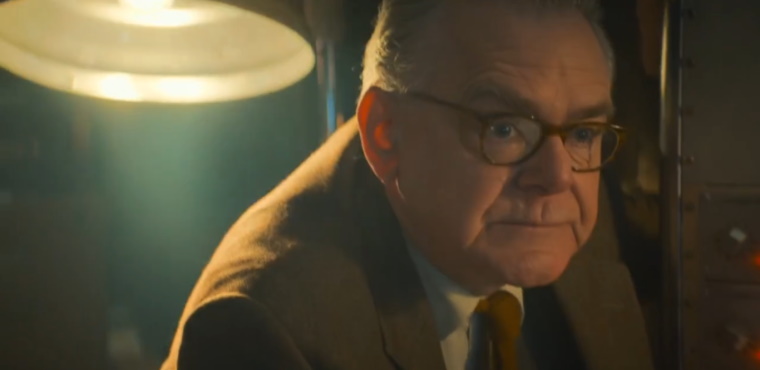
Professor Eustacius Jericho, the Scourge of Scoundrels, is not the first Beekeeper I’ve covered that comes from the Doctor Who franchise. That would be Goronwy Jones. But Jericho comes closer than his predecessor to becoming an actual Companion of the titular Doctor.
Jericho was a British soldier in the Second World War, and saw many terrible things. When he returned home, he threw himself wholly into academic life, seeking largely (consciously or otherwise) to be detached from the “real world” because of the darkness he’d seen. By the 1960s, he had some rapport with the people of his village, but avoided close attachments. And, because science often pairs well with the keeping of bees, it was in this era that seems to have taken it up. We don’t know how many hives he had, but we know he liked to use their honey in tea. “Nature’s own shock remedy,” he called it. I suspect he found it useful treating his trauma left from the War.
When supernatural events barged into Jericho’s life, he doubted them at first, but his scientific rationale quickly caught him up. Even in dangerous situations, he hoped to continue researching and learning. And when he wound up stranded in the early 1900s with the Doctor’s Companions, he and they went on a years-long, world-spanning quest to help prevent the end of the world. And when that crisis came to its climax, he allowed himself to be captured by an alien army as part of the plan to bring them down. The plan worked, though Jericho didn’t make it back alive. He was, at least, happy in the end that after his sedentary decades, he got to have a big adventure in his final years.
The only problem is that we never got to see Jericho doing any Beekeeping. We only get that one reference to his bees’ honey. Certainly he couldn’t have been doing it after being stranded in the past and started travelling the world on a mission. That means that the part of Jericho’s life that is full of adventure and the part where he keeps bees are decidedly separate. That’s not the ideal situation I look for here in these reviews, and sadly that brings his rating down from what it otherwise could have been:

Three Honeycombs out of Five.
As discussed in other posts about Planet Gurx, the Strondovarians have been expanding far from their homeworld across space for about nine thousand years now. They have colonies on other planets and space stations and are building a new homeworld from scratch. In that time, they have encountered multiple species also capable of space travel and the Strondos have had to admit that these alien beings are as intelligent as Strondos are. They call such beings Pwotuvarian, which translates to English best as “Wrong-folk” or “Alien-minds” or something to that.
For various reasons, no Pwotuvarian has yet been made welcome on planet Gurx. Still, making contact with alien life has greatly affected the Strondovarians, so let’s take a look at how Strondos relate to some of the other intelligent species they’ve met.
Pwot Pharvarian
These strange creatures with plant-like appendages were the first “intelligent” alien species met by the Strondos, and it went poorly. The “Rootfolk” are long-lived, so they remember the Strondos as their enemies in the Great Cosmic Conflict and they still hold a grudge. While the Strondos learned from that giant war that they should be more cautious as they explore space, the Rootfolk only learned that they need to be more powerful. Even now the Rootfolk will attack Strondo ships and colonies on sight.
Pwot Tibgeddavarian
Another species that the Strondos first met on the fields of space-battle, the “Omnivoroids” suffered badly in the Great Cosmic Conflict. Their planet’s technological progress was blasted back significantly. With considerably shorter lifespans than either Strondos or Rootfolk, the Conflict was thousands of generations ago and lives on in their memory as myths. The Omnivoroids of today are reaching into space once more, and they’ve met the Strondos again. Though the Omnivoroids hold all other beings in contempt (seeing them primarily as potential food), the Strondos are in a more powerful position, so the two species are occasionally able to work together and exchange goods.
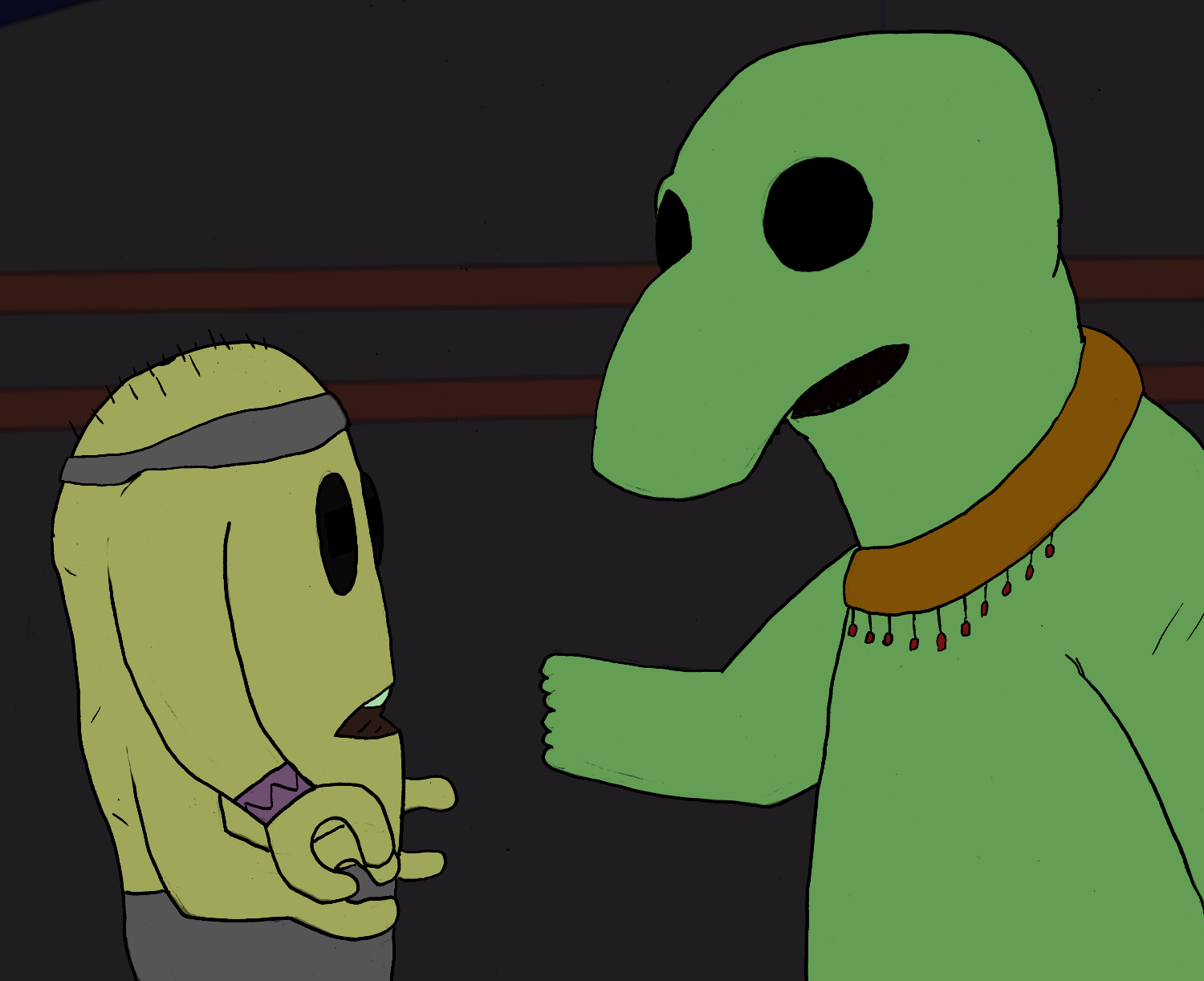
Pwot Bulongivarian
Of all the species the Strondos have encountered, they are on the best terms with the “Multitude of Blong” a six-legged people who have not yet travelled far from their home system. Relations between the Strondos and this younger species are so good that the planet Blong has been given devices that allow them access to the Knowledge Base of the Strondovarians, an honour bestowed on no other species thus far. This means that the Multitude of Blong have the information needed to learn the location of planet Gurx, something not given to other species. The Blongians don’t quite have the technology to get there yet, though.
Pwot Verrmiss
A bipedal species that has rarely even managed to leave its home planet, the so-called “Pwot Verrmiss” are not even recognized as “Varian” by Strondos. But some more enterprising Strondo scientists have reached the homeworld of “Earth” and begun experimenting on the Pwot Verrmiss, but most of the primitive people have no idea Strondos exist. Perhaps someday the Pwot Verrmiss will be seen as worthy of the Strondo’s respect.
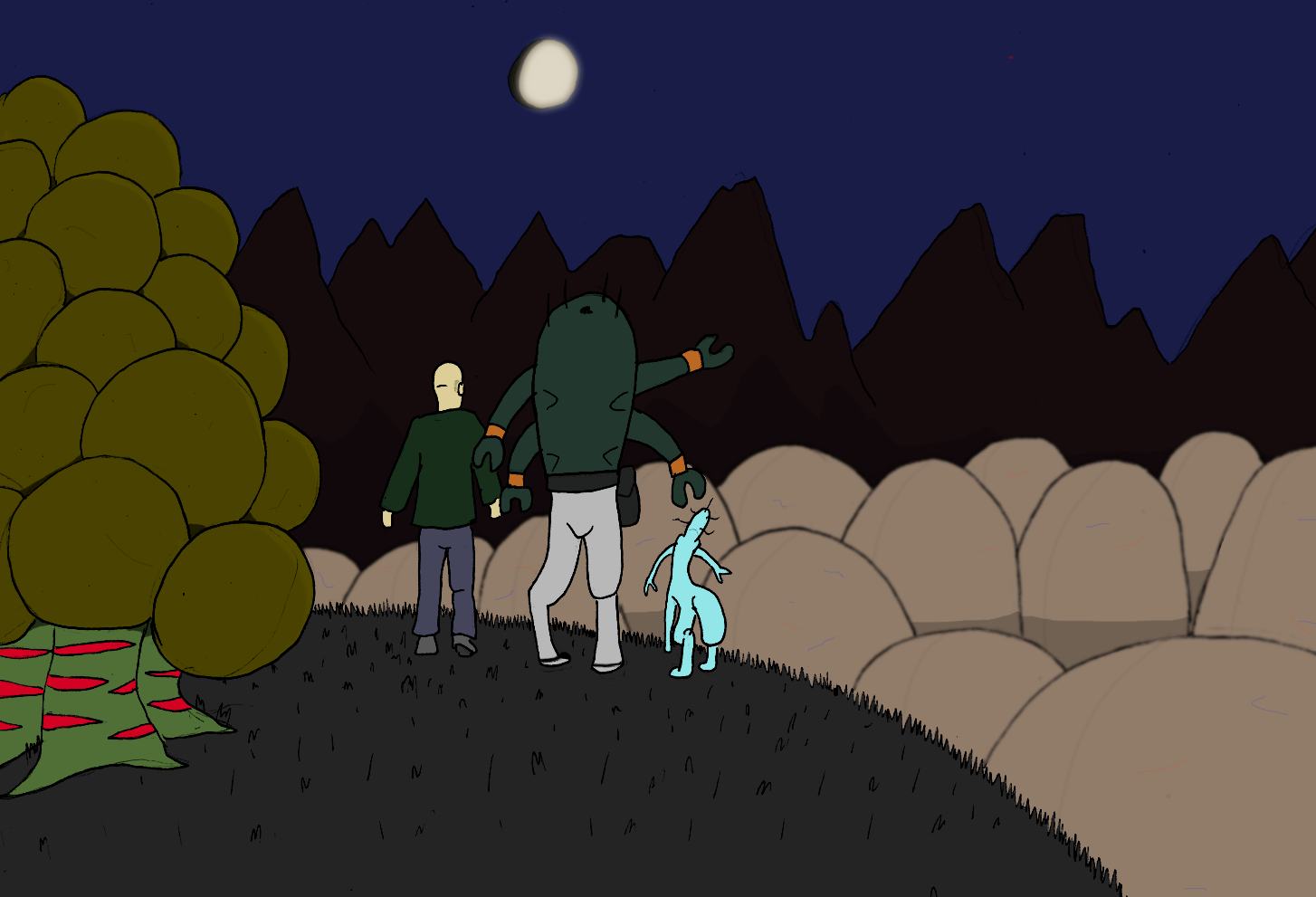
Infiltrators
The Strondos don’t yet know about the Infiltrators. There is no name for the Infiltrators in the Knowledge Base. And while no Pwotuvarian has been welcomed to planet Gurx, hundreds of Pwotuvarians are there. Posing as Strondos (and other Bwotyaxgurx), they have been working their way into roles of influence and preparing the world for the next wave of their kind to arrive.

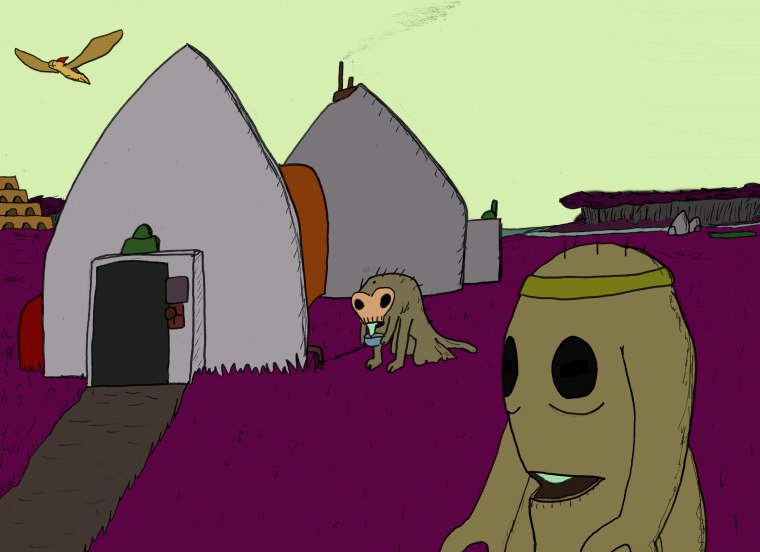
A Strondovarian stands on slime farm grounds. Near a building, an Embivel drinks from a dish of water. A Nathaie flies above. Visible in the distance is a slime pool.
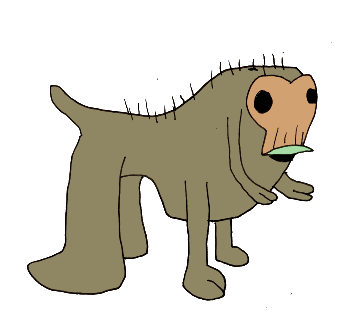
Embivels are one of the first animals that the Strondos domesticated, at some point in history long forgotten, and they now occupy a place in Strondo culture similar to dogs or mules to humanity. An Aehubar species capable of carrying or pulling a lot of weight, most of the work once done by Embivel on Gurx is now done by machinery, but it’s still generally seen as useful to have some around.
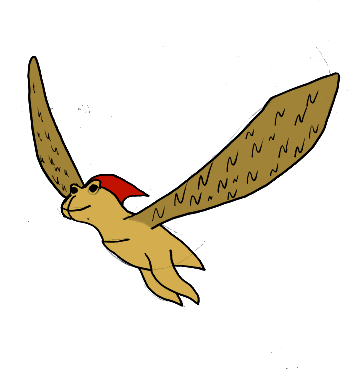
A Glounaph species known for bright crests, Nathaie are very territorial and quite intelligent. Strondo farms will often provide a home for Nathaie, and treat them well, so that they will chase off small animals that try to sneak onto the grounds and raise alarm should larger creatures show up.
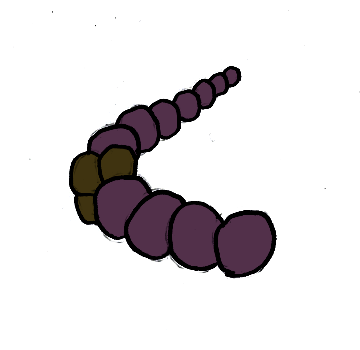
Unseen in the picture, but ubiquitous on the farm, are the tiny creatures known as Palooath. A distinct worm-like branch of Vootuph, Palooath can live beneath the purple grass-equivalent of Gurx and draw nutrients from the soil. At some point in history, Strondos noticed that when creatures ate Palooath, the resulting biological waste was quite good at helping slime to grow. It’s now standard farm procedure to have a lot of palooath around to be eaten by the other creatures and gather the resulting waste to drop into the slime pools.
