Planet Gurx: Even More Gurxian Animals

And now we’ll take another look at some of the animals one could find on planet Gurx.
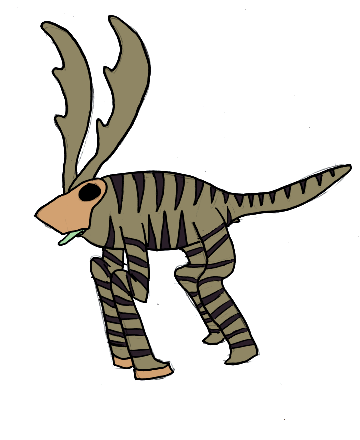
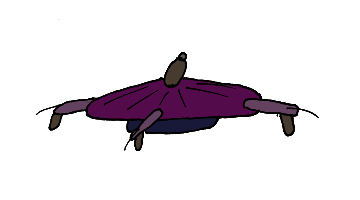
Abpeaoulee

The Abpeaoulee graze in the tundra lands. Their top limbs, having evolved into an antler-like shape, are often used in fighting one another to establish standing in their herds, but instead of using them to fend off predators, they tend to tuck them down down along their back to become more aerodynamic as they flees. They are some of the fastest runners on Gurx.
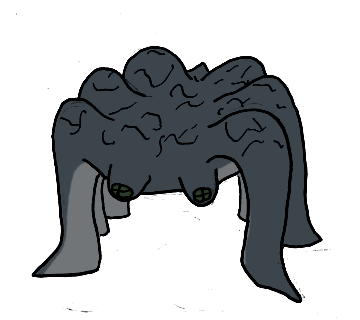
Eenag

Bottom-feeding Lapaouger, Eenag are adapted for living at the bottom of the oceans of Gurx, eating whatever they can find down there. Perhaps the most notable thing about them is the fact that they are considered the most-recently discovered and catalogued “Oaheem” (Roughly translating to “large animal” in differentiating them from plants or microscopic animals) on Gurx, the scientist who discovered them being still alive.
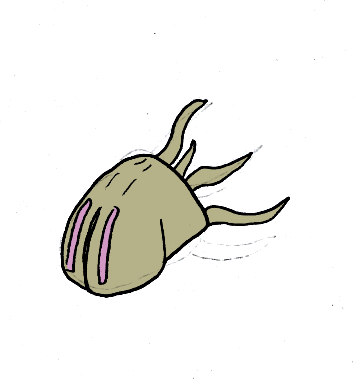
Gloyantib

With a name that is meant to evoke the idea of a biting tattoo, the Gloyantib are a tiny relative of the Loyoloy. They dwell in the water until some larger, preferably land-dwelling, creature happens to swim into their reach, at which point they grab on and hitch a ride. Once they’re in the air, they feed off the blood of their host.
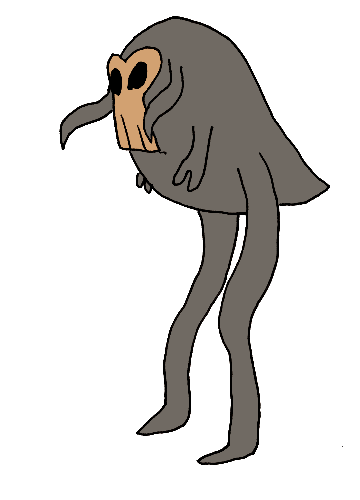
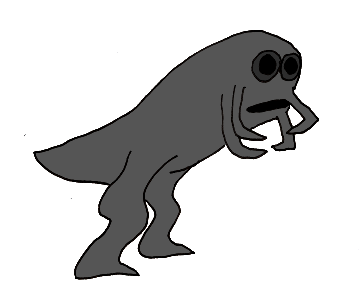
Okloat

The dominant predator in the tundra regions is a Aehubar species that lives and hunts in packs. Their top limbs are adapted for grasping their prey, allowing them to hang on until the victim tires itself out. They may not be able to run down an Abpeaoulee, but Okloat are extremely intelligent animals, capable of tracking and flanking the animals they hunt. Larger relatives of the Okloat once hunted Varians during the Neboosidih, and though those ones were wiped out, modern Strondos are still not overly fond of Okloat and will kill them if they come too near cities.
Phollop

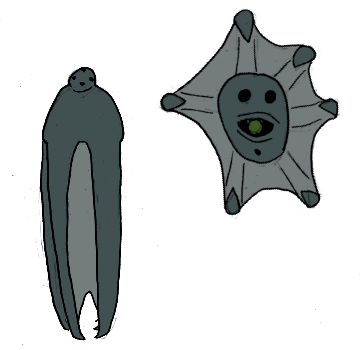
Related to the Stepao, Phollop are smaller than their cousins and spend a lot more time living in the water. They do leap out so they can glide down on prey swimming near the surface. Unlike Stepao, the Phollop have no particular reputation as an ill-omen in Strondo culture, but they do consider them annoying beasts who hang around cities near the ocean.
Aigreeloa

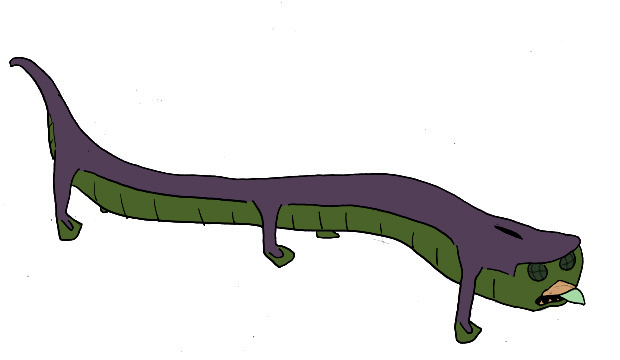
The forest-dwelling Aigreeloa are long creatures that swiftly move about and scoop up plantlike food while they run about. Anything resembling teeth are rare on Gurx, usually food is dismantled by the Rel while being held within the mouth cavity, but Aigreeloa have something toothlike. Bony protrusions along the bottom of their mouths help to quickly sever the plant matter from its roots, allowing the Aigreeloa to keep on the move.
Hooidho

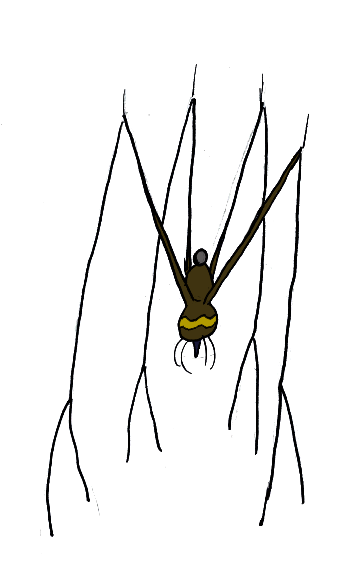
A little kind of Vootuph, only about three centimetres in size but with a highly potent venom. They act as ambush predators, hanging out in tall grass, usually near water, until they get a chance to sting small animals that come nearby. They can only eat so much of an animal’s corpse though, so they often share with others of their kind. They are not a particularly social species, but meeting while eating is also when they find a chance to mate.
Uttatib

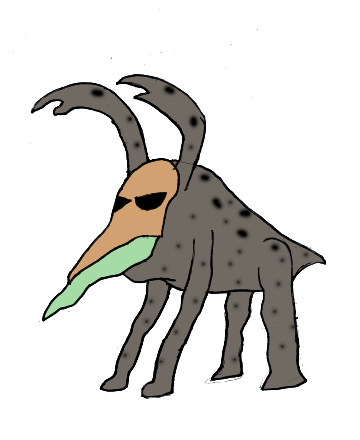
Another species from the tundra, Uttatib are scavengers who don’t directly compete with the Okloat when the hunters have superior numbers, but if Uttatib come across a lone Okloat with a kill, they will certainly drive them away and steal the meal. Otherwise, the Uttatib tend to make do by catching corpses where they can find them.

Planet Gurx: Many More Gurxian Animals

Here’s another batch of animals that you might find wandering in the wilderness of planet Gurx.

Ailonaig

One of the aquatic species of Vootuph, the Ailonaig are noted for their showy colours and complicated mating dances. It is not uncommon for Strondovarians to keep them in aquariums and admire their beauty.

Beegloy

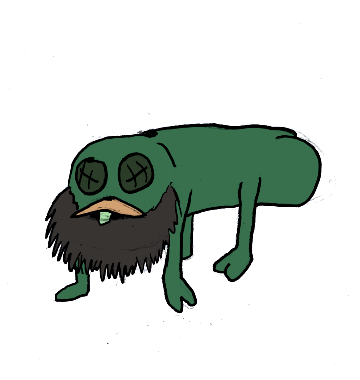
The bearded clapbutt is a variety of Ekkpay notable for its facial hair, which it drags along the bottoms of slimy rivers. All the little bugs and slime and stuff get stuck in the beard, which the Beegloy can lick all day. It’s a great life.

Yityoal

A Yityoal is possibly the smallest air-breathing Vootuph on Gurx. They are so small that their presence can easily be missed by larger animals, which is handy because their goal in life is to be eaten by those larger animals. Almost completely indigestible, the Yityoal can pass through the digestive system of the larger animals unharmed, all the while eating the other food being broken down in there. And then they come out and mate in the poop, then try crawl out to get eaten all over again.

Henouto

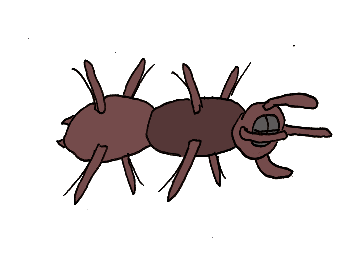
Numerous throughout the slimelands, Henouto are amphibious Vootuph that burrow into the slime. Though they have some similarity to Earth ants, they are not generally eusocial, instead living in large familial packs. Henouto care for their offspring until they are old enough to mate, at which point they wander off to join other packs.

Oudaihib

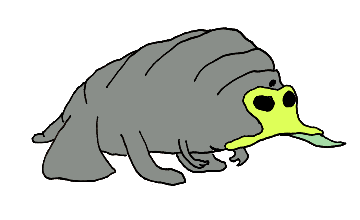
Also living in the slimelands, the Oudaihib is a kind of Lapaouger that specializes in eating Henouto. Their sticky Rel is specialized at wiggling into the Vootuph tunnels and catching a snack while their bony faceplate protects them from the defensive bites of their prey.

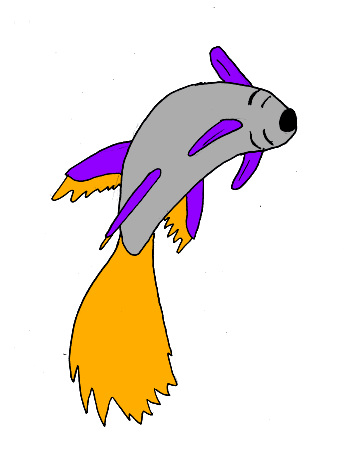
Ellea

Ellea are a kind of Vootuph that at the tops of forest canopies, feeding on the leaves of the vast Gurxian trees. Their tongue, always protruding from their bottom side, contains enzymes that eat away at the plant matter, digesting it before the Ellea can take it in. Their purple colouring does help them blend in among the foliage, as they freeze in place when they see a threat approach.

Daembeb

A solitary hunter dwelling in some of warmer forests, the Daembeb are an Aehubar species whose hunting technique is all about sneaking up on small prey and grabbing them with their four upmost limbs, which force the prey into their mouth. Daembeb are terrible climbers and have to focus on animals on the ground, so when something occurs that draws out smaller animals (such as the death of a Tessen) they will lurk nearby, intent on picking off some distracted creature.

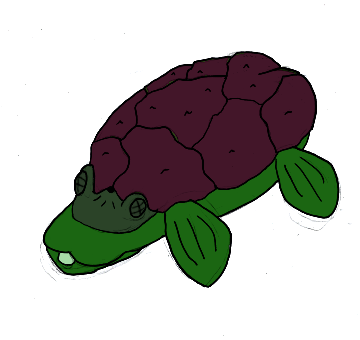
Seampway

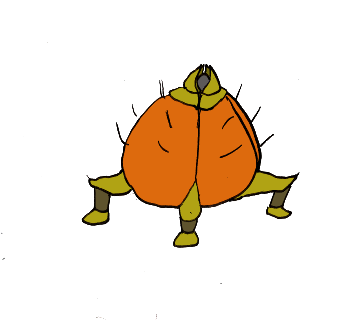
The largest of the Ekkpay species, the Seampway are more solitary than most of their cousins. Though they still breathe air, they have adapted to a fully aquatic life, preferring to dwell in the waters lazy rivers and swamps and feed on the smaller animals that swim through. Their size, and their leathery shells, offer a decent amount of protection from predators and allows the Seampway to have long relaxed lives.

Planet Gurx: Gurx Pants

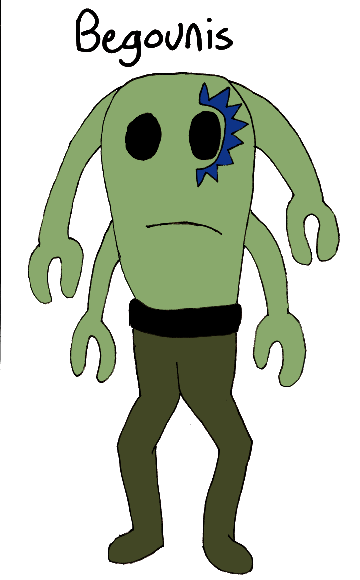
Begounis

Begounis is a Nexvar Strondo who has devoted their life to the repair and improvement of Gurx Pants and other woven technology. While most Nexvar have to spend a lot of time in suspended animation between their uses, Begounis is kept busy, because everyone needs pants.

If one has really paid attention to the Strondos depicted in this series, they will have noticed that they all wear pants. Gurx Pants aren’t just a decorative genital-cover to Strondos as they are with humanity. Strondovarians have excelled at developing technologies that can be woven into fabrics. Their carpets and tapestries are almost always actually electronic devices. A wall hanging that looks like a simple design may actually be a light source that is activated when there is someone in the room, walking on the carpet. What seems like a curtain may be able to constrict and reshape itself into a hook when one needs a place to hang up some baskets. The possibilities are endless.

Gurx Pants were first developed in the early days of Strondo space travel, when they found that walking on planets other than Gurx wasn’t always easy or pleasant. To help solve this, Gurx Pants were designed to support the weight of the wearer as if they were moving within Gurx-normal gravity. Over time the pants were improved: they can now simulate the temperatures of pleasant climates, sync with other devices, store data, play music, and perform a host of other functions.

Understandably, Strondos have become quite dependant on these things. So, Begounis travels from various pants-manufactuing plants all over Gurx and, of course, beyond. And they are treated like a hero for helping to maintain these important garments that are technological marvels.