February 1 Phone Guys


Veskadians
This tripedal species is from Veskadia, a planet much more massive than Earth. As a result, they are stout, standing about a metre on average, and very strong. They have thick scales and occasionally horns. Their arms, placed on either side of their mouth, are ideal for foraging the nuts and berries that make up their diet and plopping them right into their mouth. Veskadia is a harsh, dry world with terrible sandstorms where Veskadians must spend most of their day foraging. There are predatory animals, some willing to try to take on Veskadians, but the Veskadians build large fences to try to keep them out of their territories, which are usually valleys.
Because survival is very hard on their world, the Veskadians don’t work quite as hard to keep wounded Veskadians alive. If a Veskadian breaks their leg, for example, it is not uncommon for the others to stomp them to death. Dead bodies are left at the base of food bushes to encourage their growth.
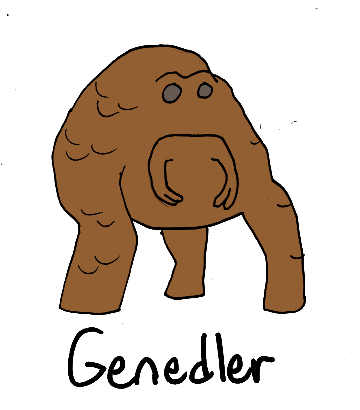
Genedler is a young Veskadian living in one of the most strongly-fenced valleys on the planet. While residents there still have to deal with harsh weather and droughts, foraging there is easier than elsewhere, allowing more time for leisure. Genedler prefers to spend that time painting on rocks, a pastime considered wasteful by most, and which would not be possible in other valleys.
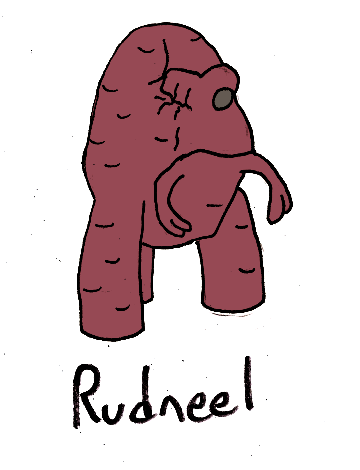
In a rougher part of the world, Rudneel is the boss. Rudneel’s valley has a river that dries up for much of the year, so food becomes scarce. Rudneel has lived through a lot of these hard periods and is now seen as an elder who can offer advice to others on how to get through. Rudneel is willing to try to keep others alive, but only if they follow the rules exactly. There’s no sense in trying to save those who make things more difficult.
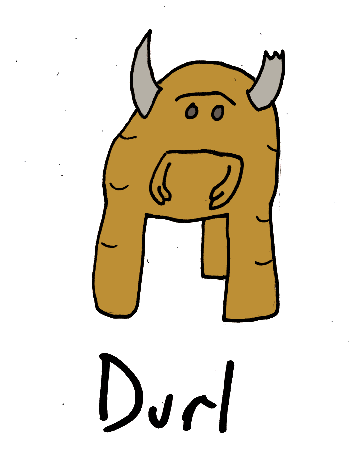
And Durl is in an even rougher part of the world than that. After a storm during Durl’s childhood killed every other Veskadian in that valley, Durl is the only one left. Growing up alone, Durl doesn’t even realize that there are others still alive elsewhere.
A Fact About Veskadians: Veskadians don’t have any strong familial attachments. They give birth to litters averaging about four and the young can stand only hours after being born. Though they often remain in the same valley for life and will mingle in social groups, they don’t place any preference for family over others. They do, however, recognize close relatives by scent, which helps prevent incest.
Universe: Indigo
Probably time for an update. As I believe I mentioned last time, I have had to deal with various things of a monetary nature. The current status is that, for the first time in my life, I own a car and I own a flat screen television. The latter was free, so that was nice, but it turns out that cars are expensive and owning it is not immediately improving my economic situation. Hopefully this is one of those “in the long run” deals. Still, I’ve acquired two of the material goods that capitalism tells me should make me happy, right? (Side note: Do televisions get channels without cable, or is this thing just going to work with my laptop?)
If the site had an audience, they’d be noticing that SecGov has been stuck for a while. It’s just that with all the things I’ve had on the go, it has been the lowest priority. Hopefully once I get back into the swing of it, I’ll be able to push through and end it once and for all, because then I’ll have one less thing on the go and that’ll be nice.
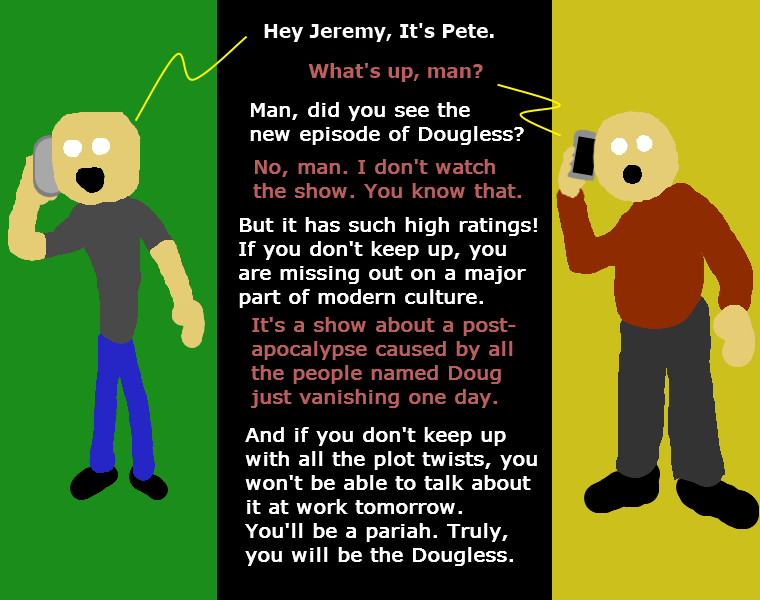
Giptunks
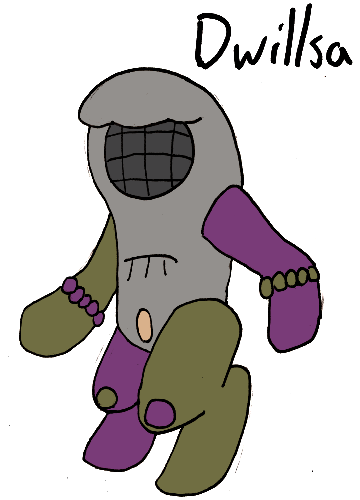
Giptunks live on a planet they call Gropkla. It is a world of lesser gravity than Earth, allowing them to grow twice the height of a human, on average. They stand upright and have a single large compound eye on their face and fine grey fur that covers their body. One each limb they have three digits, those of the feet being very short and stubby, those on the hands being longer and useful for making tools. The society of Giptunks would be seen as primitive by humanity. They are largely agricultural and small villages dot the landscape, but few large cities have arisen. There is, however, some advanced technology, both in farming equipment and in the form of flying vehicles, the latter aided by the low gravity of the world. They have also developed lasers much earlier in their development than humanity, which is nice. All manner of animals on Gropkla have been domesticated. They are used as beasts of burden, and as food, and as pest control. Very few truly “wild” species remain on land, and flying animals and sea creatures are only more likely to be free because they’re harder to tame.
One Giptunk, named Dwillsa, is trying to tame some of the sea creatures, though. With her farm located along the shoreline, she has created an artificial harbour to house a type of animal they call “rats” but which have nothing to do with Earth’s rats. The nearest comparison to Earth animals for Gropklan rats would be to call them mammalian frogs. While they are edible, they are no particular delicacy, but Dwillsa is hoping they can be made profitable anyway, if she can convince people they go well as a side dish to every meal.
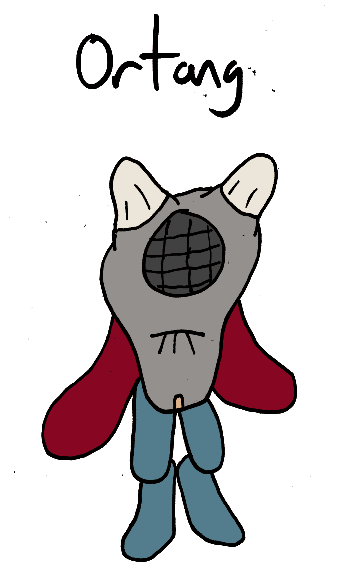
As a member of the male-equivalent gender of Giptunk, Ortang is smaller than the average “female” and has blunt horns on his head. These “males” make up only thirty percent of the Giptunk population, so it is not hard for them to find mates (often multiple mates), but the existence of the horns makes Giptunk historians wonder if, perhaps, there was a time when males made up the bigger proportion and they had to fight over mating rights. To this day, male Giptunks in a fight will use their horns to try to damage the eyes of their opponents. Ortang, however, is a pacifist and is, in fact, one of those historians. He shudders to think of the violence that may have once been a common part of his species’ life.
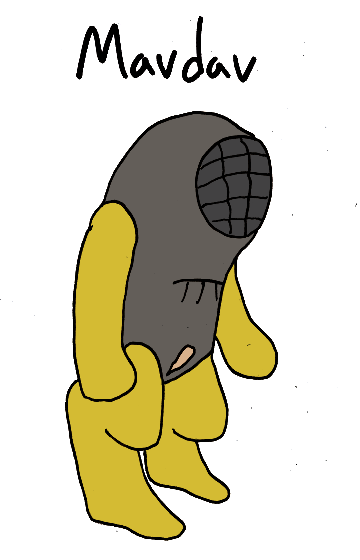
Mavdav is a pilot. With agriculture being so important to Giptunks, there is a vast network of shipping of goods and livestock and equipment. The people who run these shipping lines see a lot more of the world than the mostly sedentary farmers. Experiencing the many different Giptunk cultures exposes them to ideas and concepts that challenge their minds and make them more open mentally. Mavdav in particular has spent a lot of time picking up concepts about plant life and created several written comparisons that we would consider scientific research. It is not unusual for her to meet other pilots in inns and compare her notes with theirs on other topics. It is in this way that knowledge spreads on Gropkla, and this is why pilots there are responsible for most cultural advancement.
A Fact About Giptunks: Giptunks wear fabric sleeves on their limbs, considering bare limbs to be ugly and obscene.
Universe: Green
