Agent of HINDER (part 25)


In a world where superheroes are fairly commonplace, there are bound to be more loser ones than good ones. This is a sitcom about a handful of heroes of lesser renown who keep stumbling across one another in their attempts to fight crime. None of them are really friends and they only tolerate each other in the name of fighting for justice, or as close as they can manage.
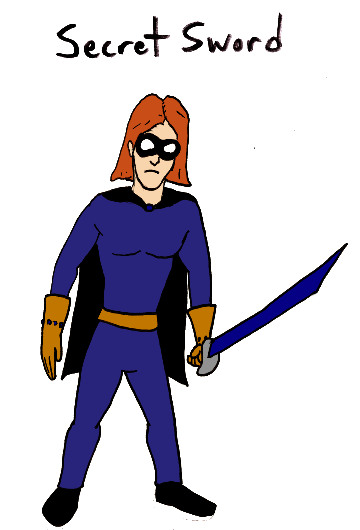
Our point-of-view character, the Secret Sword is a young lady who found a sword that gives her magic powers. Having recently been fired, she decided to fight crime. She is immediately in over her head, and gets beat up repeatedly, and sticks with it only to show up the other heroes, who think she can’t make it.
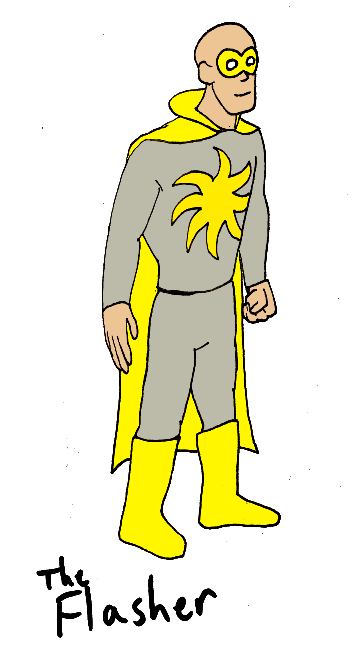
A prominent hero who has been active for decades, the light-powered Flasher is so very tired. He puts on a brave face for his fans, but he really thought that punching bad guys would have made a difference by now. He can only open up about his cynicism around the younger generation of heroes, who he wants to talk out of even trying, but also hates because they haven’t made everything great yet either.
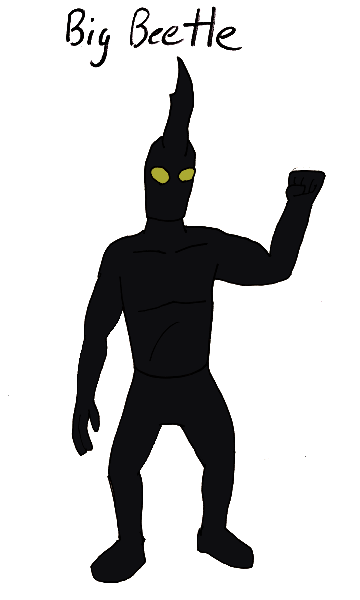
A teenager who accidentally got trapped in a superhero costume created by a rich scientist, Big Beetle has to fight crime to the scientist’s liking in order to get out of the costume for temporary spells and have a normal life. He doesn’t actually care about heroing, but the scientist sure does.
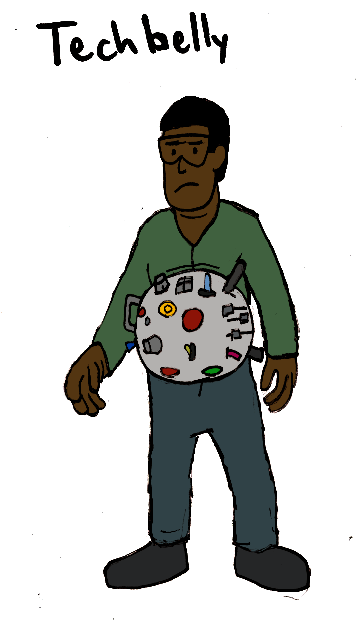
By eating metal or plastic or other such things, Techbelly’s powerful high-tech belly can rearrange them to create devices and gizmos that do all sorts of cool sci-fi stuff. Using these gizmos, Techbelly works to take down the criminals who run the illegal weapons rings in town. After all, he could make a lot of money selling high-tech stuff if they weren’t around.
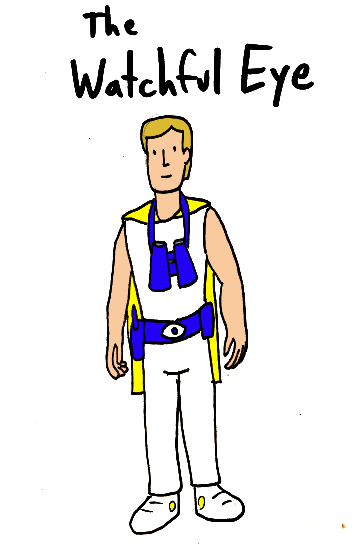
Stuck by lightning, a young man found he suddenly gained a peak-human fitness level and no longer required sleep. Deciding to use these powers to benefit humanity, he became the Watchful Eye, a hero who prowls the streets and, when he sees danger, calls the appropriate authorities to the scene. All the other heroes find this incredibly lame and mock him mercilessly.
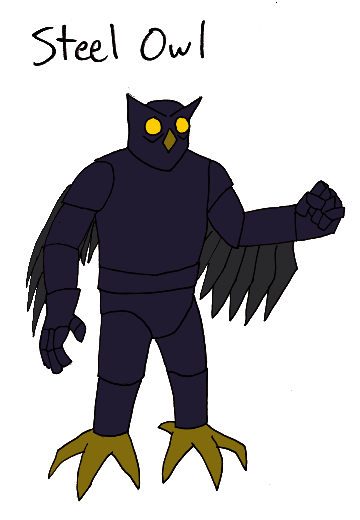
The mysterious Steel Owl is a vigilante of the night wearing high tech armour that provides awesome powers and hides the wearer’s identity. There are rumours that the Steel Owl is actually a rich playboy who hates crime, but the truth is that the Steel Owl suit is worn by a high-ranking police officer. She knows that what she is doing is very illegal, but just enjoys it too much. It isn’t even an “I hate crime so much” thing. She really just finds superheroing fun. The rest of the cast are in awe of the Steel Owl who seems so cool and aloof and driven, but the Steel Owl is just extremely desperate to not mess up in any way and give away her secret identity.
Superhero sitcoms have been done well and done poorly. This, I think, would be one of the latter. I don’t think this show even gets to air all the episodes that are produced before it is cancelled. I would try to avoid the “superheroes hanging out in their downtime” thing that is most common. These guys all run into each other while working, but never in their downtime. It would only be Seinfeld-grade sitcom coincidence logic that makes them have to endure each other. That amuses me, at least.
I just shovelled a bunch of characters from loose sketches into this. At some point I was half-jokingly dared myself to create ANOTHER superhero universe so, while these would fit into one of the many I have already created, instead I declare this Yet Another Universe. Try and stop me.
Flasher is meant to be a superhero whose name would be seen as terrible by people who think about it more than he does (see the Whizzer, for example) and, in case it isn’t clear, I absolutely think the Watchful Eye is the most sensible person in this cast.
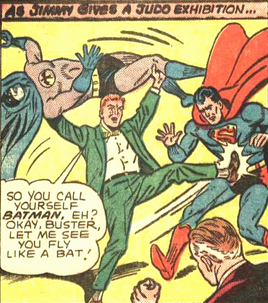
Superman and Batman gotta stop hanging out. I expect, if I were in charge of the Superman books, this would be my single most controversial decree. And that’s saying something, considering that given the opportunity, I’d write Superman as bisexual*, but I still think this would be more hated. Entire generations of fans would be against me on this. I wholly believe that Superman would be better if his stories weren’t a part of the DC Universe.
It’s not just the fact that I don’t care about the DC Universe that makes me feel that way. I mean, it is absolutely true that I don’t care about the DC Universe. I’m not going to offend you all by pretending otherwise, but it isn’t just that. In fact, I think I actually first came to this conclusion from the other direction, because I like Batman. I don’t love him, but I like him fine. He’s got fun villains, Gotham is a decent setting for those kinds of stories, and I enjoyed 60s show and 90s cartoon as a kid. But whenever I encountered stories about Batman among the other DC heroes, it wasn’t the same. It wasn’t what I wanted from Batman stories. I pretty quickly decided I’d like Batman more if his franchise was a standalone thing.
It took me longer to decide that about Superman, but only because my interest in Superman took longer to grow. My primary introductions to Superman as a kid were the Reeve movies and the Lois and Clark show. Neither of those had other DC properties forced in. Let’s say that at that point in my development, I was a casual Superman fan, mostly because I liked goody-two-shoes heroes in general. In my twenties I remember checking out the first season of Smallville, but dropped out not long after that, so I encountered no real big DC elements (it wouldn’t be until I was obsessed that I suffered through the rest of that show). Also in my early twenties, I was drawn to the Silver Age of Superman, when the comics got really weird. That appealed to me and, I’d say, brought me from casual fan to actual fan. There were minor elements from DC, Superman would occasionally hang out with Batman or race against the Flash, but there was so much Superman-specific world building that the DC stuff was easily overlooked. From there, I slipped backward into the Golden Age of the character, when his social crusader nature was at its sharpest and his DC connections were absolutely minimal. That’s the point when I became an obsessed fan of the franchise. I had grown to love Superman, the supporting cast, and even the villains. I made my journey from casual to obsessed all without any real influence from the DC Universe showing in the stories. I don’t know that a fan could do that these days, given that there is no outlet for Superman family characters (or for Batman or, I assume, Wonder Woman or the Flash or whatever else) which is not strongly integrated into a universe of other heroes. Anyone who has become a fan more recently will think that a Superman/Batman relationship is a requirement.
After becoming obsessed, I finally got around to reading the Death and Return story from the 90s. Here I was introduced to still more great cast members and I loved it. But then the DC heroes came along. The collection I was reading included some Green Lantern issues, relevant to the overall plot, but with a focus on Lantern and his stories. I actively did not care about Green Lantern’s stories and had to slog through wishing we could get back to the people I actually wanted to read about. And that’s the exact problem I still have to this day. Any time I’m reading a Superman story and Batman or someone shows up, all I can think about is how many pages I have to flip through that could have been used for Lois or Jimmy. Imagine if every time someone was watching Game of Thrones (or whatever else is popular and people watch these days), they had to sit through fifteen minutes of each episode watching the cast of CSI: Miami or whatever. It’d be amusing once or twice, but every episode? Nobody wants that.
But even beyond DC’s other characters eating up precious page-space, the DC Universe is constantly exerting itself on the stories. For those who are lucky enough to not know, DC has had, for decades, a problem with wanting to maintain a continuity of all the stories that have ever come before, but also want to reboot and change things to constantly keep them fresh. They frequently come up with vast cosmic plotlines to explain why things have changed. So, instead of getting stories about Superman Supermanning, we get endless plots that do nothing but explain the latest status quo that last almost until the next big event changes things again. It’s like if Game of Thrones dropped all their plots for a season to explain how CSI: Miami characters came to be in their world, then the next season did a story arc about why the CSI: Miami characters weren’t around anymore. And so on. I might be rambling.
Unfortunately, Superman’s stories these days have no room for even the basic cast of Lois, Jimmy, and Perry, let alone the rich beyond them (whom I hope to cover in future weeks). The only way I can see to improve this is to cut out the characters who already have their own books and, presumably, their own overlooked supporting casts.
*This would, unfortunately, not be so radical as it sounds because I have no interest in any romantic relationship for Superman except that with Lois Lane. It’d be an informed attribute at best. But that’s a topic for another day.
Two families living in a duplex have to put up with each other’s quirks.
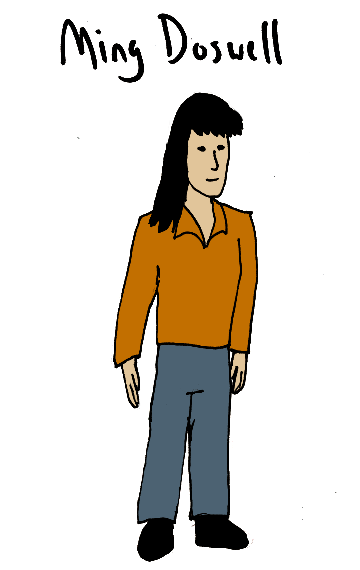
Ming is a police officer from a line of police officers, and she deals with chaos so much in her job that she’d like to get some order in her home life. She will never actually achieve this.
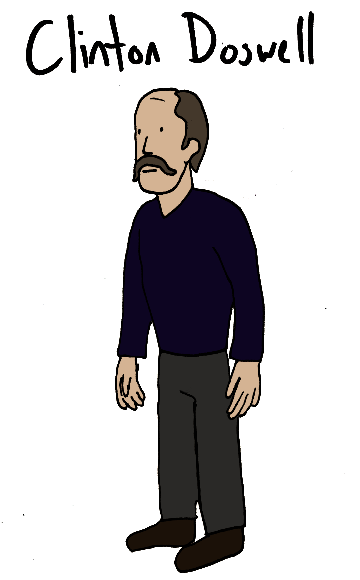
Clinton is a simple man, and likes it that way. He is a stay-at-home dad who does some odd jobs to make extra money, but the thing he is most concerned with is that his kids have a fun childhood. Because of this, he doesn’t put many restrictions on them.
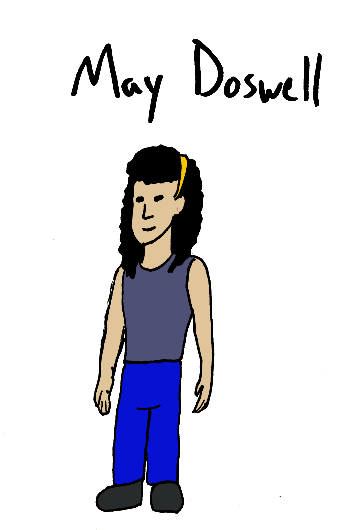
May is the younger sister and she’s all about learning. She does her homework by choice and seeks out extra credit assignments and even tries to learn on her own. She’s also very nosy, and pries into other people’s business all the time.
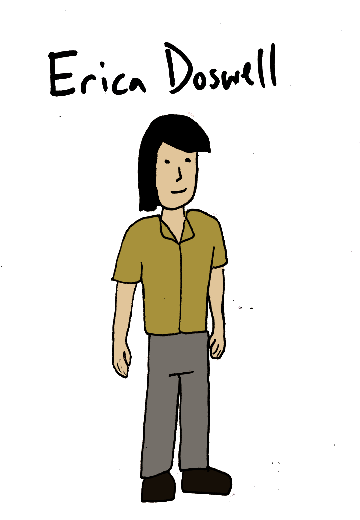
The older of the girls, Erica is a trickster. She will do anything to get a laugh, including lying to other members of the family to see things go wrong.
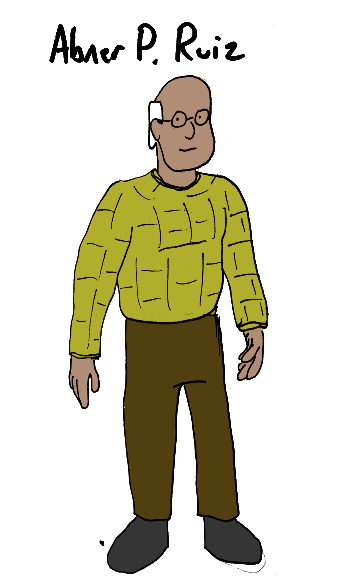
A professor of classic literature, Abner is convinced that the way to raise children well is by exposing them to the fancy-pantsiest of novels. This hasn’t worked with his son, or with his students, but he blames them, not the works.
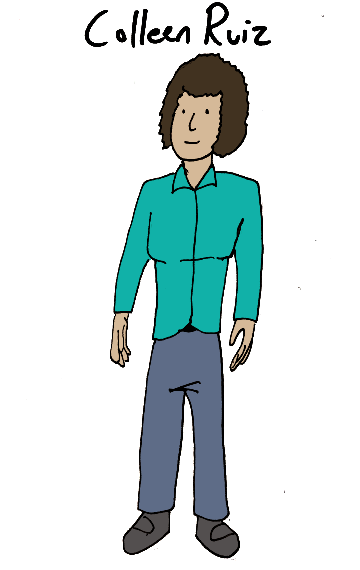
Colleen Ruiz is a writer of dramatic plays and constantly tries to seek inspiration in her family life. She is not above “experimenting” on the kids in the families to see how they react to situations.
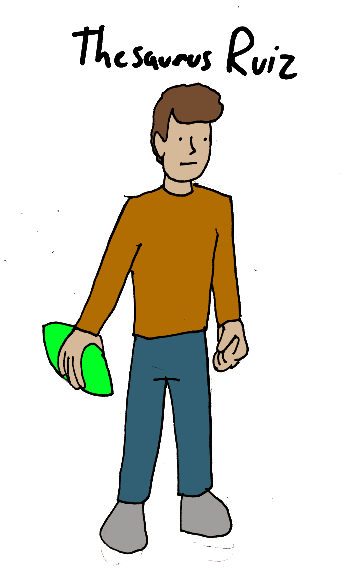
His idiotic intellectual parents named him Thesaurus because they thought that would make him good with words. It hasn’t. Thesaurus’s main love is sports, much to the embarrassment of his father.
The idea of a big cast of characters coming together is pure sitcom normalcy. All kinds of opposing or complimentary motivations could generate all sorts of story ideas here. There’s no real PDR-Style Twist to this premise though. Probably that would make the show more popular, though.
