Phone Guys: Wash Car


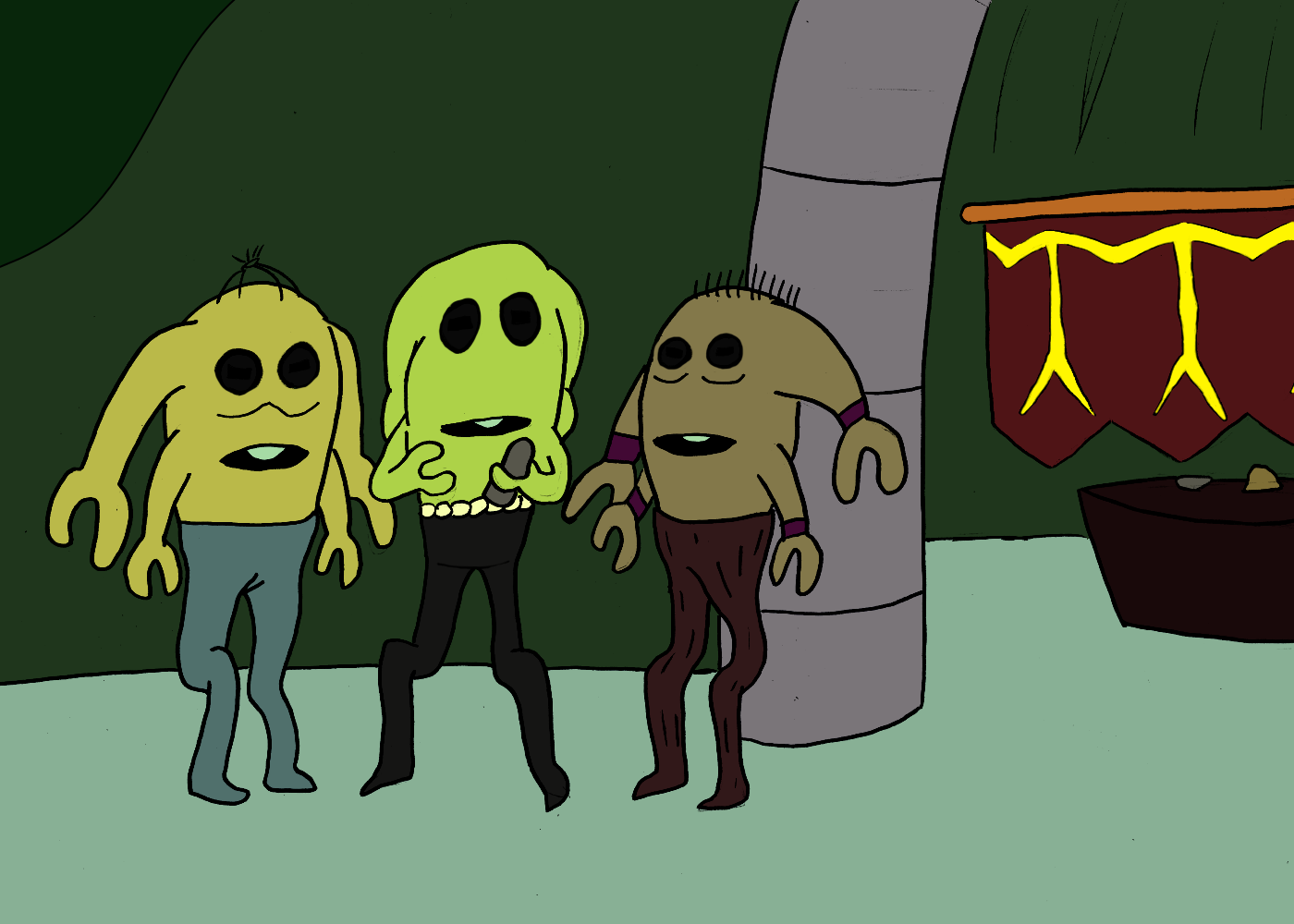
Although Strondovarian culture is dominated by a singular idea of what it means to be “Strondovarian Culture” there are, in fact, still different groups that divide the population among their number. These groups, called Ve, hold a place in society similar to that of national identities for humanity, but without being tied to any physical place. Instead, your membership in one of these groups is based on your ideals and traditions, so in a way it could be considered closer to a religion. That said, the word “Ve” would more literally translate to English as “community” or “team” so let’s go with those terms.
There are dozens of Ve recognized by the Knowledge Banks, but we’ll just take a look at a few, to get a sampling of what they offer.
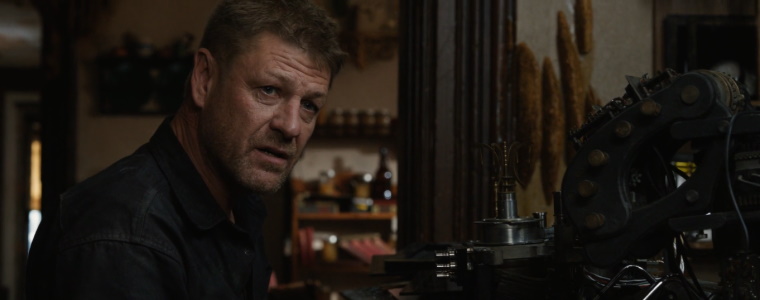
Stinger Apini, played by Sean Bean, is a character from the film Jupiter Ascending. Without getting into the macro-level details of the movie’s sci-fi setting, I can say this much about Stinger: he’s a genetically-engineered space cop who has been demoted and posted on Earth where he lives with his daughter and keeps bees. And it does seem that he’s good at the beekeeping, a trait that may well bred into him at a genetic level. His farm not only has multiple hives, but the home is covered in still more honeycombs, apparently placed wherever the bees felt like it. From what we see, the bees have a lot of leeway on this farm.
It is definitely worth noting that the bees we see on Stinger’s farm have a certain supernatural style. They can sense royalty in a person, for example, and respond to that person’s actions, to the extent that they’ll attack bad guys to help protect the film’s main character. Stinger says, “bees are genetically designed to recognize royalty… bees aren’t like humans, they don’t question or doubt. Bees don’t lie.” But Stinger says this is true of all bees, not just his. If all this is just a fact of bees in this sci-fi world, I can’t give Stinger any credit for it.
What I can give Stinger credit for is that he’s also an excellent fighter with a long history in space battles. He even had wings up until he acted nobly (taking credit for the actions of a soldier under his command) and was punished for it. While this did result in his disgrace, and his anger over it (and his desire to protect his daughter) led to him betraying his allies, he came back around to rejoin the protagonists. He wasn’t so overcome with rage that it became a problem in the long run.
He’s definitely a skilled combatant and a decent beekeeper. Even his name, Stinger Apini, is cool and thematically appropriate. But look, I have to be honest. My own opinion of the very concept of royalty is working against Stinger in this review. The idea that being “royal” is not made-up bullshit but is, in fact, an actual quantifiable physical attribute of a person and makes them “better” than other people and that bees can recognize and defer to it… none of this gets PDR’s approval.

Three Honeycombs out of Five.
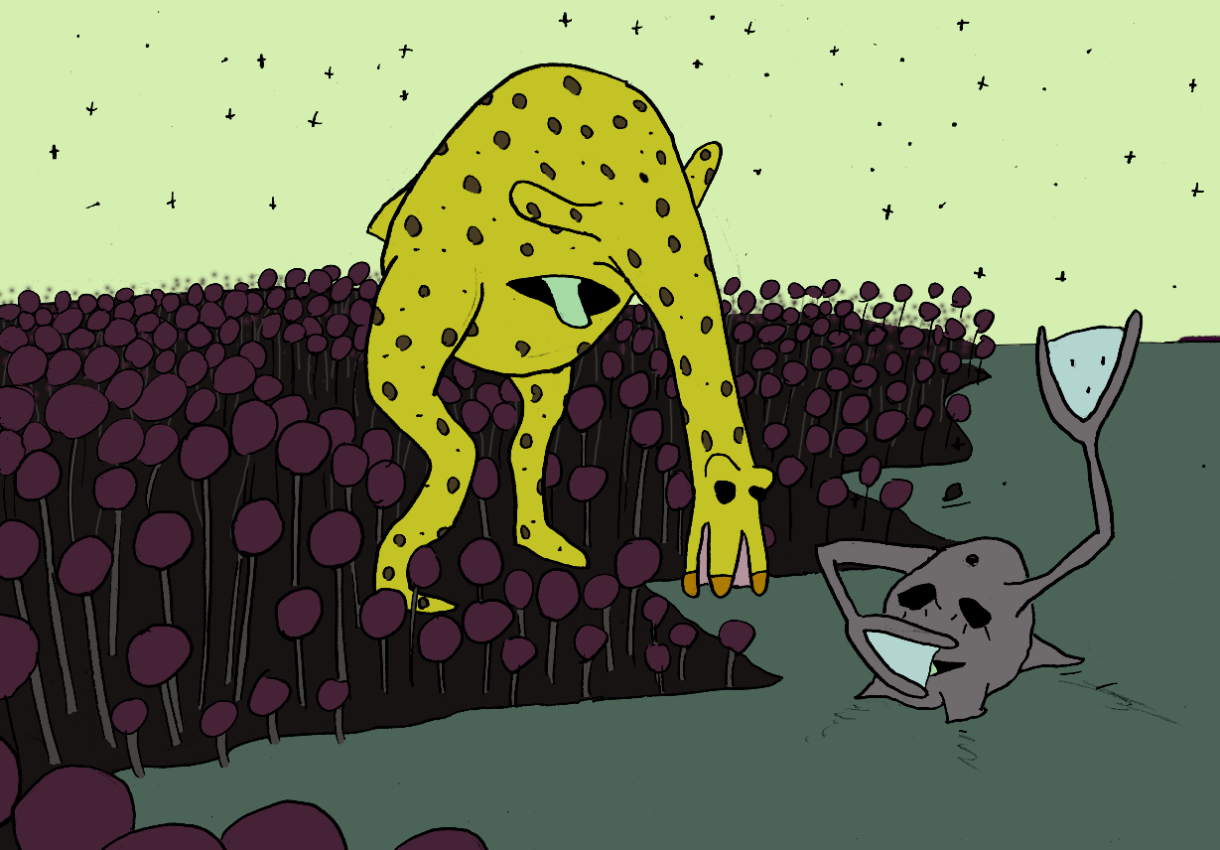
Along the shore of a small, lazy river we see a Heyohayo stopping for a drink. A bunch of Louk cloud around it, looking to suck its blood, which in turn is a welcome feast for a Biddooa in the river.
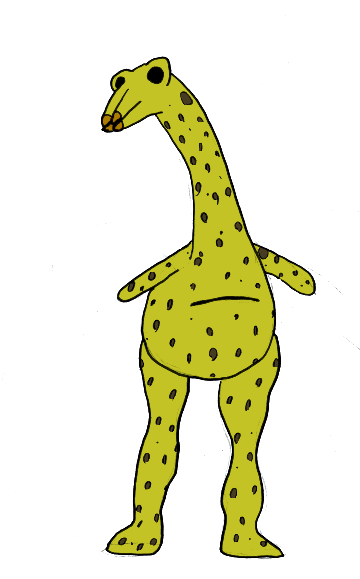
Heyohayo are a large, flightless species of Glounaph. They mostly feed on the vegetation that grows alongside rivers, but will eat small animals from time to time. Larger predators do try to make a meal of Heyohayo when they can, but the large spotted beast has a powerful poke that can do a lot of damage to a potential threat if it can get a good hit in. That said, little tiny creatures like the Louk can prey on Heyohayo while barely being noticed.
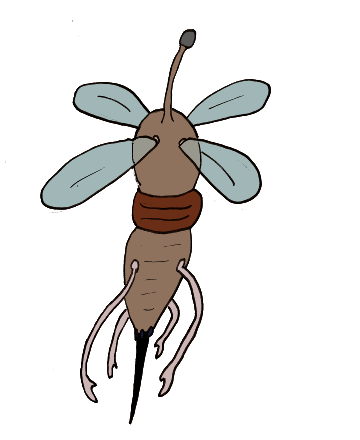
A small kind of flying Vootuph, the Louk pierce the skin of larger animals and suck out the blood and juices they find within, so they love when a big clumsy beast like a Heyohayo wanders by the ol’ watering hole. As with most Vootuph, they have sight organs at one end and the mouth at the other. Their compound eye is on a flexible stalk that allows them to see predators, but isn’t always effective, which is good for the next animal…
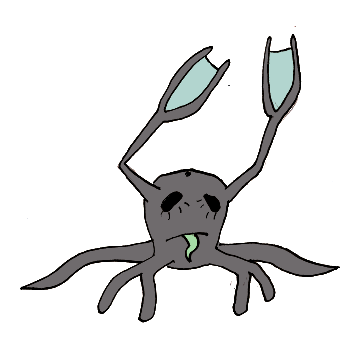
The Biddooa are a particularly ancient species of Lapaouger that have remained largely unchanged since days long ago. Four of their six limbs are devoted to locomotion, but their topmost limbs have sticky pads that are ideal for capturing small flying Vootuph. They can snag a few and then bring the catch to their Rel for consumption. You can’t see it in my little drawings here, but the bottoms of the legs on a Biddooa look wrinkly and bumpy and rough, all the better for gripping onto the rocks at the bottom of running water.
