Planet Gurx: Strondovarian Space

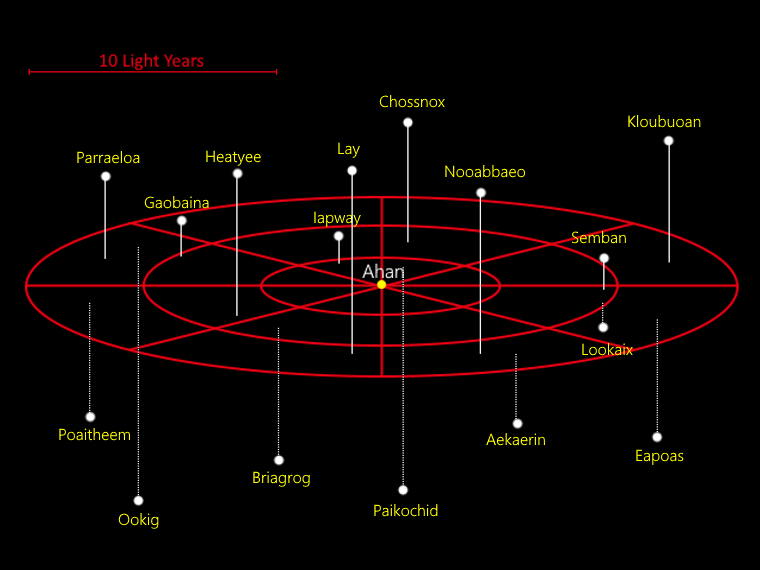
Although this series of posts has been labelled “Planet Gurx” it is simply the case that the denizens of that planet, the Strondovarians, have spread not only to other planets, but other star systems. Though other alien species may dispute the claim, this is the region that Strondovarians consider to be under their ownership:
The Core
These are the stars which are most populated and trafficked by the Strondos. Every world and moon in this range has been visited, studied, and put to use in some way, whether it be as a colony or being mined for resources to use elsewhere.

  • Ahan: This is, of course, the system in which the planet Gurx is located and the Strondovarians arose.
  • Iapway: The first system visited by Strondo explorers millennia ago, Iapway features a lot of the oldest colonized worlds away from home. To prevent the occupants here from straying too far from Strondovarian culture, the technology was invented to sync up the Knowledge Base to other systems.
  • Parraeloa: This is the system where Strondos first located other complex life forms, Doaphean. This world was colonized and was highly populated, but was devastated during a cosmic war. It has been rebuilding, but even now, thousands of years later, the scars from that war are felt.
  • Gaobaina: Finding no planets here with atmospheres that could be altered for their use, the Strondovarians set up colonies here in underground cities where they didn’t need as much air.
  • Chossnox: This is the industrial section of the core where there are many factories or shipyards and such. There is a steady stream of resources being shipped into this system from other ones.

The core is the most highly protected. This map does not even identity what types of stars each system has, because that would make it easier to find the actual location of Gurx, and the Strondos don’t want that. It is assumed, though, that in one of these systems (or perhaps in the space between them) the construction of New Gurx is underway.

The Outskirts

These systems are less populated. In some, there are worlds largely ignored by the Strondos, or there are small frontier populations that the primary Strondo culture consider strange. In several (Heatyee, Semban, Lookaix, and Paikochid), the main presence is automated machines that are strip mining the worlds and bringing the resources to the core.

But there are systems in the outskirts that have some points of interest:

  • Briagrog: With many worlds with underground colonies, like those in Gaobaina, this system would probably be considered part of the core if not for its distance.
  • Nooabbaeo: A massive space telescope has been built here, with an accompanying science outpost to study its findings.
  • Lay: This system has the most space stations, which makes it a nice location for Strondos who aren’t as comfortable on planets (it’s not a small number that feel that way).
  • Aekaerin: This system is home to the biggest space station known to Strondos. That’s nice for Strondos who prefer space stations, but not small ones.
  • Kloubuoan: A frontier area populated only by Strondos who feel like they need to escape from something, or who think they have some big idea and this is the perfect place to bring it to fruition.
  • Eapoas: Another frontier area, this is considered the “last stop” in Strondo space before reaching the star system where planet Blong is located. For that reason, there is a colony here in which both Strondos and Blongians live together.
  • Ookig: During the cosmic war against forces much more powerful than they were, the Strondos created a “false Gurx” here and made it seem as if this system was the capital of their culture, to better hide Ahan. Though neither Gurx was successfully attacked during that war, the fake one is generally avoided because it reminds Strondos of that conflict.
  • Poaitheem: Is home to “the Graveyards” a remnant of destruction from the cosmic war. Shattered spaceships and artifacts can be found here, and Strondo scientists have gone looking for them, but they usually only find strange occurrences have given the system a reputation for being haunted.

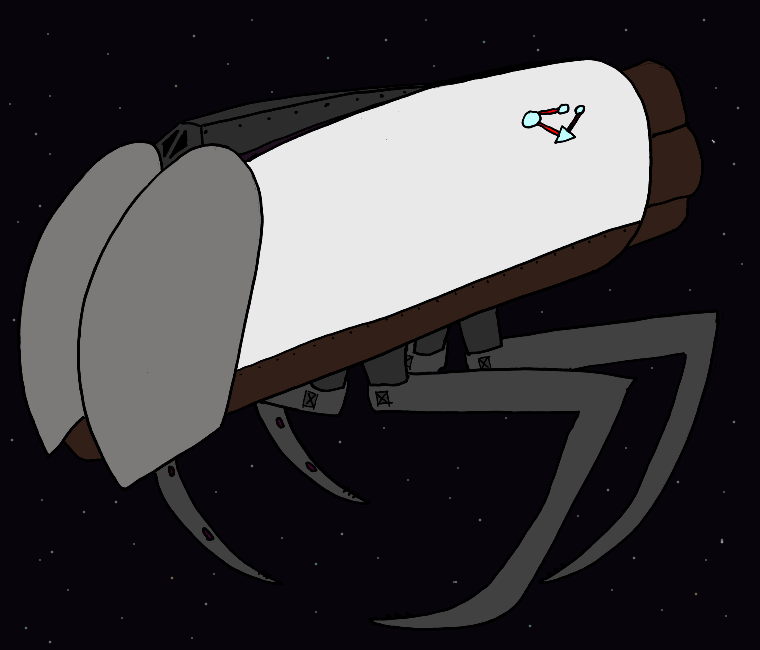
And here is an example of an automated spacecraft that tows resources from one system to another at sub-light speed, so it takes quite a while:
Planet Gurx: The Rocky Shores

Bwotyaxhugalla


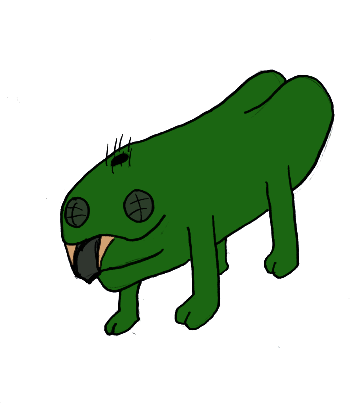
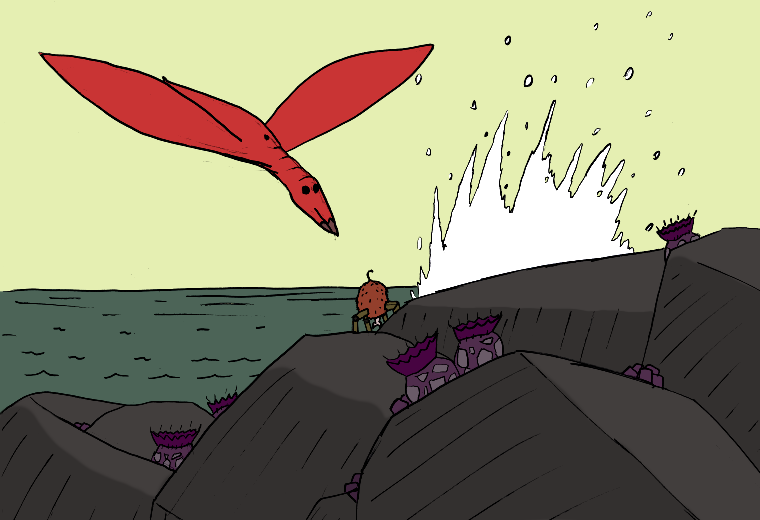
On the shores, not far to the south of the city Varniv, a Bwiak is crawling along the rocks hunting for Eyaedroy cocoons. Before it has a chance to feast, however, a Briapway swoops down with intent to kill.

Bwiak

A predatory type of Vootuph, the Bwiak has a specialized tongue/limb that grasps and crushes its prey. This prey can be smaller Vootuph, but a real feast is Eyaedroy cocoons. Bwiak live solitary lives, making dwellings for themselves among the rocks, and protect their territory from others of their kind, only coming together when it comes time to mate.

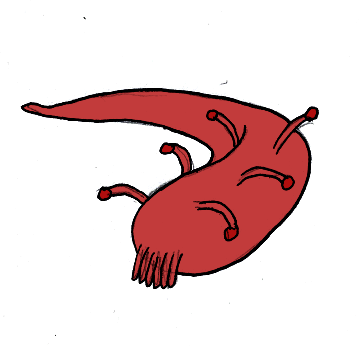
Eyaedroy

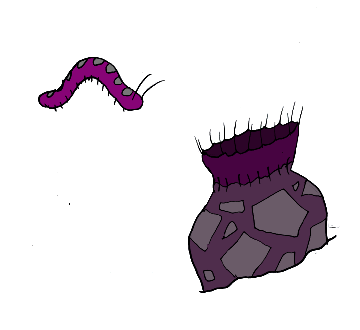
An ancient species, not closely related to many other Gurxian animals still alive, the Eyaedroy has is born as an inchworm-like creature that moves inland to feast on vegetation. After about a year, if it hasn’t been eaten, it is full and returns to the shores where it can end its life cycle by going into a cocoon, but Eyaedroy cocoons are not solitary. Up to a dozen of the worms may cocoon up next to one another, forming a cluster in which genetic material can be shared. These clusters grow into the final stage of their life cycle: a sessile bulb that functions like a factory to pump out more of the worms.

Briapway

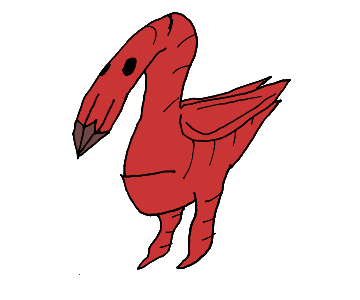
A Glounaph-of-Prey, if you will, the Briapway soars over the oceans along migratory routes, feeding on whatever sea or shore life it happens upon. The fore-limb of the Briapway is tipped with sharp piercers that it can puncture into the flesh of its target. The Briapway’s digits spread slightly causing the piercers, which are barbed such that it can’t easily be pulled out, to hold onto the victim while it bleeds out.

Planet Gurx: Some More Individuals

A Few More Strondovarians

Bovadis

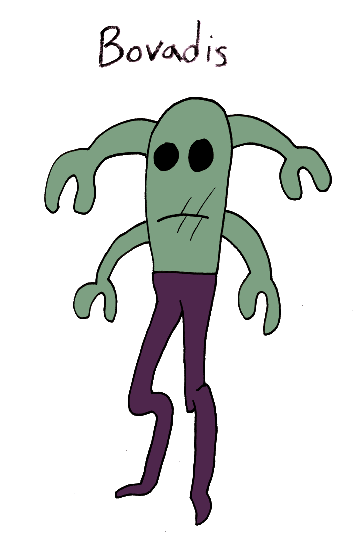
Bovadis was born to a parent fiercely loyal to the Ve Pwoora and was taught from an early age that all other Ve were inferior. Raised in a small compound in the slimelands, Bovadis has only recently had cause to interact with Strondos from other Ve, and has been surprised at how those strangers all seem perfectly reasonable. What’s more, one of them gave Bovadis access to the Knowledge Bank, and suddenly everything Bovadis had ever thought was true seems suspect.

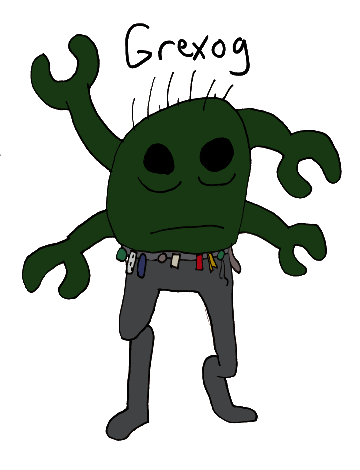
Grexog

Grexog has come to Gurx in the hopes of working with a prominent team of entertainers, but was rejected because they thought Grexog was too ugly. Taking it personally, Grexog has worked hard at entertaining becoming a prominent entertainer on their own. Luckily, that sort of story plays well with the crowds, so plenty of audiences support Grexog just to see an underdog make good.

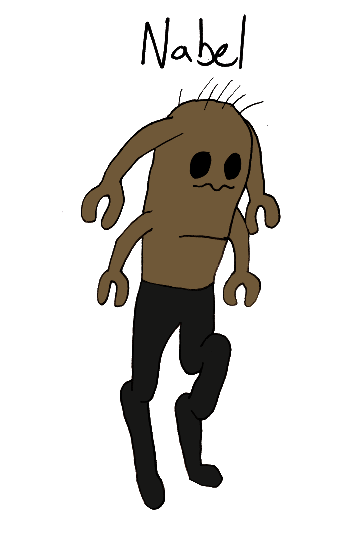
Nabel

Nabel lives in the city of Hoaubp and enjoys working as a poet. They also spend their evenings documenting the actions of the bwotel that live in the city. While Nabel’s notes about the animals aren’t excessive, they are certainly not something most Strondos consider noteworthy. It’s an especially niche hobby, but a Strondo has to have something that isn’t about getting esteem to keep themselves happy.

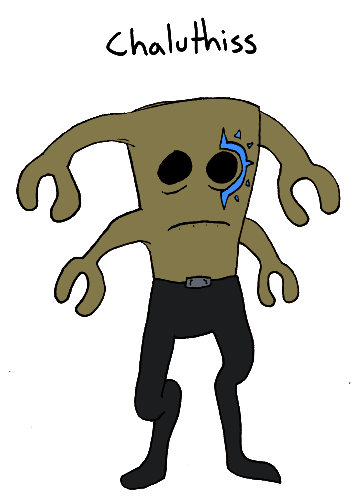
Chaluthiss

Chaluthiss is Nexvar combat mech pilot. Mech combat was once a big part of life on Gurx and Chaluthiss was extremely good at it. But now, in this “civilized” age, combat is only waged against aliens on planets far away. Chaluthiss knows that if they go into suspended animation they’ll likely wake up to be employed in a conflict on some other world. But Chaluthiss is atypically sentimental for a Strondovarian, and likes the homeworld. The living tools called Nexvar are rewarded by society for their devotion to their work, but how long can Chaluthiss partake of those rewards if they have no intention of going back into the toolbox any time soon?

Planet Gurx: Slimelands Animals

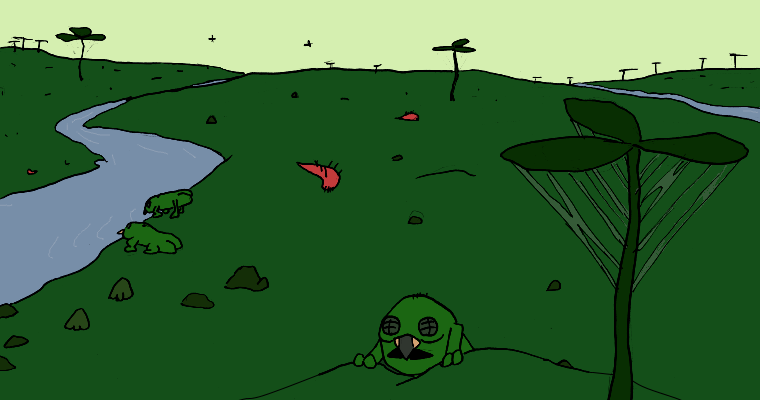
Bwotyaxchooeviv


The slimelands: a continent-sized region where a super-thick layer of slime floats atop the ocean, strong enough to support an ecosystem on its surface. Here, a Heppoig pokes out of its mound beneath a mucus-covered plants to look around, while others of its pack take a drink from a nearby stream. Sekuoarmil wander the area, and some Huthchoo are hidden among the blobs of slime.

Heppoig

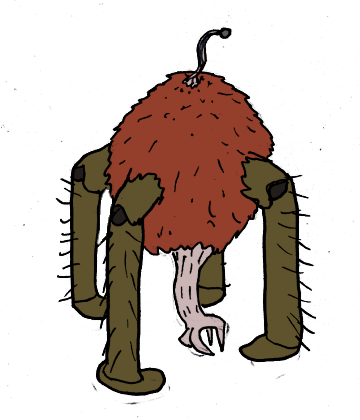
Heppoig are a type of Ekkpay, related to the Aunip found in cities all over Gurx, and we should at last examine that group more closely. Ekkpay use their top four limbs to move in a quadrupedal manner, while their lower limbs are short stumps on the rear of the animals that they use to slap on the ground for communication (they hear through their feet and bottom side), or to slap together and create a large sound that might scare predators. This is why the closest translation to English for the word “Ekkpay” would be “Clapbutt”. Heppoig specifically are a type of Ekkpay that thrive in the slimelands, using their beaks to burrow tunnels into the slime. But unlike tunnels built in dirt or soil, the slime is constantly trying to fill them in again, so the Heppoig work together in packs to maintain their living space. They can even allow the tunnel entrances to grow closed again for extra protection.

Sekuoarmil

The Sekuoarmil can afford their bright red colour because they are highly toxic. No predator in the slimelands would be stupid enough to eat one. And so, Sekuoarmil are free to wander the slime, living off the waste of other creatures. At the end of their lives, the Sekuoarmil head to the water to lay eggs and die.

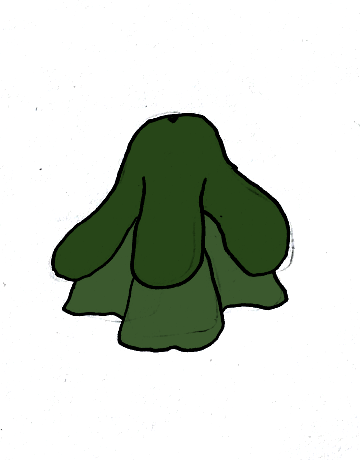
Huthchoo

Hidden in the scene above are some Huthchoo, a type of Vootuph that has adapted to life in the slimelands by developing a hard shell that resembles a blob of slime, and so goes ignored by predators. The slime that makes up the pseudo-ground beneath them is largely the dead slime cells which have been forced to the top, but the Huthchoo have long, piercing tongues that poke downward and absorb nutrition from slime over a metre beneath the surface. Incidentally, wind can be harsh in the slimelands (as well as dust storms if it has been dry and the top layer of the slime begins to flake off), so the tongues of the Huthchoo also allow them to anchor in place during such events.

Planet Gurx: Strondovarian Gestures

For social creatures, the Strondovarians don’t have much in the way of facial features. Although a human may find Strondos to be cold and unemotional in many ways, they do in fact have emotions and, even without eyebrows to furrow or lips to curl, they can get their feelings across to others non-verbally.

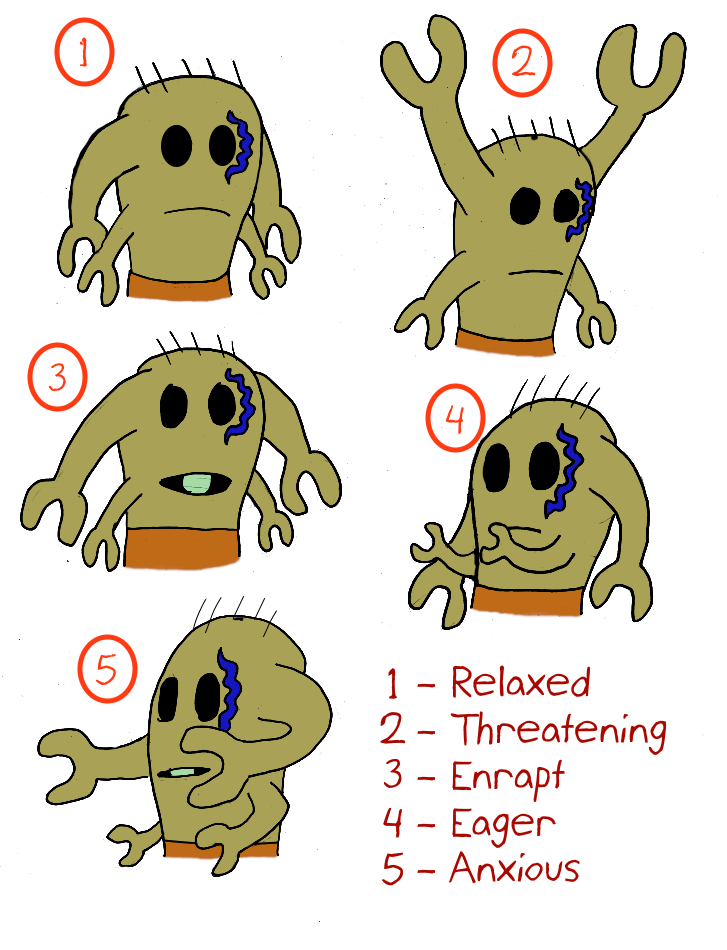
Here, Nibnassin gives some examples of body posture and what emotion it may be revealing:

The upper arms of a Strondo are the biggest indicators. These limbs (they call them “Thast”) tend to droop when a Strondo is relaxed, often getting tucked behind their back when most comfortable. Contrary to that, if a Strondo is raising their Thast, you can be sure they’re trying to be imposing, and since they can swing a Thast in a powerful blow, they are pretty imposing.

Given that a significant part of a Strondo’s auditory sense organs are located behind their mouth, it is appropriate that the Strondo word for their lipless mouth hole is “Hear”. Though they only close their Hear tightly when eating, if they are especially interested in listening to something, they will open it wider to let more sound into the mouth cavity (which they call “Aaruo”) that serves as an echo chamber for the sound taken in.

The lower set of arms for a Strondo (the “Thae”) are more commonly used for finer manipulation, so if a Strondo has raised them, it is apparent that they are ready to engage in activities that require a more active role on their part. When they raise them, they’re ready to think and act in a less blunt way then with the Thast.

So that’s the basics you’d need to know to get the basic idea of how a Strondo is feeling. There are other little things they do (like shaking a single Thae to indicate impatience, or curling limbs inward to indicate feeling tense), but among Strondos, if you really want to catch their meaning you need to listen to what they’re saying.