Planet Gurx: Some Individuals

A Few Strondovarians

Lembeb

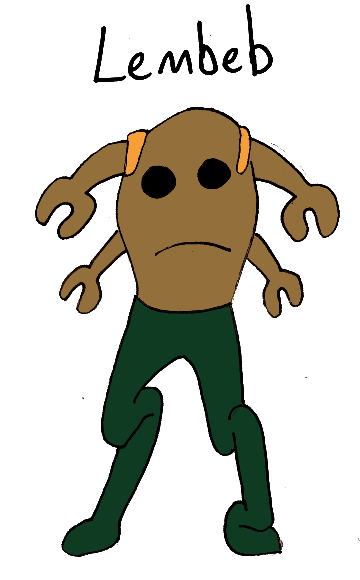
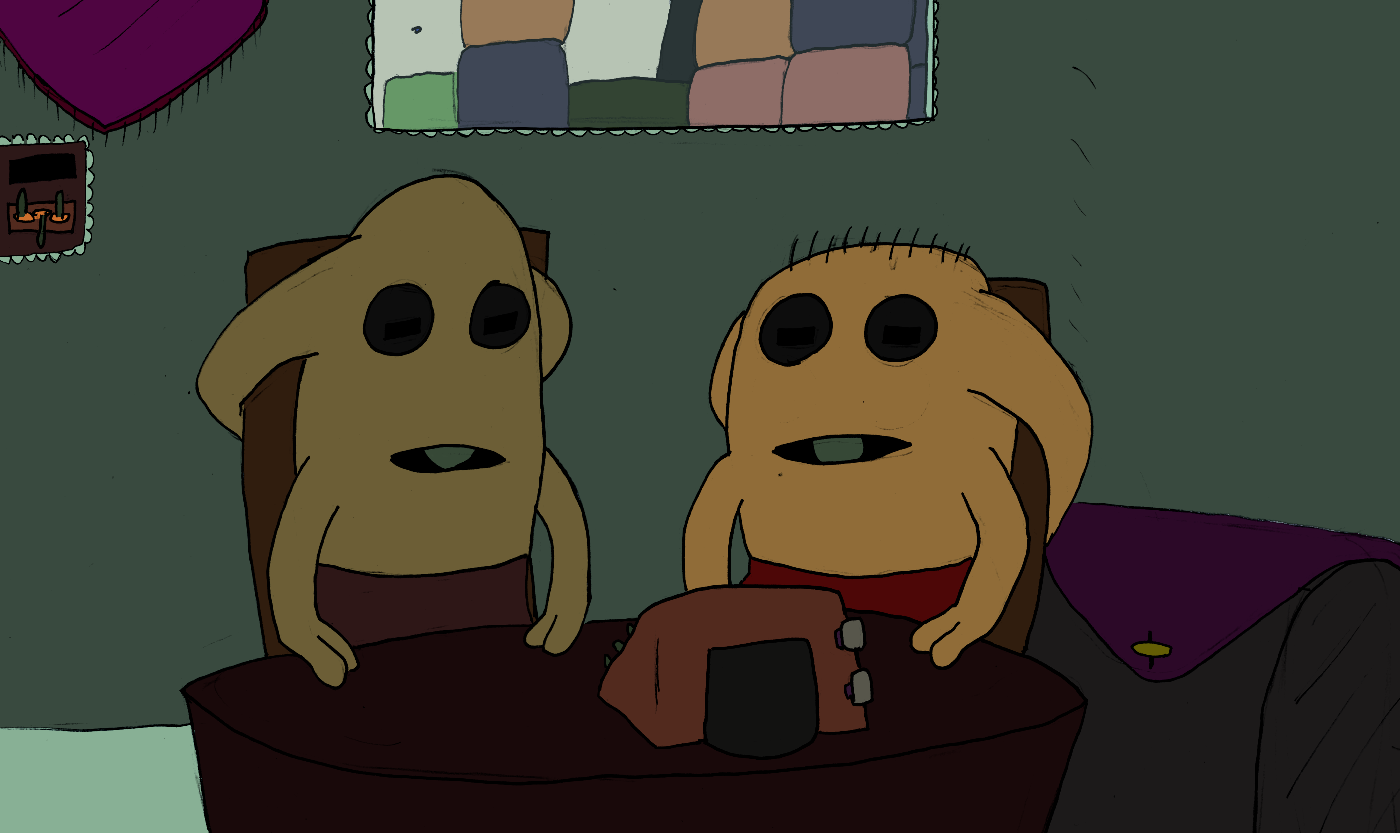
Lembeb has spent the last few years working as the Strondovarian equivalent of a bounty hunter. There’s a lot of criminals on Gurx who are notable enough to be profiled in the Knowledge Bank, and if those criminals are killed, the killer is obviously going to be mentioned on that profile. Lembeb has killed a dozen Boais criminals. It’s risky work, though, because if someone kills Lembeb, they’ll get to be mentioned on Lembeb’s profile.

Nenoaur

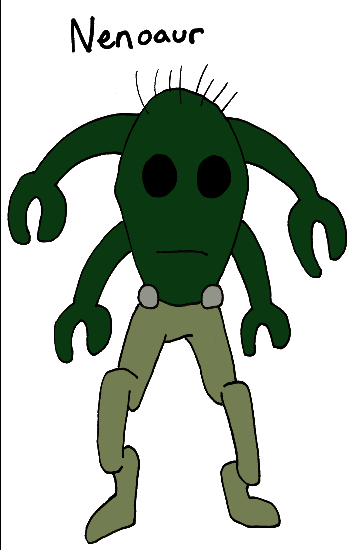
Born on a space station near planet Doaphean, Nenoaur first moved to planet Gurx to study at the planet’s prestigious schools, but has stayed to work with a team that designs rubber tires with treads ideal for different terrain. This is a relatively new team, but they’ve provided tires to some of the more prominent exploratory space missions of the last century, which means they have some prominent credits in the field. Nenoaur is content with that. Would it be nice to gain more esteem and become rich among Strondos? Sure, but it’d be a lot of work too. Nenoaur is happy just maintaining a level of comfort and a chance to tinker with non-fame-bringing hobbies, such as listening to audio drams.

Pelkis

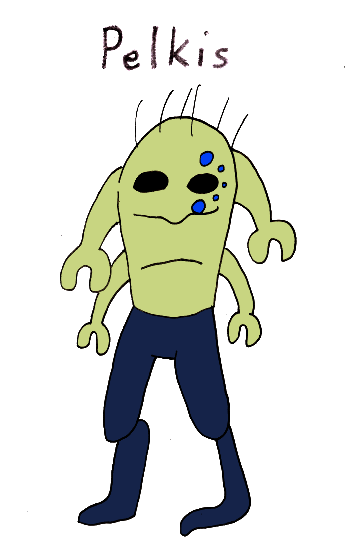
Pelkis is marked by a tattoo (“Gloyan”) which means they are Nexvar. In general, Strondos don’t think of occupations the way that humans do. No Strondo would say “I’m a baker” or “I’m a plumber” or whatever. They’d say “I’m baking” or “I’m fixing the plumbing” because they describe the actions, not the person. But then there are the Nexvar, who liken themselves to living tools dedicated to specific situations and are highly rewarded for it. Nexvar put themselves into suspended animation for long spans of time, until they are awakened by someone who needs their help. They deal with whatever they were needed for and then get to live lavish lives until they opt to go back into the box and wait for the next time. Of course, if a Nexvar isn’t noteworthy enough that someone would want their help… Well, they prefer not to think about that. Pelkis has been alive for over 2200 years by Earth’s counting. Pelkis’s specialty is baking.

(You may note that our friend Nibnassin is Nexvar dedicated to educating aliens about Strondo culture.)

Chauban

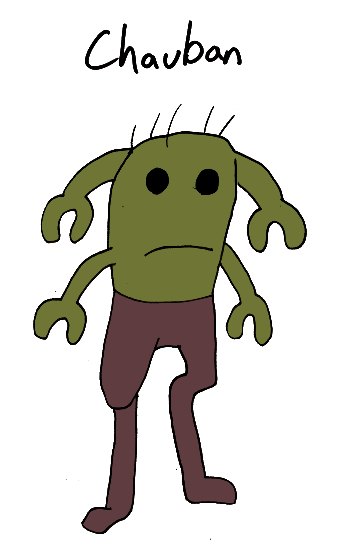
Chauban is in charge of the import operations in the city of Theebev. It’s widely known that the planet Gurx doesn’t have enough resources to maintain Strondo society as it is, but by bringing in materials from space they hope to keep things running smoothly until construction is completed on New Gurx. Chauban and their workers accept the shipments from space and load them onto boats that bring them down-river and to the rest of planet. Chauban has been at the task for years and has gained a lot of esteem. In time, they plan to leave Gurx and put themselves in suspended animation around the construction site of New Gurx. It’ll be so nice to blank out and wake up to see the ultimate accomplishment of Strondovarian civilization complete at last.

Planet Gurx: Ocean Life

Bwotyaxagedda


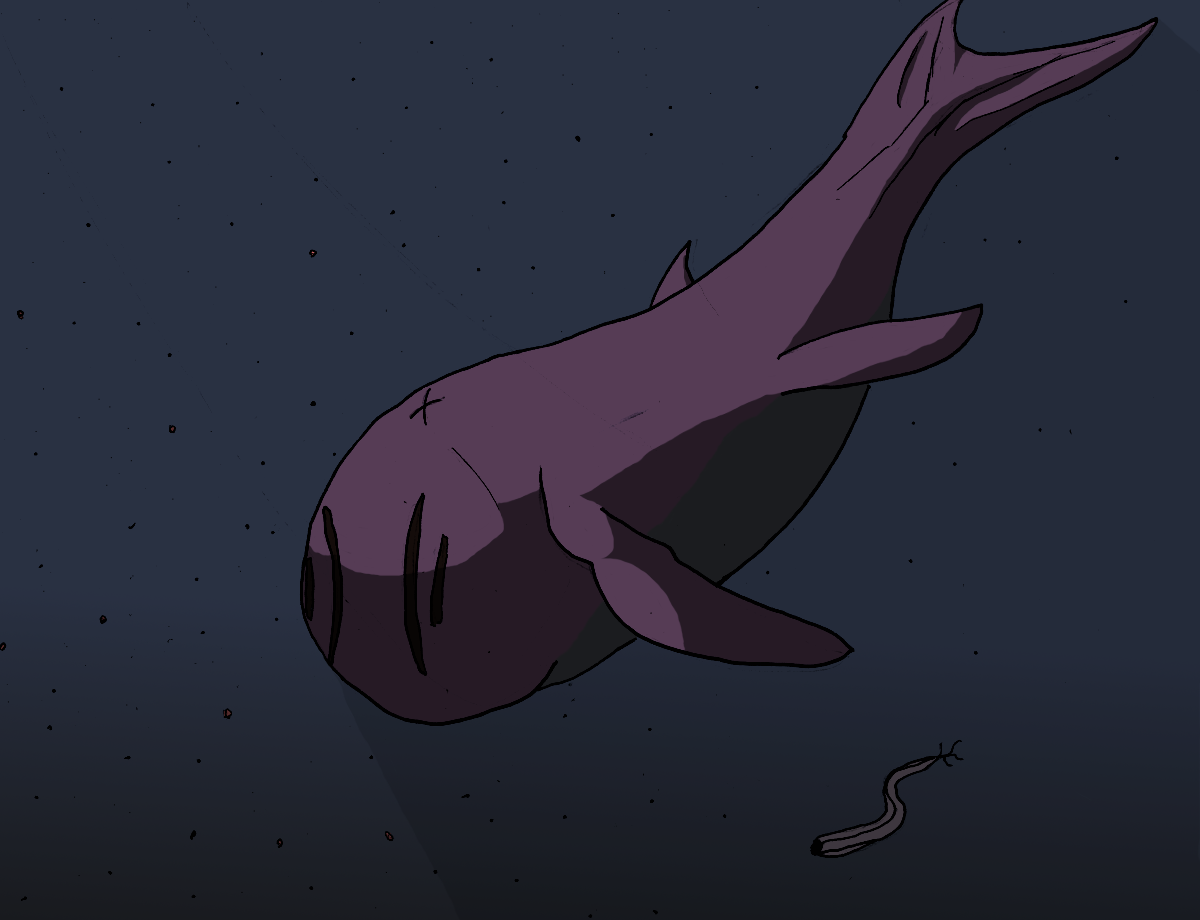
The oceans of planet Gurx are vast and full of life. Here, beneath the surface of a region that is not covered with slime, we see a large Tweheak interrupting an Uebie’s meal as they both swim through a region filled with tiny creatures.

Tweheak

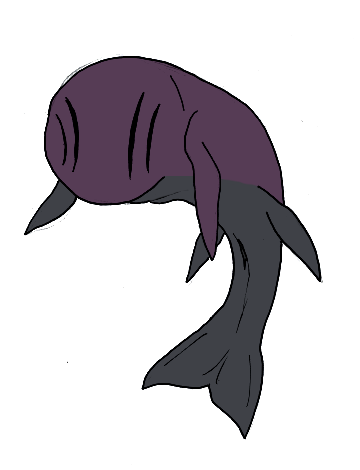
Tweheaks are one of the largest kinds of Lapaouger on all of Gurx, but they live on some of the ocean’s smallest creatures. Neither as intelligent nor as social as the whales of Earth they may superficially resemble, the Tweheaks are filter-feeders who basically only need to point their four mouths toward the sounds of food and swim that way. They’re completely sightless and feed primarily at night.

Uebie

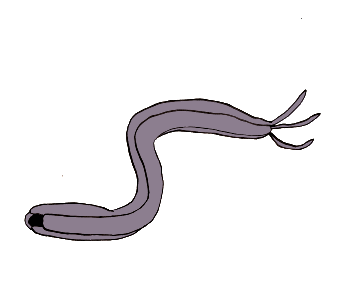
Uebies are a type of Vootuph that have found a lot of success in the oceans Gurx. They can swim extremely quickly, helping them to catch their prey and to avoid predators. They migrate through the oceans with the climate, following the smaller creatures they eat as the seasons change. For a period in the era before the Knowledge Base, the Strondovarians considered Uebie to be a gourmet food item fit for only the most special.

Yena

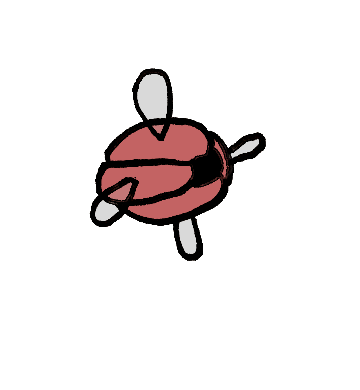
Yena are tiny Vootuph that feast on the planet’s equivalent to algae and plankton and all that. This makes them a nutrient-rich food source for lots of other ocean life. To survive being a common food source, Yena eat voraciously until they are full, then sink to the ocean bottom to give birth to an innumerable next generation to repeat the cycle, or get eaten in the process.

Planet Gurx: The Knowledge Base

The Knowledge Base of the Strondovarians

The single most important element in modern Strondovarian culture is their collection of all information deemed important enough to be noted for all time. While it has several euphemistic names in Strondovarian language, it is most frequently called the Revariax and it began, over 10000 years ago, as a physical collection of scrolls or tablets or any kind of physical record. In time those who maintain it came to realize that the physical collection was not as important as the information itself. When they developed computers capable of storing the information, the Strondos kept their information in a systems of well-protected and redundantly saved locations (including beyond the planet Gurx), but accessible to any and all Strondos. A human may check a clock on their phone to see the time or date agreed upon by their culture, but Strondos sync up their devices to the Revariax to see the information their culture agrees upon to make up reality. What political leader is in charge of a nation? What are the latest fashions? What is the goal of Strondovarian culture as a whole? It never hurts to check the Knowledge Base before starting your day.

One important aspect of the Knowledge Base is that, on subjective issues or those open to discussion, it allows Strondos to weigh in. If a Strondo wants to be the ruler of a nation, there is no actual election process, they only need to state it as fact on the Knowledge Base. Strondos who review the fact can either support or deny it. If enough support it, it’s true. Any Strondo who can convince enough others to vote for them can do almost anything they want. For this reason, fame has become the currency of the Strondovarians.

A “Noteworthy” (or “Boais”) Strondo is wealthy. Once their accomplishments are listed on the Knowledge Base, they have something to point to that proves their worth. Strondos who are less famous will clamour for the chance to be linked to the famous ones, and so will happily work for them on projects to be listed and credited in articles, and the Boais will only pick those who are esteemed enough to deserve it. Still less famous Strondos will work for that tier, hoping that their hard work will earn them credits that will get them noticed by their higher ups. And so on. There is, of course, a strata of non-famous Strondos who have no respect and, therefore, in the eyes of their fellows deserve no respect. Strondos who consider themselves better than these dregs can push around or even kill these poor souls, and nobody cares.

Planet Gurx: Life Beneath The Slimelands

I’ll get back to talking about Strondovarians in the future, but they aren’t the only life on Gurx, so we should periodically look elsewhere. The Strondos consider themselves the dominant species on the planet, but there’s also the Bwotel, which is the Strondo word specifically for Gurxian animals (alien animals are called Pwotgedda). The Strondo word for the kind of Bwotel that live in a particular region is “Bwotyax” and the word for the oceans under the Slimelands is Chagheam. So today, we’ll look at:

Bwotyaxchagheam


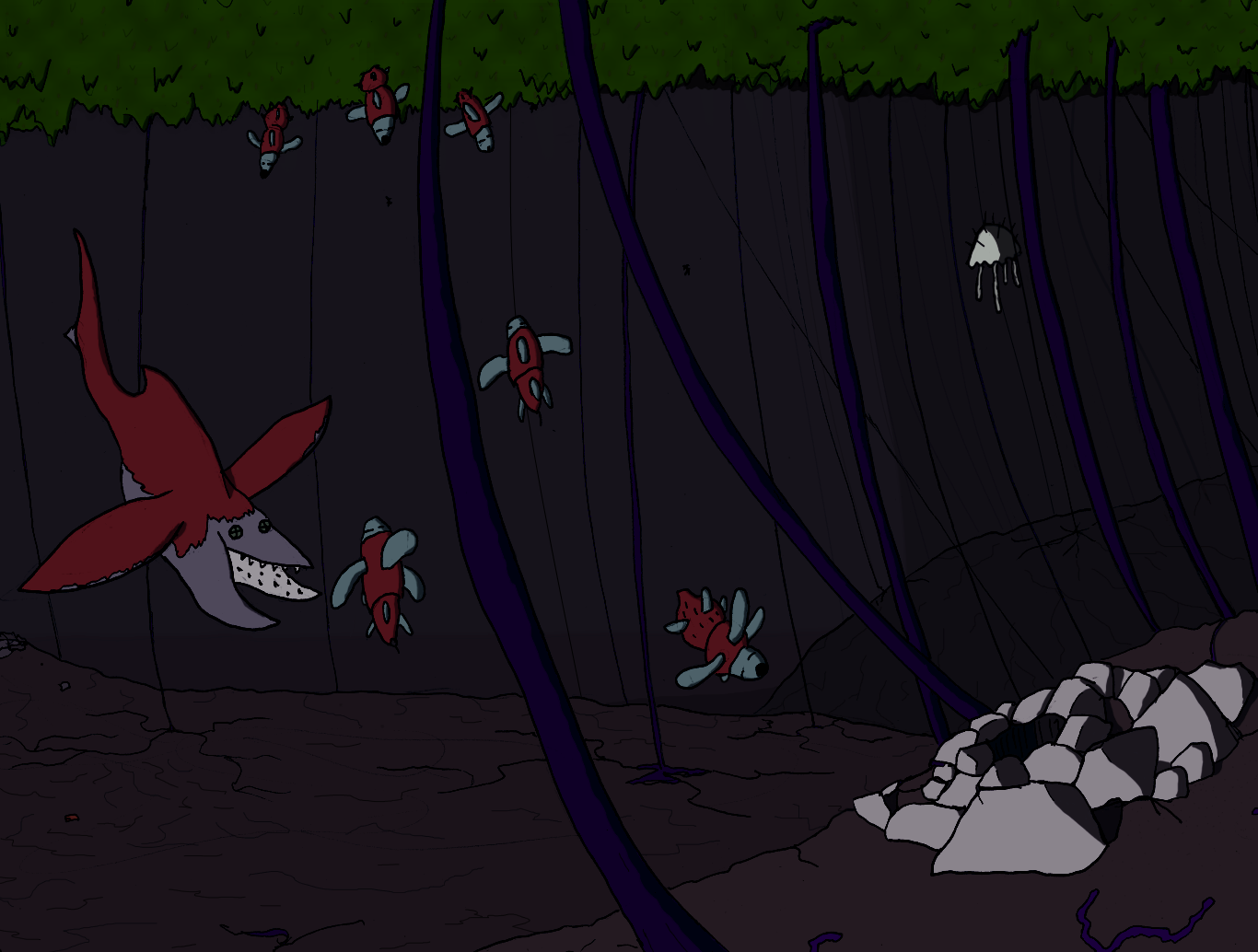
Most of the Chagheam is under a layer of slime so thick that no sunlight reaches it. But along the shores of the slimelands there exist a lot of animals who want to live off the nutrients in the slime. In this scene we have a colony of Twooay sending gatherers out to harvest from the bottom of the surface slime while potential predators swim nearby.

Twooay

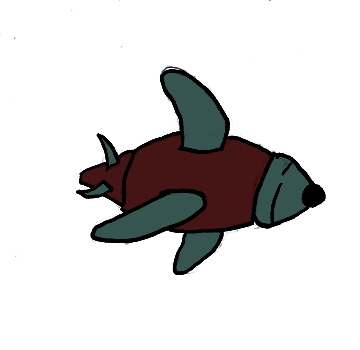
Twooay are an aquatic kind of Vootuph (four-sided animal) that live in tunnels on the ocean floor. They are eusocial creatures that can live in massive colonies. Seen here are members of the gatherer caste, sent out to gather slime and return to the tunnels where it is stored and used to feed the colony. Their mouth is in their backside, on the opposite side of their four-segmented eye, so when they reverse up to the slime to take some into their mouths, they can keep watch for predators. There are also worker Twooay, that dig the tunnels and place rocks near the entrances to help protect them and will come out to fight when the colony is threatened. And, of course, there is the parent caste, who exist to be taken care of while they reproduce.

Ubeelih

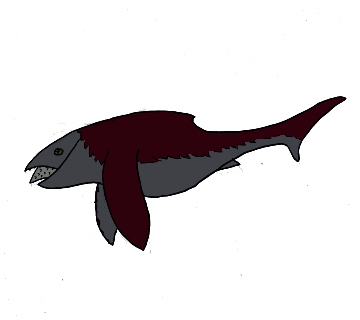
Ubeelih are an example of Lapaouger (six-limbed animal) that did not evolve to live on land, but instead to become aquatic killing machines. Their lower limbs have fused into a streamlined fin, and their top limbs into grasping appendages that can grab prey and hold them in place while the Ubeelih feasts. As with most of the creatures on Gurx, the Ubeelih have no teeth, but they do have inward facing barbs that can make it very difficult for prey to escape once grasped. Solitary animals, there are a lot of types of Ubeelih across the oceans of Gurx. The one in this image is a juvenile from a species that stays close to the slime shores and preys on the life that come there for easy meals, such as Twooay.

Loyoloy

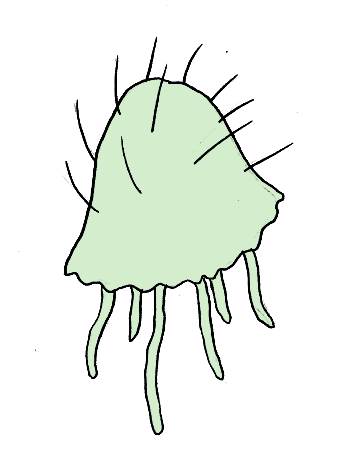
In the scene above, a Loyoloy can be seen moving through the strands of Haara, plants that grow from the sea floor up into the slimelands on the surface. As we move inland from the shore of the slimelands, Haara get more dense, but here there is room enough for a large Loyoloy to float about freely. A creature similar to what we call jellyfish on Earth, Loyoloy get extremely large as they age, so while they can excel in the darkness of the Chagheam while they’re young, they eventually get too big to easily move through Haara, so they come out to the shore.

Planet Gurx: A Timeline

So far in my Planet Gurx series, I’ve covered a lot of information about the Strondovarians, the current dominant species of the planet, and not a lot about the planet Gurx itself. So today, let’s just lay out the history of the planet. (To avoid complication, we’ll be measuring in Earth years, instead of translating the system Strondos use to keep time.)

Roughly 6 Billion Years Ago: The planet Gurx comes into being around a star that the Strondos will eventually name “Ahan”. As time goes on, the planet is bombarded by meteors and oceans form and all that good stuff.

Roughly 4 Billion Years Ago: Multi-cellular life begins to form in the oceans of Gurx. Over time it evolves into what we would recognize as the Gurxian equivalent of animals and plants.

Roughly 1 Billion Years Ago: Complex life has spread through the oceans of the planet. While there are many types of animals around this point, one of the most successful and widespread is a family of four-sided symmetrical creatures with exoskeletons (Strondos will call this branch of the tree of life on Gurx “Vootuph”, or Four-siders).
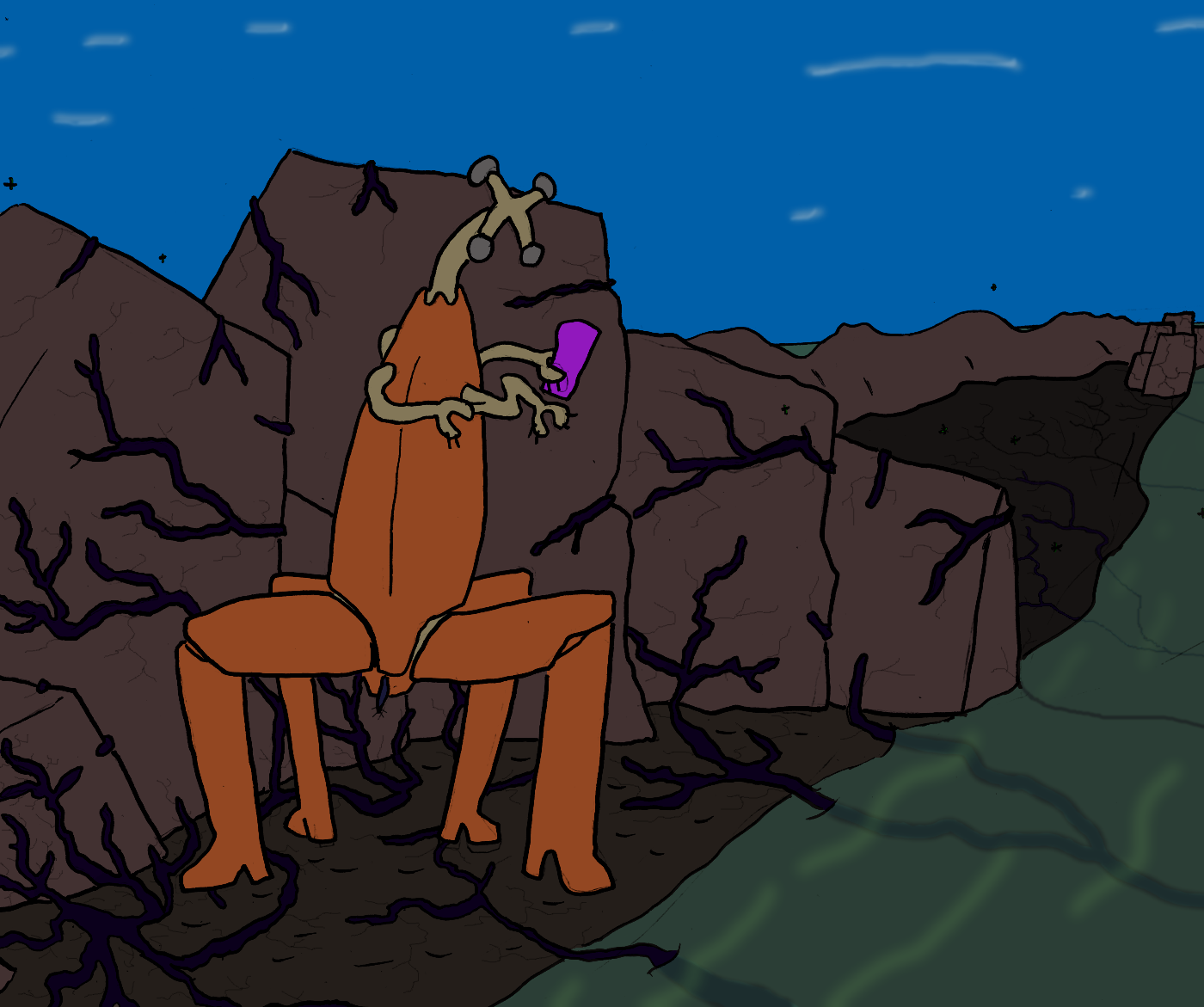
Roughly 500 Million to 250 Million Years Ago: Life has spread to the surface of Gurx, as plants and as Vootuph that have adapted to an aquatic lifestyle. Back in the waters one of the newer family of animals to come along has a body plan that includes musculature that functions as a skeleton and six limbs (“Lapaouger”). In the later years of this era a species of Vootuph will evolve traits such as community, tool-use, and intelligence that would be recognized as being on par with human or Strondo life, but their time is brought to an end by an extinction event that wipes out most of the life on the surface of the planet and a sizable chunk of that in the ocean as well. The Strondos know little to nothing about the intelligent Vootuph that once lived on their world.

Roughly 200 Million to 50 Million Years Ago: While Vootuph animals are not totally extinct, the Lapaouger group spreads into many of the evolutionary niches they once held, including eventually finding their way onto land and having considerable success. Some land-based Lapaouger evolve hind legs that allow them to stand upright and walk bipedally. This upright subsection of Lapaouger will be known as “Aehubar”. This is also the era when the Slimelands (“Chooeviv”) come into being.

Roughly 30 Million to 2 Million Years Ago: The ancestors of modern Strondovarians are using tools by this point, and by the end of this span they have begun to spread around the continent forming various tribes and communities, one such group becoming modern Strondovarians. The Strondos of today use the word “Varian” (meaning “folk”) to describe the closely-related species who had intelligence similar to their own.

Roughly A Million to 40000 Years Ago: By this point the tribes and communities of Varians have developed into nations and cities. Civilizations begin to rise and fall. The population of Varians on the planet grows frequently, but is often brought back down by natural disasters, disease, and war. This era will come to be known as the “Neboosidih”, which can best be translated as “the Times Lost To The Wind”. It was a time of struggle that ended with the only when the non-Strondovarian Varian species were wiped out by various means. In the ages that followed the Strondos were the only Varian left alive, and their dominance over the planet Gurx begins in earnest.
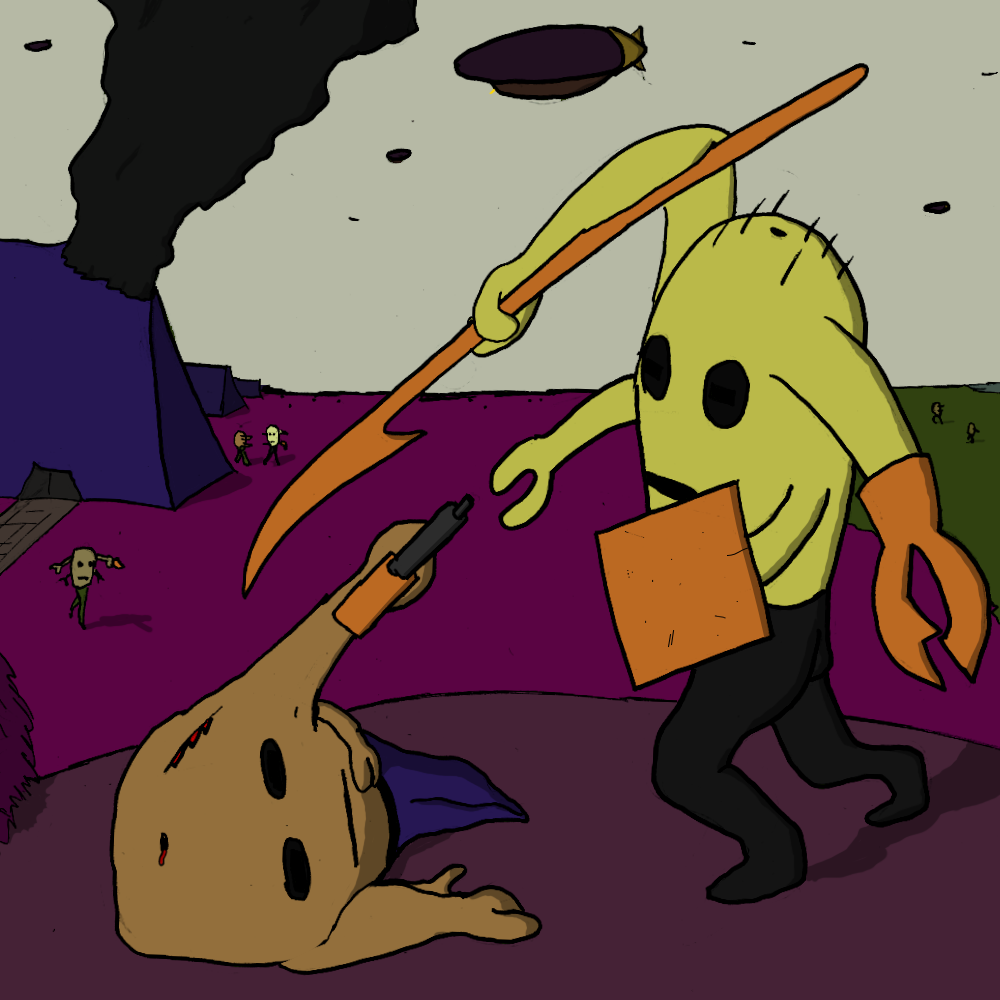
Roughly 12000 Years Ago: Among the nations of a more technologically-advanced Strondo population, a decades-spanning war wages. One Strondo nation, one that values knowledge and esteem more than anything else, is able to conquer or convert all the other Strondo nations on the planet. This results in the Strondo Culture that will create the Knowledge Base of the Strondovarians, the record of all information deemed worth knowing and remembering. This culture also makes a point of preventing the degradation of their language by enforcing strict rules and wiping out other languages.

Roughly 9000 to 7000 Years Ago: This is the era in which the Strondos reach out into space for the first time. They explore their own star system, and soon generation-ships are launched to other systems by those who want to be famous for founding cities on other worlds. The spread of Strondos to other planets is helped by advances in suspended animation and, eventually, the “Buloggo Engine” is developed, which makes travel to other star systems much more easy. On one world (“Doaphean”) Strondos find living alien animal life, though it seems unintelligent by their standards. They begin colonizing Doaphean.

Roughly 6000 Years Ago: The Strondos make first contact with a species of similar intellect to themselves and it does not go well. The newly-met species, which the Strondos call “Rootfolk” (“Pwot Pharvarian”), seem to have values incompatible with those of the Strondo Culture and conflict arises. To make matters worse, that contact is noticed by other even more powerful alien forces and Strondos and Rootfolk are both pulled into a Great Cosmic Conflict that, to this day, they still don’t fully understand. The Great Cosmic Conflict waged for more than a thousand Earth years, during which time the Strondos put utmost importance on keeping the location of their homeworld a secret from their foes, though the settlements on Doaphean suffer unimaginable losses. Eventually the conflict seemed to cease on its own and Strondo Culture returned to its exploration of the systems it could reach, now aware they had enemies.

Roughly 3000 Years Ago: It is decided among the Strondovarians that the planet Gurx is not good enough to be the capital of Strondo culture. Thus began the biggest project in the history of the species: the creation of a new homeworld from scratch. A better star is chosen and space stations and asteroid bases are built there. A large segment of the population makes a pilgrimage to the new system and take up roles in what will surely be a historically noteworthy mission.

And that brings us to today. Strondo culture, as intentionally stagnated, combined with the fact that there are Strondos alive who were alive when the New Gurx project was begun, means that the planet Gurx of 3000 years ago is remarkably similar to that of today. And the Strondovarians have no intention of changing their plans any time soon.