Beekeeper Review: Trigona Ambrose

Trigona Ambrose is a character in a webcomic called Beeserker. It’s a very surreal sort of strip wherein some Sciencemen decide to create a robot powered by bees. Such a quest requires a lot of bees, and Trigona is the beekeeper who supplies them. So now that robot, the titular Beeserker, considers Trigona its mother figure and she’s got some bizarre friends to drag her into bizarre adventures. Most of the beekeepers I’ve reviewed so far have appeared once or twice and then their story was done, but Trigona is still appearing in an ongoing comic, so she’s still “active” if you will.
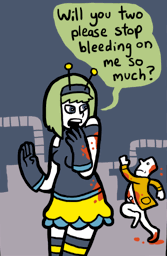
Called “Beegirl” by the Sciencemen, in many instances Trigona comes across as a voice of reason in the strip. But that is only because of how insane everyone and everything else is there. Trigona’s role as a bee-seller is, she admits, not typical of a beekeeper, but she’s bored with her life and doesn’t care much about the well-being of her bees. Considering her method of beekeeping seems to be entirely based around shooting them with a flamethrower made of a bear’s head (the Ursinerator), selling them as a fuel source is pretty consistent.
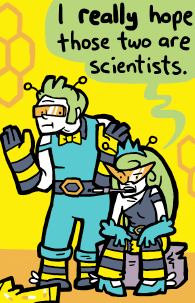
The Ambrose family is the latest branch of a long lineage of beekeepers, apparently. That is appropriately mythic. Her parents have been seen in the strip. Her father is Meliponini, who wielded the Ursinerator before Tringona. Her mother is Queenie, who seems to have the strongest bee control in the family (she is the queen after all) and apparently smoke-control. It’s very clear that in the universe of this comic, beekeepers are the supernatural force I’ve been saying they were all along.
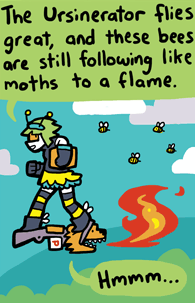
So let’s run down the beekeeping powers Trigona has displayed so far: She’s got an antennae headband that allows her to translate “all bee languages”. She’s got goggles that allow her to track bee energies. The Ursinerator, of course, is a pretty cool flamethrower, but it also flies and functions as a phone. She even has transformation sequences to help her get dressed. In the Beeserker video game, she can double-jump. The Bee-Dome in which she lives, has some handy self-regenerative powers. She has a bit of a weakness for glue-fume-instigated hallucinations, but for the most part that’s a very impressive set of abilities. She’s held her own in many a fight and the fact that’s she’s got so many bees to sell indicates at least some success at keeping her colony active. Though I’d almost bet the bee-dome is self sufficient enough that it’d keep a good colony even if there were no Ambroses there at all.

Four Honeycombs out of Five. Very strong in the adventuresome aspects of the profession, but less so in the beekeeping parts.
Beekeeper Review: Reginald Prawnbaum

You can just watch this one for yourself, why not? It isn’t even five minutes long.

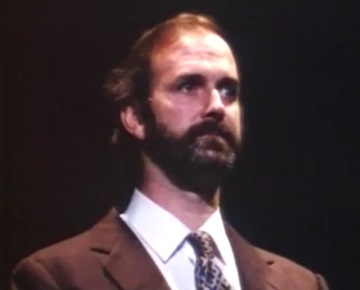
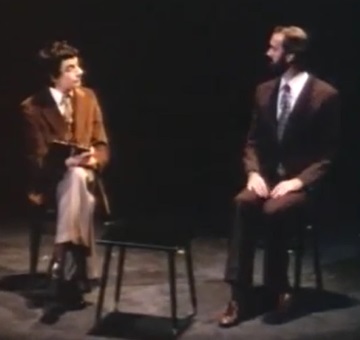
What we have here is Beekeeper Rage in action, right before our very eyes. Reginald, portrayed by John Cleese, is being interviewed by an interviewer, played by Rowan Atkinson, and it all goes downhill from there. As you can see for yourself, Reginald Prawnbaum is a very renowned beekeeper. So much so that he gets to appear on television! Television! If that’s not a measure of success, I don’t know what is. Reginald starts out very composed and together but less than five minutes later and he’s lost the constant struggle that rages in the heart of every beekeeper.

We learn quite a bit about poor Reginald in that time. He’s been a beekeeper for “over forty years” and whose love of bees began as a child. He kept notes about what kinds of flowers the bees visited even then. As a child! This is a man with so many experience points devoted to his beekeeping stats that I assume when he is among his swarms he is like unto a demigod. He’s not got much experience dealing with idiotic interviewers, though.

I mean, the interviewer is an idiot. I think there might even be some malice behind it. Are his tics real? I can’t actually be sure that this was a calculated attempt to discredit a beekeeper live on television, but the possibility exists.

But does the possibility that the interviewer is actively goading Reginald, or even the certainty that he’s extremely annoying, justify the wrath that Reginald brings down on him? Well, making him run around until he falls off the stage, that’s not so bad. Shooting him? That’s a touch more than necessary.

How good a beekeeper is Reginald? Well, we don’t see him do any beekeeping. I can (and do) assume he’s got all kinds of supernatural powers and fighting ability. But it isn’t just his stated beekeeping experience that make me suspect it. It’s the gun. Where does Reginald get the gun? Why does he have it at this interview? If you say he has it because it is funny, you’re missing the point of overthinking fictional beekeepers. If you’re PDR you realize there are two possibilities: Either he just carries around a gun because he’s the type who needs a gun on a regular basis because he’s fighting mobsters or something, or he just straight up summoned a gun from the ether (maybe he had his bees bring it to him instantly during the moment of darkness?). Either scenario means one thing: Reginald Prawnbaum is a badass beekeeper.

Three Honeycombs out of Five. I’m certain this guy is extremely powerful, but he unfortunately loses points for the Rage.

Beekeeper Review: Springfield’s Beekeepers

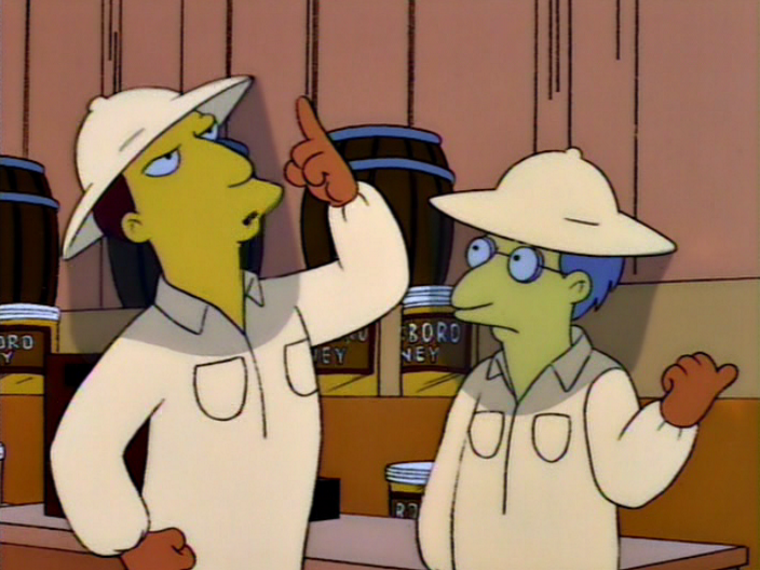
The Simpsons was a pretty great show. Season Six of the Simpsons was smack in the middle of its best years. Lisa’s Rival was a good episode. Homer getting a pile of sugar was an excellent subplot. That’s when the Simpsons got Beekeepers.

Homer gives a rousing speech about why it his right and his duty to protect and sell his pile of sugar when suddenly a swarm of bees descends upon it. He tries to fight them, but can’t win (“Ow! They’re defending themselves somehow!”). Soon the local beekeepers notice that their apiary is oddly quiet (“No noise… suggests no bees”). Seeing one lone bee, so they follow it in their “beemobile”, which is actually a Chevy, and track the bee to Homer and his pile. They assume that Homer has taken their bees on purpose and are prepared to pay him to get back their swarm, but then it starts to rain, the pile melts, and the bees head home. Homer gets nothing for all his hard work.

These two are pretty great. The taller one (voiced by Hank Azaria) is very much based on Adam West’s Batman. The shorter one (Harry Shearer) is the perfect compliment to the other. It astounds me that, on a show like the Simpsons, these guys never came back. I admit, there’s a decade and a half of Simpsons that I haven’t seen, but from what I can tell from the Internet these guys have never so much as appeared in a crowd scene or anything. They don’t even have a page on the Simpsons Wikia site. What the chunks?

I can only assume the beekeepers themselves didn’t want to be seen. They don’t really display any special powers, except perhaps being able to follow a single bee while they’re in a car, so maybe the power they did have was keeping hidden. They have no preternatural control over their bees at all. Still, being given a Batman-reference for a voice is an indication of badassness if nothing else is. They do seem fairly safe from Beekeeper Rage, though. Even as think Homer is a criminal genius they don’t get very angry at him. They almost seem to respect his cunning.

Incidentally, the name of their company, Goldsboro Honey, is a reference to a song called “Honey” by a guy called Bobby Goldsboro that there is, apparently. I learned that thanks to the Internet.

Two Honeycombs out of Five.

While writing this I learned that there’s an episode in the twentieth season that deals with beekeeping, but these guys aren’t even in there. I’ll have to deal with that one someday way, way down the line.

Beekeeper Review: Dial H’s Beekeeper

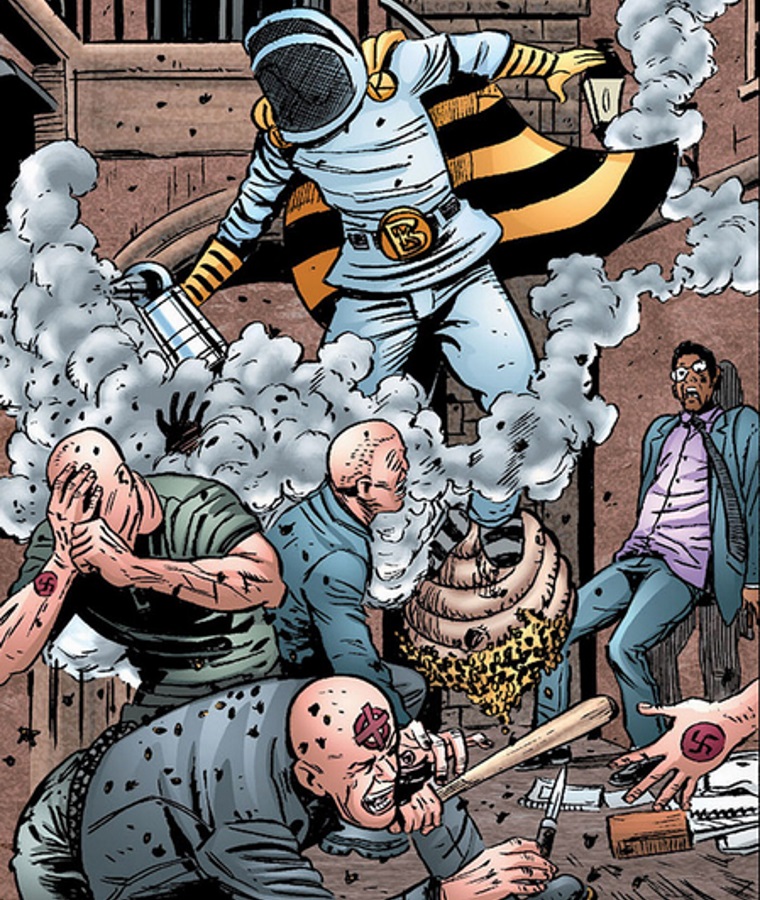
Dial H was an iteration of DC Comics’ Dial H for Hero franchise. The basic concept is that the protagonist(s) have a dial that, when activated, turns them into a superhero. This Beekeeper was one such transformation, so the panel above is actually someone else using the identity of this hero. But Dial H, at least, used the notion that the heroic identities made by the dial were actually the heroes of other universes, so somewhere out there this Beekeeper is probably fighting all types of crime.

That single panel is, as far as I know, the only appearance of this Beekeeper (I’m assuming they’re named “the Beekeeper” because of the B and K on the costume). Still, that single panel tells us an awful lot. This Beekeeper can sic bees on their enemies, which is a great, if standard, beekeeper ability. This Beekeeper also make good use of their smoker, also fairly standard, but depicted less frequently. But then: This Beekeeper Rides A Flying Hive! That’s new. It appears that the hive is actually carried by the swarm, and it must be assumed that the Beekeeper uses this hive as their primary mode of transportation, like the Green Goblin’s glider. It’s a pretty great visual. And on top of it all, sweet cape.

We don’t, sadly, know anything of this Beekeeper’s personality. The Dial would not have summoned this identity if they weren’t a good guy, but beyond that we know nothing. Did they swear revenge on crime after their Beekeeper parents were killed by mobsters? Was this Beekeeper chosen by bees to do good in the world because they were such a noble soul? Was radioactive bee-stinging involved? We don’t know. As such, it’s really hard to rate this Beekeeper with any real authority. But if anyone can do it, I can:

Three Honeycombs out of Five. Cool powers, cool visual. We don’t know enough to go higher, but also we don’t know enough to go lower.

Beekeeper Review: Jabez Mather

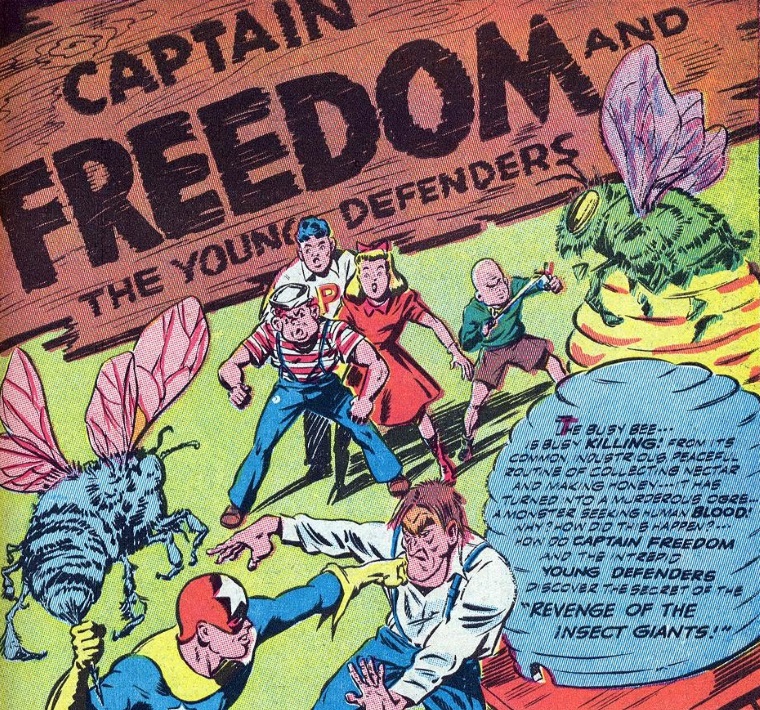
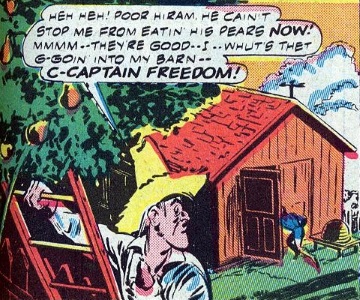
Beekeepers aren’t always on the side of good. During the Golden Age of Comics there were plenty of superheroes, which, of course, means there were even more super villains. Captain Freedom may never have made it to the big leagues of superheroes, but he had a run in Speed Comics that lasted for a few years. Probably fought a lot of supervillains in that time. In one issue, issue #35, the villain was a beekeeper.

So it seems that Captain Freedom’s deal is that he is your standard low-powered patriotic hero who hangs out with a tough kid gang (Those were popular in those days. The Newsboy Legion and the Young Allies are some of the more prominent examples.) Captain Freedom’s friends, the Young Defenders, stumble upon an argument between beekeeper Jabez Mather and his neighbor Hiram Bymore. It seems that these two have been at odds for years, and their families have been feuding for generations. This isn’t gonna end well for Hiram, because Jabez is a particularly science-minded beekeeper.

Indeed, in spite of his apparently country bumpkin nature, Jabez has successfully invented an “insect growin’ process” that makes his bees gigantic. Like the size of flying dogs or something. Also, Jabez is apparently able to control his bees by ordering them around by humming. But the first of the big bees refuses to listen to Jabez and goes out and stings Hiram’s bull to death. Hiram responds by shooting up Jabez’s hives and the beekeeper responds by sending all his huge bees out to feast on human blood! Hiram is killed pretty quickly. Pears are stolen.

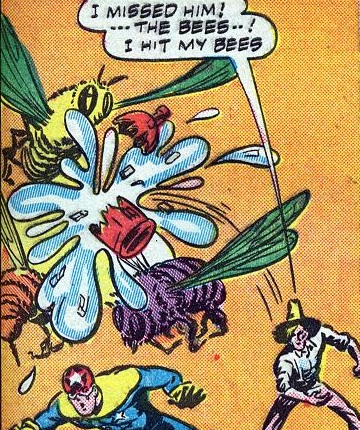
The Young Defenders are the first to investigate, but Jabez incapacitates the whole lot of them by throwing “a smoking smudge pot” at them, which renders them unconscious so that Jabez can tie them up and coat them with nectar so they’ll be eaten alive by bees. As is tradition for superheroes, Captain Freedom shows up to solve the problem with punches. The hero takes out one of the big bees, but all but declares that he’s doomed. He is surrounded by angry giant bees when Jabez foolishly decides to help the bees out by throwing a jar of nitric acid he had lying around.

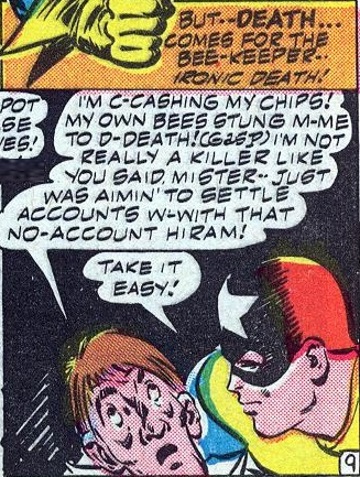
Jabez manages to kill all of his own bees in that one acid toss. That would be an incredibly badass move if he’d done it to almost anyone except his already-winning bees. Jabez doesn’t even think to pass it off as a change of heart, instead he just makes a break for it. It doesn’t take long for Captain Freedom to catch up to him and punch him in the face. Jabez falls into one of his own hives and is fatally stung. As he lay in Captain Freedom’s arms, he laments his folly, then dies.

This is, I assume, Jabez’s only appearance. With so little to go on, I just decided to give you a full description of his story. Now we all know the tragic tale of Jabez Mather. It’s worth noting that Captain Freedom is apparently one of those golden age comic characters that have fallen into the public domain. So if any enterprising genius out there wanted to give us a sequel where he meet the rest of Jabez’s beekeeping family, it would be totally legal.

As far as supernatural beekeeping powers, Jabez provides a good showing: Giant bee creation and supernatural bee control humming are both impressive Beekeeping powers, and his use of smoke to take out the kids is pretty good too (I assume the Young Defenders are probably captured a lot, but still he got them pretty easily). It’s important to note that Jabez does not create his bees with evil intent, he just figures big bees will make a lot of honey. There is a possibility that the bee that killed Hiram’s bull was acting on Jabez’s hatred of Hiram, but that’s never said. As he said in his dying words, Jabez didn’t want to be a killer. It’s just that when Hiram shot up his hive, Jabez gave in to Beekeeper Rage. That was his downfall. So how does he rate?

Two Honeycombs out of Five. Beekeeper Rage squanders the potential of another promising apiarist.