Beekeeper Review: Mr. Andretti

“‘Your average beekeepers usually wear gloves,’ he explained. ‘A lot of the brave ones use gloves with no fingers and thumbs so they can work with the bees more easily.’

Mr. Andretti thumped himself on the chest and went on. ‘But your truly outstanding beekeeper – such as myself – likes to work with his bare hands. My bees trust me.'”

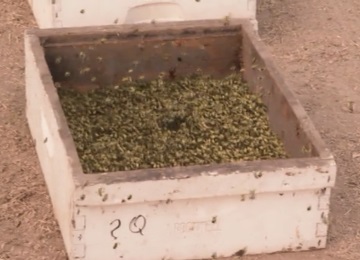
Mr. Andretti is a beekeeper who appears in a Goosebumps novel called “Why I’m Afraid of Bees” and, as the above quote proves, he’s kind of a boastful sort. I fully admit that when I set about reading this book, I was under the impression that the beekeeper was going to be the bad guy, responsible somehow for the main kid getting his brain switched into a bee’s body. Disappointingly, that ain’t the case. The kid gets himself into that mess on his own. Andretti is just an ancillary character, the kid’s neighbor. He’s seems to be a decently successful beekeeper, though he’s kind of a jerk. He seems to know that the main kid is afraid of bees and likes to make him think the bees are out of control just to laugh when he gets scared. He also tends to yell sarcastic remarks at the kid if he catches the kid staring at him. And he’s got a strong tendency to laugh at his own bad jokes. I can only assume that all this jerkish behavior is Andretti’s way of dealing with a relatively mild case of Beekeeper Rage.

I’m taking Andretti at his word that his bees trust him. He also claims to “have complete control of those bees at all times.” He apparently doesn’t mean this in the sense of literally having mental control of the bees (he uses a net to catch straggler bees), but this is as close as Andretti gets to any kinds of powers or badassery. With that in mind, I can only give him:

Two Honeycombs out of Five.

Beekeeper Review: Lucius Farnsworth

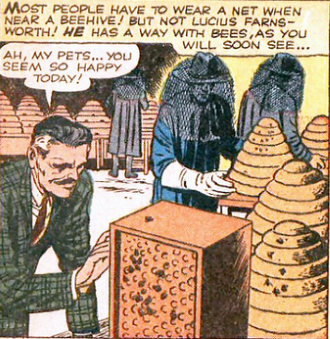
Lucius Farnsworth should have been one of the greats. Appearing in comics by Stan Lee and Jack Kirby in the early sixties, Lucius could have become one of Marvel’s most successful properties. Sure, he was appearing in Weird Sci-Fi stories, instead of more standard superhero fare, but so was Hank Pym and he made it to the Avengers.

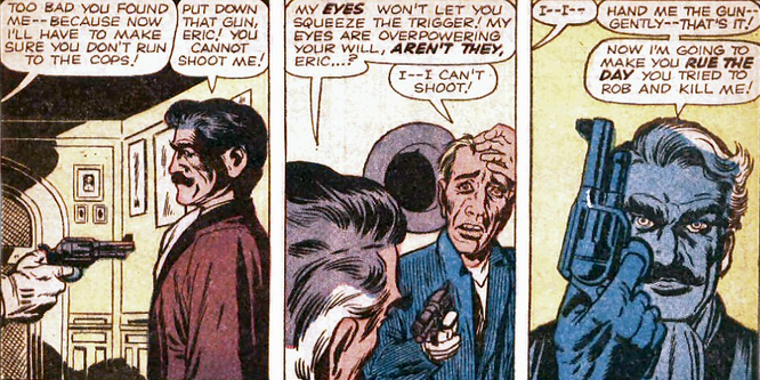
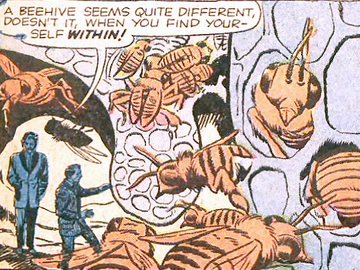
But before I continue my rant about that, I should explain who Lucius Farnsworth is. Lucius was born with the all sorts of fancy mental powers and, naturally, he uses them to be a kickass beekeeper. He’s the “most successful honey producer in the state” and he has a luxurious estate to prove it. From his few appearances, we can see that he can hypnotize people and communicate with bees. He can also shrink himself and others at will. Who knows the limits of his mental powers. But, as far as ultra-powerful millionaires go, Lucius isn’t a bad guy. In one story he wants to help a loyal gardener reach his potential by starting his own business. In the other, one of his hired hands tries to burgle him, and Farnsworth just gives him a bee scare and lets him go when he promises not to rob anyone again.

To sum up: He’s a rich and powerful beekeeper who is a decent guy. But maybe that’s why he wasn’t successful? All of Marvel’s heroes in the Silver Age were really defined by their weaknesses. The Fantastic Four bickered like a real family, and the Thing was trapped in a monstrous form. Spider-Man was a kid, with kid problems and his superhero life did nothing to improve it. The X-Men were discriminated against. Daredevil was a lawyer. That sort of thing. But Lucius here has everything going for him. But does he really?

Lucius is old. His powers give him the most incredible mind, sure, but his body is well past its prime. If we use that as Lucius’s humanizing feature, we can have him trying to solve problems every month while his ungrateful kids try to convince him he needs his rest and that he should let them take over the running of things. His series would have been cancelled pretty quickly, sure, but the Hulk only lasted six issues on their first attempt. Lucius would have been relegated to guest appearances and more offbeat series never quite successful enough to break into the mainstream. He probably would have been shoehorned into ugly costumes in attempts to make him popular, or de-aged to make him cool. But hey, all that’s Dr. Strange’s deal too and he’s got a movie coming. I love Strange, but that could have been Lucius up there on the big screen and we’re all poorer that it isn’t.

But all of this is beside the point, isn’t it? I’m here to review how good Farnsworth is as a beekeeper. Well, he’s pretty good. Very successful, very powerful. Judging from his restrained treatment of a criminal, there’s no sign of Beekeeper Rage. Pretty good indeed.

Three Honeycomb out of Five. With full confidence that he’d be at Four if Marvel just had the guts to give him the exposure he deserves.

I’m just saying, if that SHIELD show I’ve never seen wants to do an episode around this guy, they should gimme a call.

Beekeeper Review: G.O.B. Bluth

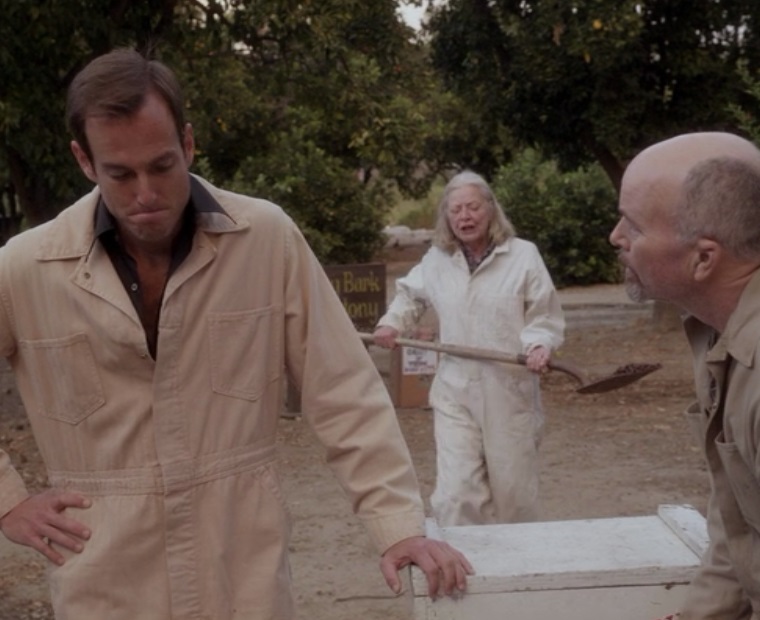
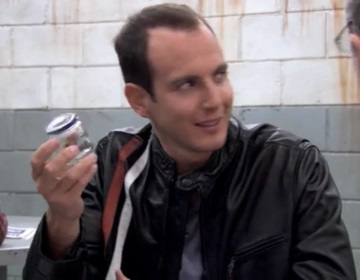
George Oscar Bluth Jr. could have been an ideal example of a beekeeper, but his development was stunted by his less than virtuous personality. Born into a rich family, G.O.B. was overwhelmed by all the pressure to be bright, and wound up as a pretty big jerk. Still, he’s a beekeeper. He must have something going for him, right? Let’s find out:

G.O.B. got on board the bee business mostly to spite his family. Even though his business plan isn’t particularly well thought out (“How do you make money from it?” “You know, honey. Or just as gifts.”), he’s stuck with it a lot longer than many of his schemes. For a time, G.O.B. kept his bees in his apartment, keeping them in line with his magic smoke, which is pretty badass. Unfortunately, this only resulted in a very sick swarm of bees (“My bees are dropping like flies, and I need them to fly like bees.”). He kept them at an expensive bee hospital, but got kicked out of there because his bees were a risk to all the other bees in the place. After that, he kept them in a limousine. This is, perhaps, the best phase of his beekeeping career. Not because he’s at all successful, but because he gets to identify himself as a “gentleman honey farmer” and his swarm attacked an entourage of young celebrity jerks (though G.O.B. didn’t even notice). That’s a plus.

Okay, he’s not good at realistic-style beekeeping, but that’s not what I’m about here. G.O.B., like all the best beekeepers, is more than just a beekeeper. His primary occupation is magician. Magic beekeeper? That’s a good combination. Or it would be, if his magic career wasn’t full of failures even more spectacular than his bee business. Okay, but what about fighting prowess? G.O.B. is pretty prone to getting into physical altercations (usually with his brother). But he’s not particularly good at that either. And Beekeeper Rage? Well, G.O.B. manages to circumvent that one by not being beekeeper enough to attain it. He’s got plenty of regular rage, though.

So what is the final countdown of G.O.B.’s score? It’s not good. I gave the beekeepers from the Simpsons a bonus for just being from a great show, and Arrested Development is certainly a great show, but I can’t do that for G.O.B. His failure is just too strong a part of the character. And I don’t think he ever collected a single bit of honey. It’s almost like they were trying to make him comedically bad at the job. Come on!

One Honeycomb out of Five. GOB Bluth is possibly one of the worst beekeepers in the history of beekeepers, but he’s still pretty great. Maybe when the show comes back, he’ll find some success and get the last laugh. He’ll be the laughingstock of the beekeeping world.

Beekeeper Review: Doc Beebles

By now it is clear that it is too common for beekeepers in the superhero/supervillain world to just be called “The Beekeeper”. Clearly that is an appeal to the pure mythic appeal of beekeepers as a profession, but you’d think they could come up with something more imaginative.

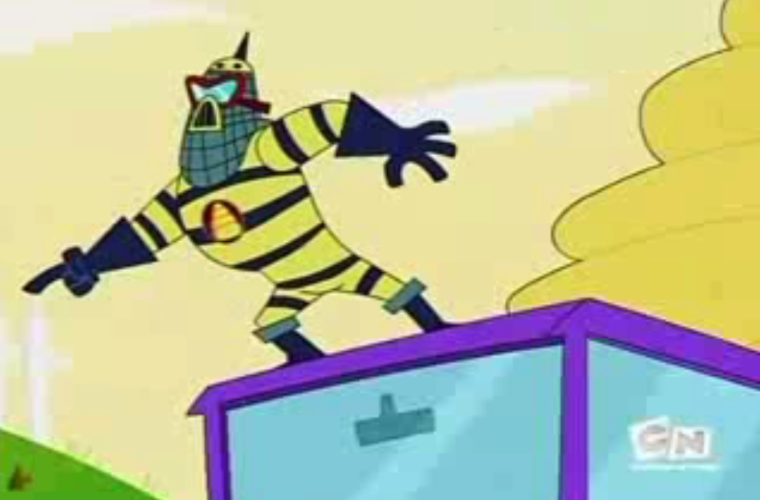
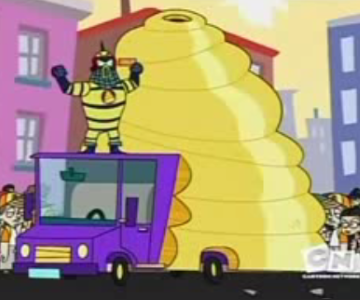
Anyway, today’s beekeeper is called “The Beekeeper”. He appeared on a show called Johnny Test. I didn’t know about the existence of this show until I was researching beekeepers, so I don’t have much to give as far as context is concerned.

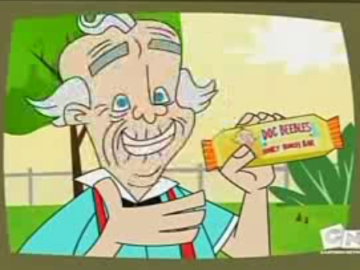
Here’s the deal: Doc Beebles is an old man who runs a company that makes honey bars, a healthy snack. Nobody buys his product because they assume healthy snacks are gross. Beebles becomes the Beekeeper and goes on a citywide crime spree, stealing candy so that people won’t have any choice but to buy his products. His plot is foiled by Johnny Test and friends and, though they admit that the honey bars are actually good, Beebles is arrested. In a later episode the Beekeeper is trying to get his revenge on Johnny, but is mostly unnoticed as Johnny is trying to come up with a new holiday. That one ends with Johnny and the Beekeeper working together, with the Beekeeper as a sort of Santa-figure, using his bees to deliver his honey bars to all the kids in the world. The Beekeeper has, as far as my research can tell, remained reformed since. So he gets a happy ending, at least.

Beebles is at the borderline between awesomely competent beekeeper and not one of those. Sure he has good control over his bees, but he also loses that control very easily to Johnny in a bee costume. He owns his own business and makes a good product, but apparently his product doesn’t sell. He’s got cool gizmos (A beemobile, some sort of balloon floatation system, a “honey blaster” which seems to basically be a laser gun) but he is, of course a victim of Beekeeper Rage, as evidenced by his anti-candy crusade. Still, he’s quite active for an old guy, wants people to eat healthier, and he enjoys making bee-related puns. I admit it’s a close call. It has to be taken into account that, while they’re probably superheroes or something, Beebles, especially in the second of these episodes, was foiled repeatedly and casually by children.

Two Honeycombs out of Five. Maybe if he just had a better name than “The Beekeeper” he could have rolled over to a third comb.

Now, I just want to point out that my Beekeepers Reviews are never intended to be a review of the work in which the beekeeper appears, but I need to point out that I don’t much care for Johnny Test. I actually do think, based on these episodes, that the humour of the show could be in the right place, but it has this supremely annoying tendency to make unnecessary noise. Every second of the show contains a sound effect, or a musical sting, or both. I assume this is (the creators’ idea of) an attempt to appeal to kids with short attention spans, but I hate it. So much.

Beekeeper Review: Beorn

“He is a skin-changer: sometimes he is a huge black bear, sometimes he is a great strong black-haired man with huge arms and a great beard [. . .] He lives in an oak-wood and has a great wooden house; and as a man he keeps cattle and horses which are nearly as marvellous as himself. They work for him and talk to him. He does not eat them; neither does he hunt or eat wild animals. He keeps hives and hives of great fierce bees, and lives most on cream and honey. As a bear he ranges far and wide.”

That is Gandalf the Grey’s description of Beorn, today’s Beekeeper. Beorn is a character in the Hobbit, and there’s no getting around it: this is one awesome beekeeper. With such an open-and-shut case for beekeeper greatness, it’s a good chance for me to look at what I consider when I rate a apiarist.

First, there’s the general quality of their beekeeping skills. Beorn apparently keeps a large area of bee pastures, and his bees “were bigger than hornets. The drones were bigger than your thumb, a good deal, and the bands of yellow on their deep black bodies shone like fiery gold.” Whatever Beorn is doing, it’s working. He’s got healthy bees and plenty of ’em. He also knows how to work with bee-products: he is noted as having “red beeswax candles” and he knows how to make “twice baked cakes that would keep good a long time, and on a little of which [one] could march far” with honey. He’s a good beekeeper.

Second, are they badass? A beekeeper needs to know how to fight. Today’s guy certainly is: “Beorn was a fierce enemy” the text tells us, and it sounds true: he is a “huge man with a thick black beard and hair, and great bare arms and legs with knotted muscles [and] a large ax.” But we can’t go too far into this element of beekeeper reviewing without brushing up against the next, because next…

Next comes the matter of supernatural powers. They don’t have to be actually “supernatural” in nature, they can be technologically based or whatever, but a great beekeeper needs something that sets it apart from mere mortals. For starters, Beorn can turn to a freaking bear. He’s apparently massive in both human and bear form, so he has the advantages of two separate powerful forms. It seems he prefers fighting in bear-form, though. Check out some quotes from the Battle of the Five Armies:

  • “But even with the Eagles they were still outnumbered. In that last hour Beorn himself had appeared – no one knew how or from where. He came alone, and in bear’s shape; and he seemed to have grown almost to giant-size in his wrath.”
  • “The roar of his voice was like drums and guns; and he tossed wolves and goblins from his path like straws and feathers.”
  • “[N]othing could withstand him, and no weapon seemed to bite upon him. He scattered the bodyguard, and pulled down Bolg himself and crushed him.”

Beorn essentially won that battle. But don’t go thinking that being a bear is Beorn’s only skill. He can also talk to animals, all types of animals, and they like him well enough that they help him out around the house. That’s a sweet deal.

The final element to consider is, how do they handle the Beekeeper Rage? It’s a constant problem and Beorn is no exception. Before dropping in for their unannounced visit, Gandalf warns his comrades: “He can be appalling when he is angry, though he is kind enough if humoured. Still I warn you he gets angry easily.” And that’s how it is. He is angry, but if you can get past it, he is a pretty good guy. At first he doesn’t trust the protagonists, since they are strangers to him, but once he checks out their story “Beorn was most jolly for a change; indeed he seemed to be in a splendidly good humour and set them all laughing with his funny stories.” It is Beorn’s good luck that he exists in a fantasy world in which objectively evil people exist, so he can channel his Beekeeper Rage into mostly productive areas like Goblin removal.

So that’s it. I, as an expert, am able to give or take some ratings based on certain intangible qualities, my gut instincts or just a “certain something” that a character may possess, but the above metric is the most reliable way to tell how good a beekeeper is. So where does that leave us with Beorn?

“Beorn indeed became a great chief afterward in those regions and ruled a wide land between the mountains and the wood; and it is said that for many generations the men of his line had the power of taking bear’s shape, and some were grim men and bad, but most were in heart like Beorn, if less in size and strength. In their day the last goblins were hunted from the Misty Mountains and a new peace came over the edge of the Wild.”

Holy smokes.

Five Honeycombs out of Five. He’s top of the line.