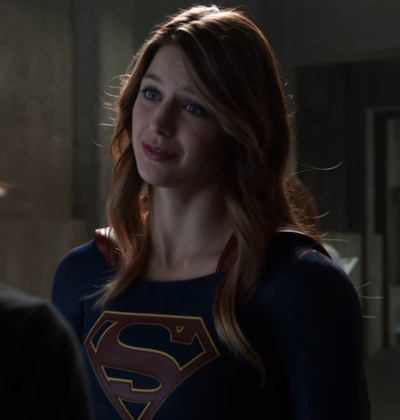
Supergirl Had A Show

It’s several years late, but I have finally managed to finish watching the Supergirl show. Now is as good a time as any to do a post about my thoughts on it.

Now, I have to be honest first of all. I didn’t love the show. It’s definitely a show I would not have watched if it had not been a part of the “Super” franchise, as it were. But that fine. That was also true about Smallville. That was also true about the Superman movies that have come out since I was a child. That is also true about the currently-running Superman live-action show (on which I am similarly years behind). I don’t feel like I was the target audience for this show, so I never felt too insulted by how it wasn’t doing what I wanted, but it did do plenty of things I didn’t like. Some of the things that annoyed me the most:

  • They brought Jimmy Olsen into the show. When this was first announced, I saw people on the Internet complaining that this Jimmy was buff and handsome and confident, not the little dweeb that Jimmy often is. I argued against these people, saying this was a Jimmy who spent a decade working alongside Superman, so it makes sense that he would be transformed by that (they also complained that Jimmy was Black, but I didn’t feel the need to argue with them about that, because their opinion on that was self-evidently dumb). But then the show never really did anything good with Jimmy. It was a real waste of a version of Jimmy Olsen we don’t usually get to see.
  • Speaking of the supporting cast, they almost all get turned into superheroes. This is something I’ve complained about happening in all superhero stuff these days, but it always irks me when the stories suggest that characters only have value if they can get in fights. If that’s how we judge people in superhero stories, I don’t agree.
  • Another thing this show does that most superhero shows do now is to have the hero working with SHIELD. Sure, they don’t call it SHIELD, but it is basically SHIELD. Why is every superhero with a SHIELD now? Stop it, superheroes.
  • The SHIELD on this show is about fighting alien threats, so the show eventually settles into a worldbuilding situation that treats aliens the way Buffy The Vampire Slayer treated demons. They’re just regular people who exist in a little subculture around town. I don’t hate the setup (apart from Kara working with SHIELD, as I say), but most of the times the aliens are just TOO human. This show aspired to have aliens as cool looking as Star Trek. Usually, it treats aliens as if they are just humans with super powers, and those powers can just be turned off, as if human is actually the default state and those powers aren’t biological necessities to the aliens, they’re just extra stuff that isn’t actually needed.
  • Characters from non-Super-related DC stuff was ubiquitous. Martian Manhunter is there from the beginning and, honestly, he works well enough that I could almost forgive it if there weren’t all the crossovers with other ongoing shows I wouldn’t watch without being paid. And there’s even a big continuity-rewriting crossover in the middle of the run, and if the show can’t maintain its continuity for six seasons, why should I be invested in anything that happens? But it was done more as a gimmick reference to DC comics than anything.

This show was for people who look at the way the superhero genre is today and thing “Yes, I like this.” And that sure isn’t PDR.

But there were things to like about the show and it may be better for me to focus on them a bit. First and foremost: Melissa Benoist in the title role. She’s pretty much perfect in the role. Personally, I would list the show’s depiction of Supergirl as a weak spot above, they too often just try to plug her into Superman/Clark Kent roles without letting her be her own thing, but Benoist does such a good job with it, I simply can’t consider her to be even slightly a weak spot here.

The show also does spend time on the kind of social justice and political stories I actually want in my superhero stories. They do it both in allegory, in which bigotry against aliens is used to show the evils of racism, but also they deal with issues like actual racism and feminism and stuff too. A lot of times the actual results can be clumsy, but at least they’re trying. With the state of things, I’ll take what I can get.

There were other things I liked about the show, but I feel like every one I bring up will come with some downside and I don’t want to bury the show in negativity. It was fine, probably great for the intended audience, and mostly I’m glad the show happened. I will even give it this compliment: I may go back and watch episode again (but certainly never the whole show).
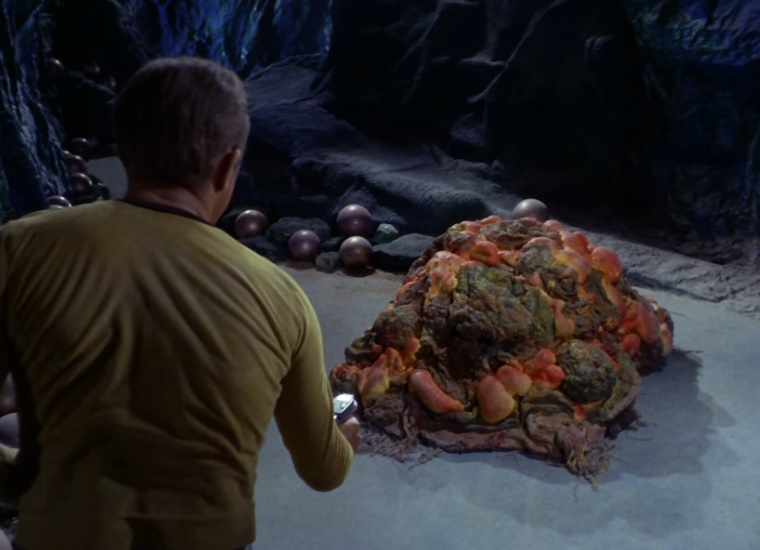
Trek Aliens Could Be Better

Any person who knows me and has ever had to endure my thoughts about Star Trek knows one thing for certain: PDR wishes the aliens in Star Trek were better. I am, in general, a fan of science fiction that presents us with aliens that are weird and imaginative. Classic sci-fi novels have given me a taste of alien minds and I just crave more forever. I feel like if we can expand our minds to encompass the weirdest and most unearthly viewpoints, then understanding our fellow humans gets a little easier. That’s one of the coolest things about sci-fi, I think. Star Trek is the most prominent ongoing source of cool sci-fi ideas that I ingest, so I want the best aliens to be in that franchise. They’re not though.

Star Wars, for example, had aliens that really impressed me as a child. Growing up I very much enjoyed a documentary called Star Wars Classic Creatures: Return Of The Jedi. I’d go do far as to say it was my favourite Star Wars movie. A lot of it is about the design of the aliens in Star Wars and how they brought them to life with puppets and stuff. When I came to be a Star Trek fan around aged ten, one of the first things I did was sketch little alien puppets that I would put on the show if I could. Even then I recognized the “rubber forehead aliens” the franchise was famous for as a weak spot.

But why do they look like humans? Well, the budget is one of the first and foremost reasons. It’s hard to make the actors look like aliens without paying for it. And also, they want those actors to be able to emote and stuff to get things across to the audience. Of course, they’ve given an in-universe explanation for why the aliens in Star Trek are basically just humans, and believe me I’ll get to that garbage in a future Star Trek thoughts post.

As for the desire to make it easy for audiences to connect to the characters? Well, I call that laziness at this point. We’ve got Vulcans and Klingons and Bajorans and literally a hundred other aliens that already can do that. Use one of those if you need to. Any time they create a new race of aliens that looks like humans they are simply being too lazy to work that little bit harder and make the connection to the audience through better writing or acting skill. I’d go so far as to say that if you put that effort in to reach the audience, the connection would actually be stronger.

It’s hard to argue with the budgetary concerns. Star Trek is a show being made to profit some jerks and if those jerks don’t get their profit they stop making Star Trek, with or without cool aliens. But make-up technology has surely gotten cheaper over the years. CGI as well. And puppets are an almost untapped potential for aliens in Star Trek. Also, at this point either one or two ongoing Star Trek shows are animated (the fate of Prodigy is up in the air as I schedule this post). The shows have done a little bit of cool alien design, but they both feel like they are sometimes limiting themselves to humanoid aliens because that feels more like “Star Trek”. I consider Lower Decks especially guilty of this. This animated show has given us aliens that looks just like humans but are orange or have bumps on their head or whatever. Look at the aliens on Rick and Morty, a show that I believe shares some creative DNA with Lower Decks, and those aliens are ALIEN. Lower Decks could do that. But, apart from the occasional exception, they don’t.

The quality of Star Trek’s aliens has definitely improved since I was a child, I don’t deny it. But it also feels like a failure every time they take the lazy way out. And I will complain about it until that changes. I’ve kind of rambled this time, but I can promise now, more of my Star Trek thoughts will be about this, though more focused.

Space: Above And Beyond – Who Monitors the Birds?

I don’t think it’s too early for me to say that I am enjoying this show less than I did Earth 2, but I’m not yet ready to claim this is a bad show, and certainly they’re able to try some interesting things. Large swathes of this episode are without dialogue and, even if there is some clearly-mandated-by-higher-ups clumsy narration at the beginning, I found this to be a bold choice for television of the era.

One of our top two favourite handsome In-Vitro cast members, Cooper Hawkes, gets to star in this one. He’s recruited for a secret mission that goes badly and he winds up stranded on a Chig-occupied planet waiting for extraction that he may or may not be able to get to. Hawkes spends a lot of this episode killing Chigs and being haunted by a corpsey sexylady (who, being bad at faces, I didn’t realize was played by the same actor as Vansen until after, and I don’t know what is relevant about that to the scenario). This is interspersed with flashbacks to Hawkes’s birth and training in the In-Vitro training facility (we see text on screen and In Vitro is apparently not hyphenated, but I ain’t changing now). We see that Hawkes first began to question the propagandistic programming they were being fed when he saw a bird (appropriate given his name) and he was considered “defective” and had to escape. All good stuff.

In the present, while stranded on the planet fighting the Chigs, he is about to kill a Chig when he notices it looking up at that planet’s equivalent of a bird (and I was very happy to see this example of alien life, I assure you). With this, Hawkes (and the viewer) finally comes to think of Chigs as persons with maybe different personalities and points of view and whatnot. Maybe it’s just that they all look exactly the same because of their armour, but I suspect that they probably have a lot of similarities to In-Vitros, who are trained from day one to be soldiers. Later Hawkes has a moment of bonding with a Chig (probably the same one who watched the bird, but how would I know). And later still, he has to fight some more and realizes that one of the ones he killed was the same one he had the moment with. It’s a shame. It’s a tragedy. It’s war.

Space: Above And Beyond – The River Of Stars

Well, I sure wasn’t expecting this: it’s a Christmas episode. And it’s a religiousy one too.

Instead of their usual space planes (which actually don’t see that much use now that I think about it), this time with Wild Cards are in a mid-size ship where they can all be together doing different jobs (there’s a communications position, and pilots, and turrets, and cetera). They get in a fight with the Chigs and get blown off course or whatever and are left pretty much dead in the water.

Back on the Saratoga, they are assumed dead but McQueen doesn’t believe it. He’s able to convince Ross to let him use resources to look for the main cast. They figure out that the Wild Cards can hear their radio calls, but not respond, which keeps the search going, but the Saratoga is searching the wrong part of space. That means that the team gets to all react to being stranded, drifting toward enemy lines, and it’s Christmas above it all.

Amusingly, we learn that Hawkes left the In-Vitro training before learning what Christmas is or who Jesus was. There’s a tinge of “teach someone the true meaning of Christmas” to his plot, but I wish there’d been more. I wish the show had gone on to be fully about teaching him Christianity. I would have laughed. McQueen’s plot is about not losing faith that the team is out there. Mildly religious stuff. But then there’s Wang’s plot. He’s the type who will cross himself when he thinks he’s going to die, so he was probably religious growing up, but now, after all he’s had to see and do during the war, he’s a non-believer. Thus, it is through him that the miracle that saves the day comes to pass. While Wang is on communicator duty, he picks up a strange code that he translates and uses to find the location of a nearby comet. This “some scientific language” goes on to explain how the ship could adjust its momentum to fall into orbit around the comet, which will carry them back to the Saratoga. And because Wang has faith in the message, he does a spacewalk to adjust the thrusters and does the dang thing. And then they have a Christmas party.

So the theme of the episode is mostly vague “faith” stuff, but Jesus and Christmas are specifically mentioned, something you don’t get in Star Trek. We don’t get explanations for where the strange code came from (though the comet used is clearly analogous to the star the Magi followed), or why a group of passing Chigs didn’t shoot the ship. These are just miracles. If we learn that the Chigs celebrate Christmas too, I will be highly entertained.

Some other stray notes: 1) There are definitely extras among the Wild Cards for the last couple episodes, but I have no idea if they’re the same ones who were introduced in that one episode. I ain’t gonna check. 2) At one point in this episode the team picks up a transmission from Earth, assumed to have been beamed out into space long ago. It’s the Adam West Batman theme song. I approve. 3) There’s also a point in here where it seems like the team can hear Chig fighters flying by not only through their ship walls, but through space. Generally with sci-fi shows I assume that the sound in space is just for the benefit of the audience, but the team hears the ships flying by and react to them and everything. Sound definitely travels through space in this, I guess. 4) Commodore Ross plays guitar for the missing team, which was cool.