
Space: Above And Beyond – Level of Necessity

We’ve had aliens and androids and genetically engineered people and space battles with lots of sound, but this episode reveals that another common sci-fi concept also exists in this universe: psychic powers. It seems like they exist, but only just barely. Most people don’t really believe in them. But it turns out that Damphousse has psychic powers, so they are clearly real.

The Wild Cards are on a mission on some planet full of underground caverns when Damphousse has a premonition that if they go down a tunnel they’ll die. She disobeys orders to save her team, and the others who went down the tunnel all get killed. She doesn’t know what caused this vision, but the reports reach the military’s Psi-Ops division and a guy named Burke (played by Richard Kind) comes to investigate Damphousse’s “Anomalous Intuition” as they call it. He does various tests (pretty much the same ones you’d see a show set in the modern day do when testing a psychic) but is unable to prove anything. With that in mind, he accompanies the team on their next mission, even though he’s a real Richard Kind type. On that mission Damphousse does indeed have a vision that one of them will die, and it causes a bunch of tension. She also realizes that Burke’s real motivation is that he wants to prove psychic powers exist, more for his own curiosity than anything. In the end, surprising no PDRs in the audience, Burke is the one who is killed, but he gets to have a moment with Damphousse as he dies. Oh, and then at the end, Damphousse prays to God. It feels like there’s still a chance for this show to go all Christian on me. Fingers crossed.

This show hasn’t had the number of recognizable (to me) actors that Earth 2 did, certainly nothing on Tim Curry’s level, but Richard Kind is a pretty prominent one. This is the guy who wrote the Mentaculus after all!

The caves and tunnels we get in this week’s mission are neat, they continue to impress me with how they manage to keep the combat fresh. It would be easy for it to feel like the same thing every time. That said, I find myself missing the space planes that I had assumed from my childhood memory were the main focus of the show. I assume it’s a budget thing, but also the ground combat makes it easier for our characters to interact.
Supergirl Had A Show

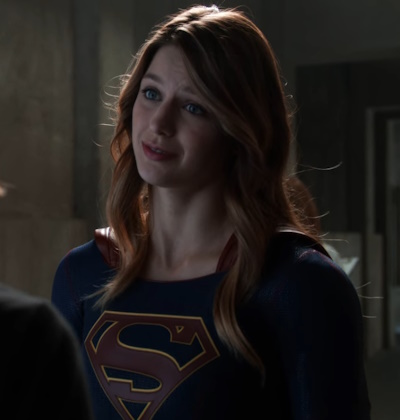
It’s several years late, but I have finally managed to finish watching the Supergirl show. Now is as good a time as any to do a post about my thoughts on it.

Now, I have to be honest first of all. I didn’t love the show. It’s definitely a show I would not have watched if it had not been a part of the “Super” franchise, as it were. But that fine. That was also true about Smallville. That was also true about the Superman movies that have come out since I was a child. That is also true about the currently-running Superman live-action show (on which I am similarly years behind). I don’t feel like I was the target audience for this show, so I never felt too insulted by how it wasn’t doing what I wanted, but it did do plenty of things I didn’t like. Some of the things that annoyed me the most:

  • They brought Jimmy Olsen into the show. When this was first announced, I saw people on the Internet complaining that this Jimmy was buff and handsome and confident, not the little dweeb that Jimmy often is. I argued against these people, saying this was a Jimmy who spent a decade working alongside Superman, so it makes sense that he would be transformed by that (they also complained that Jimmy was Black, but I didn’t feel the need to argue with them about that, because their opinion on that was self-evidently dumb). But then the show never really did anything good with Jimmy. It was a real waste of a version of Jimmy Olsen we don’t usually get to see.
  • Speaking of the supporting cast, they almost all get turned into superheroes. This is something I’ve complained about happening in all superhero stuff these days, but it always irks me when the stories suggest that characters only have value if they can get in fights. If that’s how we judge people in superhero stories, I don’t agree.
  • Another thing this show does that most superhero shows do now is to have the hero working with SHIELD. Sure, they don’t call it SHIELD, but it is basically SHIELD. Why is every superhero with a SHIELD now? Stop it, superheroes.
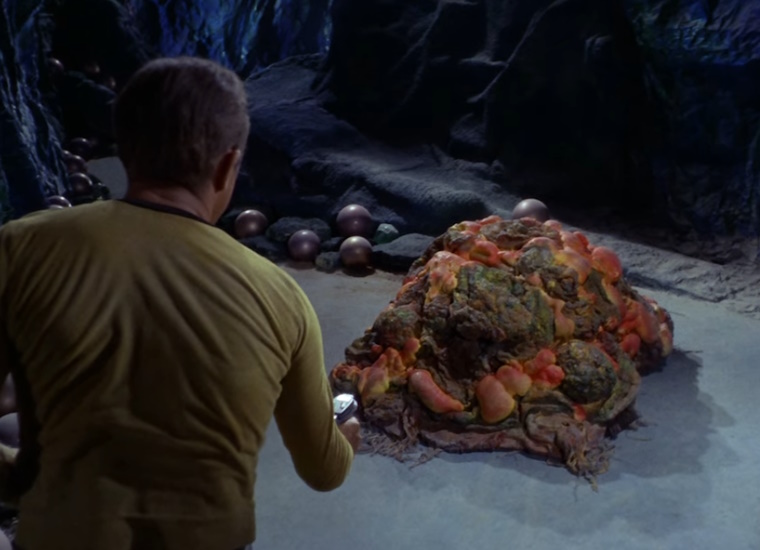
  • The SHIELD on this show is about fighting alien threats, so the show eventually settles into a worldbuilding situation that treats aliens the way Buffy The Vampire Slayer treated demons. They’re just regular people who exist in a little subculture around town. I don’t hate the setup (apart from Kara working with SHIELD, as I say), but most of the times the aliens are just TOO human. This show aspired to have aliens as cool looking as Star Trek. Usually, it treats aliens as if they are just humans with super powers, and those powers can just be turned off, as if human is actually the default state and those powers aren’t biological necessities to the aliens, they’re just extra stuff that isn’t actually needed.
  • Characters from non-Super-related DC stuff was ubiquitous. Martian Manhunter is there from the beginning and, honestly, he works well enough that I could almost forgive it if there weren’t all the crossovers with other ongoing shows I wouldn’t watch without being paid. And there’s even a big continuity-rewriting crossover in the middle of the run, and if the show can’t maintain its continuity for six seasons, why should I be invested in anything that happens? But it was done more as a gimmick reference to DC comics than anything.

This show was for people who look at the way the superhero genre is today and thing “Yes, I like this.” And that sure isn’t PDR.

But there were things to like about the show and it may be better for me to focus on them a bit. First and foremost: Melissa Benoist in the title role. She’s pretty much perfect in the role. Personally, I would list the show’s depiction of Supergirl as a weak spot above, they too often just try to plug her into Superman/Clark Kent roles without letting her be her own thing, but Benoist does such a good job with it, I simply can’t consider her to be even slightly a weak spot here.

The show also does spend time on the kind of social justice and political stories I actually want in my superhero stories. They do it both in allegory, in which bigotry against aliens is used to show the evils of racism, but also they deal with issues like actual racism and feminism and stuff too. A lot of times the actual results can be clumsy, but at least they’re trying. With the state of things, I’ll take what I can get.

There were other things I liked about the show, but I feel like every one I bring up will come with some downside and I don’t want to bury the show in negativity. It was fine, probably great for the intended audience, and mostly I’m glad the show happened. I will even give it this compliment: I may go back and watch episode again (but certainly never the whole show).

Trek Aliens Could Be Better

Any person who knows me and has ever had to endure my thoughts about Star Trek knows one thing for certain: PDR wishes the aliens in Star Trek were better. I am, in general, a fan of science fiction that presents us with aliens that are weird and imaginative. Classic sci-fi novels have given me a taste of alien minds and I just crave more forever. I feel like if we can expand our minds to encompass the weirdest and most unearthly viewpoints, then understanding our fellow humans gets a little easier. That’s one of the coolest things about sci-fi, I think. Star Trek is the most prominent ongoing source of cool sci-fi ideas that I ingest, so I want the best aliens to be in that franchise. They’re not though.

Star Wars, for example, had aliens that really impressed me as a child. Growing up I very much enjoyed a documentary called Star Wars Classic Creatures: Return Of The Jedi. I’d go do far as to say it was my favourite Star Wars movie. A lot of it is about the design of the aliens in Star Wars and how they brought them to life with puppets and stuff. When I came to be a Star Trek fan around aged ten, one of the first things I did was sketch little alien puppets that I would put on the show if I could. Even then I recognized the “rubber forehead aliens” the franchise was famous for as a weak spot.

But why do they look like humans? Well, the budget is one of the first and foremost reasons. It’s hard to make the actors look like aliens without paying for it. And also, they want those actors to be able to emote and stuff to get things across to the audience. Of course, they’ve given an in-universe explanation for why the aliens in Star Trek are basically just humans, and believe me I’ll get to that garbage in a future Star Trek thoughts post.

As for the desire to make it easy for audiences to connect to the characters? Well, I call that laziness at this point. We’ve got Vulcans and Klingons and Bajorans and literally a hundred other aliens that already can do that. Use one of those if you need to. Any time they create a new race of aliens that looks like humans they are simply being too lazy to work that little bit harder and make the connection to the audience through better writing or acting skill. I’d go so far as to say that if you put that effort in to reach the audience, the connection would actually be stronger.

It’s hard to argue with the budgetary concerns. Star Trek is a show being made to profit some jerks and if those jerks don’t get their profit they stop making Star Trek, with or without cool aliens. But make-up technology has surely gotten cheaper over the years. CGI as well. And puppets are an almost untapped potential for aliens in Star Trek. Also, at this point either one or two ongoing Star Trek shows are animated (the fate of Prodigy is up in the air as I schedule this post). The shows have done a little bit of cool alien design, but they both feel like they are sometimes limiting themselves to humanoid aliens because that feels more like “Star Trek”. I consider Lower Decks especially guilty of this. This animated show has given us aliens that looks just like humans but are orange or have bumps on their head or whatever. Look at the aliens on Rick and Morty, a show that I believe shares some creative DNA with Lower Decks, and those aliens are ALIEN. Lower Decks could do that. But, apart from the occasional exception, they don’t.

The quality of Star Trek’s aliens has definitely improved since I was a child, I don’t deny it. But it also feels like a failure every time they take the lazy way out. And I will complain about it until that changes. I’ve kind of rambled this time, but I can promise now, more of my Star Trek thoughts will be about this, though more focused.

Space: Above And Beyond – Who Monitors the Birds?

I don’t think it’s too early for me to say that I am enjoying this show less than I did Earth 2, but I’m not yet ready to claim this is a bad show, and certainly they’re able to try some interesting things. Large swathes of this episode are without dialogue and, even if there is some clearly-mandated-by-higher-ups clumsy narration at the beginning, I found this to be a bold choice for television of the era.

One of our top two favourite handsome In-Vitro cast members, Cooper Hawkes, gets to star in this one. He’s recruited for a secret mission that goes badly and he winds up stranded on a Chig-occupied planet waiting for extraction that he may or may not be able to get to. Hawkes spends a lot of this episode killing Chigs and being haunted by a corpsey sexylady (who, being bad at faces, I didn’t realize was played by the same actor as Vansen until after, and I don’t know what is relevant about that to the scenario). This is interspersed with flashbacks to Hawkes’s birth and training in the In-Vitro training facility (we see text on screen and In Vitro is apparently not hyphenated, but I ain’t changing now). We see that Hawkes first began to question the propagandistic programming they were being fed when he saw a bird (appropriate given his name) and he was considered “defective” and had to escape. All good stuff.

In the present, while stranded on the planet fighting the Chigs, he is about to kill a Chig when he notices it looking up at that planet’s equivalent of a bird (and I was very happy to see this example of alien life, I assure you). With this, Hawkes (and the viewer) finally comes to think of Chigs as persons with maybe different personalities and points of view and whatnot. Maybe it’s just that they all look exactly the same because of their armour, but I suspect that they probably have a lot of similarities to In-Vitros, who are trained from day one to be soldiers. Later Hawkes has a moment of bonding with a Chig (probably the same one who watched the bird, but how would I know). And later still, he has to fight some more and realizes that one of the ones he killed was the same one he had the moment with. It’s a shame. It’s a tragedy. It’s war.