Wasuperman
Wasuperman
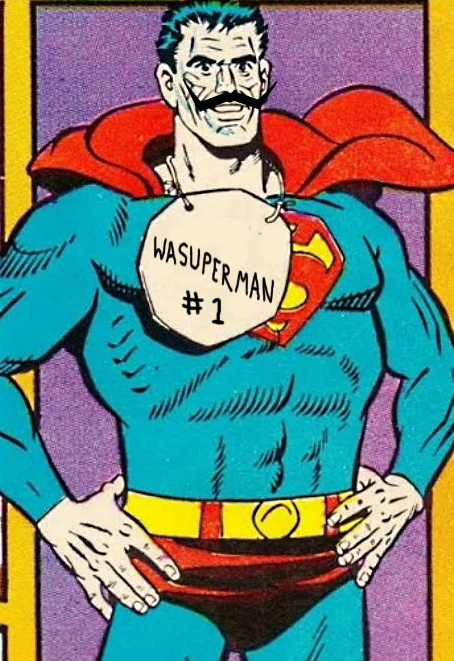
(Originally posted to Twitter Oct 11, 2020)

Wasuperman
(Originally posted to Twitter Oct 11, 2020)
I’ve said a lot of things about a lot of Superman villains on this little site of mine, but I don’t think I’ve said much about his most iconic villain: Lex Luthor. I think the concept of Lex Luthor as a nemesis has reached the world at large. I’m sure I could think of some little ways to improve on Luthor’s usage as a Superman foe, but honestly, once they expanded his mad scientist role to include all the evil capitalists that Clark fought in his early days, they got what I needed from him. Maybe I’m less concerned with him being the “smartest human on Earth” (I think such superlatives are a poison to the superhero genre) and I know I like him to be a little bit goofier than many readers, but in general I think we’re getting good Luthor most of the time.
But one thing that I’ve found controversial even among Superman fans is whether or not Clark Kent and Lex Luthor should be friends who tragically became enemies? I always preferred when they weren’t.
It’s one of my least favourite things when creators think superheroes have to have personal connections to their enemies for the sake of drama. And Superman especially! Superman shouldn’t need personal connections to a problem to want to solve that problem. And anyway, Superman has too many enemies with personal connections anyway! Brainiac is a space-faring baddie who once captured a city right off of Superman’s homeworld! This time it’s personal! General Zod (and most of the Phantom Zone criminals as well) is actually from Superman’s homeworld and maybe even knew Superman’s father! This time it’s personal! It’s a crutch and I don’t care for it.
It also bugs me that Superman just happens to grow up with the kid who goes on to be one of the richest and smartest businessmen in the world? It strains credibility and makes Clark less of the everyman they wanted him to be when they made him a smalltown boy.
But it’s surprisingly popular considering how rarely it’s actually been the status quo. It came about during the Silver Age, and I am acutely aware that Silver Age concepts seem to grow back any time they are removed. A lot of the time I’m in favour of the Silver Age concepts coming back. It was also the case in the live action Superboy television show, but compared to the various movies and show’s where it hasn’t been the case, that show can’t compare. The comics did away with it in the 80s reboot, but it has swung in and out with different revisions of continuity. Of course, the biggest reason for the popularity of this setup today is the show Smallville, which was about young Clark and Lex. That show did run for a decade, so it’s got a generation of Superman fans who like the friends setup.
And I don’t know. I don’t like it, but at this point I’m kind of just accepting it. I don’t know if either of the currently-running Superman shows have Clark and Lex as former friends or not, but if they do, I’ll just accept it.
Here’s what I think we need to do to make it acceptable for Lex and Clark to have been friends: We need Superman to have other nemeses who are as important as Lex but are not This Time It’s Personals. If I accept Brainiac and Zod as being slightly personal, let’s get at least three more who have no personal connection to Clark or Superman before they met as foes. As I’ve said, the Terra-Man is a good criminal inversion of some Superman tropes, so let’s put him on the list. But also, let’s finally give the Ultra-Humanite a chance to shine. I’m sure I’ll do a post about them sometime, but yeah, they were Superman’s big foe before Luthor came alone, so let’s get that back.
Or, of course, there’s always Tal-Var.
In a sprawling urban city, a talented hacker tries to steal from a MegaCorp, but gets caught. The company owner sways the hacker to his side with promises of wealth. Together they hijack and weaponize a satellite and, with the hacker posing as a member of the military-industrial complex, they even try to use a narcotic-based poison to bring down a crusading hero who stands in their way. During their plan to build a giant supercomputer, one of the corpos is turned into a killer cyborg. The hacker ends up leaving the MegaCorp and helping the hero.
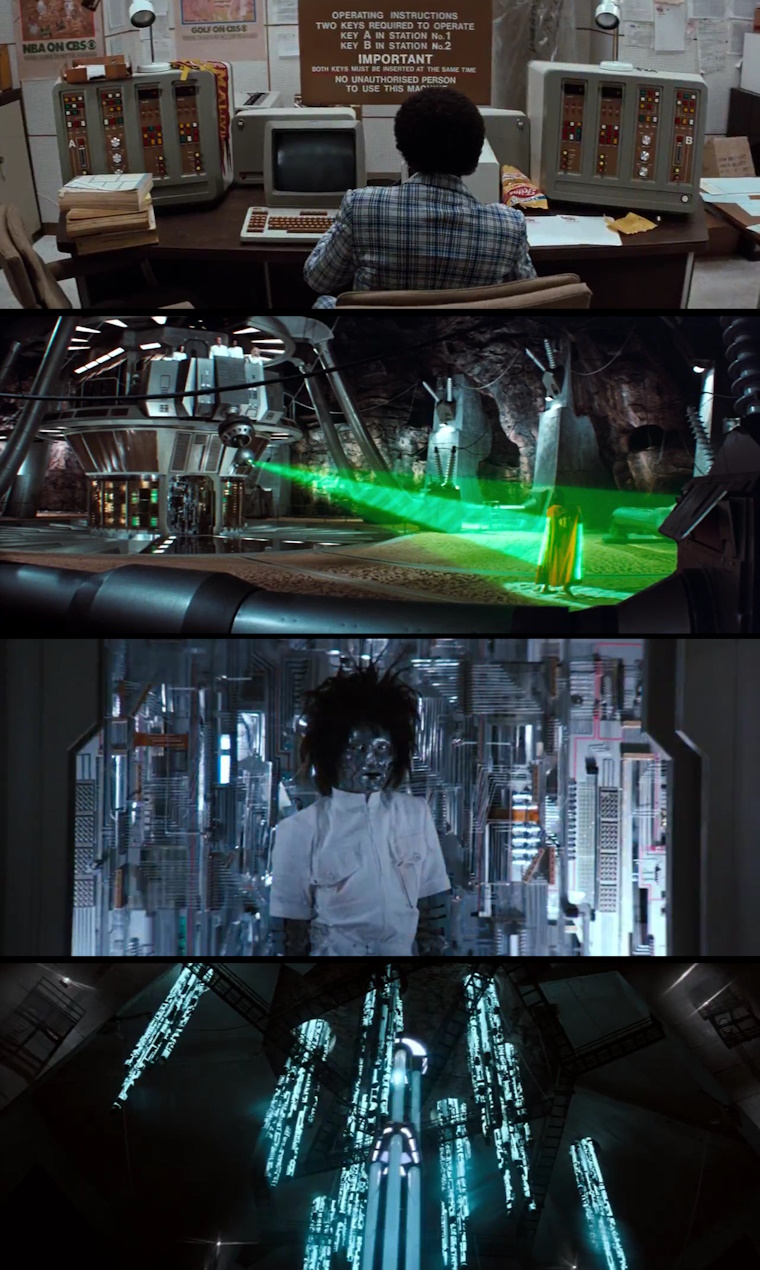
Okay, Superman III isn’t actually cyberpunk enough to be called cyberpunk, really. But I’ve amused myself by referring to it as such before and I’ll probably do it again.
What I will say is that the hacker character in the movie, Gus Gorman, should come back. I say we keep him as close as possible to the character as seen in the movie. He’s talented with computers but has trouble making his way in a corporate world, so he does thing underhanded now and then. He probably came afoul of Superman at some point, but Superman can tell that prison isn’t a solution, so he and Gus become allies. Sometimes Gus’ll get in over his head and maybe some criminal types will want to harm Gus, so Superman can save the day. There are definitely times when Superman (or Lois or Jimmy or anyone) might need the aid of a hacker, so he can be brought in for that stuff. I’d be wary of making him a clean-cut good guy, but in a world where Superman is a champion of the oppressed, Gus would be on that list.
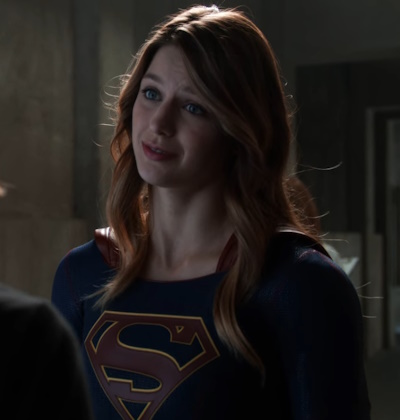
It’s several years late, but I have finally managed to finish watching the Supergirl show. Now is as good a time as any to do a post about my thoughts on it.
Now, I have to be honest first of all. I didn’t love the show. It’s definitely a show I would not have watched if it had not been a part of the “Super” franchise, as it were. But that fine. That was also true about Smallville. That was also true about the Superman movies that have come out since I was a child. That is also true about the currently-running Superman live-action show (on which I am similarly years behind). I don’t feel like I was the target audience for this show, so I never felt too insulted by how it wasn’t doing what I wanted, but it did do plenty of things I didn’t like. Some of the things that annoyed me the most:
This show was for people who look at the way the superhero genre is today and thing “Yes, I like this.” And that sure isn’t PDR.
But there were things to like about the show and it may be better for me to focus on them a bit. First and foremost: Melissa Benoist in the title role. She’s pretty much perfect in the role. Personally, I would list the show’s depiction of Supergirl as a weak spot above, they too often just try to plug her into Superman/Clark Kent roles without letting her be her own thing, but Benoist does such a good job with it, I simply can’t consider her to be even slightly a weak spot here.
The show also does spend time on the kind of social justice and political stories I actually want in my superhero stories. They do it both in allegory, in which bigotry against aliens is used to show the evils of racism, but also they deal with issues like actual racism and feminism and stuff too. A lot of times the actual results can be clumsy, but at least they’re trying. With the state of things, I’ll take what I can get.
There were other things I liked about the show, but I feel like every one I bring up will come with some downside and I don’t want to bury the show in negativity. It was fine, probably great for the intended audience, and mostly I’m glad the show happened. I will even give it this compliment: I may go back and watch episode again (but certainly never the whole show).
I have found something incorrect about Superman… ON WIKIPEDIA!
I’ve noticed mistaken information about Superman on Wikipedia and other fan-written websites before but have generally taken it in stride. This time, I feel compelled to do something about it. While doing research for my most recent Superman versus Bigots article I found this claim on the Wikipedia page for Vathlo Island (the part of Krypton that has Black people):

This is false, but I admit that I don’t know enough about Wikipedia’s rules for editing to just delete the false statement. I know they have rules about “original research” that I don’t actually understand, but I also know that I need some sort of proof of my claim. They have a citation link to an article backing their claim, but even THAT website doesn’t say that the Kryptonian from Vathlo Island is the first Black character. That website says that the Superman comic didn’t have an African American character until the ’70s, then goes on to talk about the Black Kryptonian as a separate entity, which Wikipedia’s editors failed to catch.

So what can a PDR do? Well, maybe I can’t just edit the Vathlo Island article, but I can at least provide the ammunition needed to rectify its mistake. Black people who appeared in Superman’s book prior to issue #234: Here we go:
There we go. That’s all I could find. It’s certainly possible I missed some, but it’s also certainly a higher number than the zero that Wikipedia claimed. For posterity I must also note that I ignored several appearances of Egyptians, who are African but are not depicted as dark-skinned in the comics in the way that the Vathlo Island post is clearly talking about. This includes also ignoring depictions of the Sphinx, whose face I assume is based on some ancient Egyptian who could, for all I know, be dark-skinned. Furthermore, the information I’ve gathered here does not include people appearing in advertisements, or gag strips, or educational material in the issues that is not part of a Superman story. I saw examples in each of African or African American individuals, but they were not what I was there for.
And I also want to make it clear that this data comes only from the comic magazine entitled “Superman” because the wording of the claim only drew specific attention to that book. Superman stories have also appeared in places like “Action Comics“, “World’s Finest Comics“, and “Superboy“, and I’d also count books like “Superman’s Girlfriend Lois Lane” and “Superman’s Pal Jimmy Olsen” as Superman books. Each of these books told hundreds of stories with Superman and I’m sure plenty of those involved “primitive” tribes and witch doctors as well until the 1970s came and they started peppering Black people into backgrounds. I’ll note further that the Superman radio show, the cartoons from the ’40s, and the show starring George Reeves all had African characters from various parts of the offensive representation spectrum (somehow the show managed it best in an episode that included a villain in blackface).
Some further thoughts: Obviously this is not a good amount of representation for Black people in Superman over those decades. There’s not one Black person among those A to R that I would classify as an actual “character”. There are no names, only a handful have lines, and they almost never actually matter to the story in which they appear (something also true of the Kryptonian scientist in Superman #234 whose appearance started all this). But I didn’t go into this hoping I’d find out that the magazine had secretly diverse beyond our previous imaginings. I don’t think superhero comics are as diverse in representation as they need to be even now, let alone before the fight for civil rights. And furthermore: There is not a single face listed above I feel confident in saying is a Black woman. Maybe one of the two in the very last image, but even then I can’t be sure. It’s no wonder it has been so hard for creators to establish a Black Woman of the Daily Planet when it took decades to get a Black woman as a mere extra in there.
So, maybe we can change that one line on Wikipedia now that we have an article to cite, but what would be more important would be to keep expanding representation of not just Black people, but all kinds of people, in our popular culture. It can be done, but to do it we actually have to do it.
