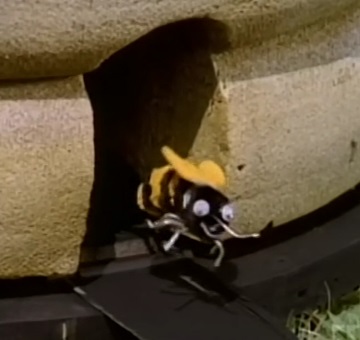
Beekeeper Review: Elizabeth Boyd and Bill Chalmers

“Between two beekeepers there can be no strife. Not even a tepid hostility can mar their perfect communion.
The petty enmities which life raises to be barriers between man and man and between man and woman vanish once it is revealed to them that they are linked by this great bond. Envy, malice, hatred, and all uncharitableness disappear, and they look into each other’s eyes and say ‘My brother!”

Uneasy Money is a novel by P. G. Wodehouse and, like most of his works, it is a farcical comedy. Unlike too many of his (and everyone’s) works, this is a story about beekeepers. The fact that they are beekeepers is not particularly relevant to the plot, so I’d hoped I could go into detail without giving much away, in case anyone wanted to check out Wodehouse (which they ought) and decided to do it through a work not related to his more well-known franchises. But I do kind of need to spoil a bit here. There are two beekeepers in this book and they fall in love. I admit that’s a pretty big spoiler, but I assure you there are jokes and misunderstandings that will get a reader through the story even knowing the ending.

Elizabeth Boyd is an American beekeeper, but she isn’t making much money at it. “She had not prospered greatly. With considerable trouble she contrived to pay her way, and that was all.” On top of running her bee farm in Brookport, Long Island, she also has to take care of her loser brother Nutty. She’s a hard working, nice young woman.

William FitzWilliam Delamere Chalmers is an English lord (albeit one of the poorest of them) who enjoys beekeeping. He worked for a year on a bee farm until his lack of money and the response of his peers. “The general impression seemed to be that I should be foolish to try anything so speculative as beekeeping, so it fell through. Some very decent old boys got me another job.” Luckily, by the end of the book, Bill and Elizabeth are off to be wed and buy a big farm of their own. He’s a particularly nice guy, if a bit dim.

How do they rate as beekeepers? Well, Elizabeth is the only one employed as such during the events of the novel, and she admits her business just barely scrapes by. It isn’t for lack of trying, though. Any success she has at the job comes from natural aptitude, for she “loved bees, but she was not an expert on them” and she has “reached a stage of intimacy with her bees which rendered a veil a superfluous precaution.” Bill may not keep bees during the story, but at the very least he has a year of experience and no fear of the insects. He is capable of the job. And what of fighting? Well, it isn’t the kind of story where they get to do much fighting, but Bill is often described as a physically fit and even imposing figure. It isn’t his nature, but I suspect that if he had to fight, he’d do alright. Also of note: on one occasion, when wanting to inflict some minor pain to Bill, Elizabeth pokes him with a pin, which is on brand as a stinger. Maybe she’d do more with that motif in a fight. Any supernatural powers? Nothing significant, though there is one moment when Elizabeth is trying to hide something from a snooping reporter and one of her bees “stung him at the psychological moment” which could be coincidence, but also could be a bee knowingly doing its keeper’s bidding.

Beekeeper Rage? Well, Elizabeth at one point notes how quickly she goes from being unhappy that her brother may come into some money he will surely misuse, to “boil[ing] with rage” when he doesn’t get it. She knows it is inconsistent, but the rage is still there. But also “it was a trait in her character which she had often lamented, that she could not succeed in keeping angry with anyone for more than a few minutes on end.” So there isn’t too much Rage to be had.

Three Honeycombs out of Five.
Beekeeper Review: Bartholomew the Bee Man

Nick Carter is a detective who has appeared in all sorts of media since his creation in 1886, starting with novels and going into radio shows and movies and so on. He’s not as successful a detective as the big names in the field, your Sherlocks and Marples and Chans, but he’s done well for himself. But is Nick Carter a Beekeeper? No, Nick Carter is not a Beekeeper. So let’s stop talking about Nick Carter.

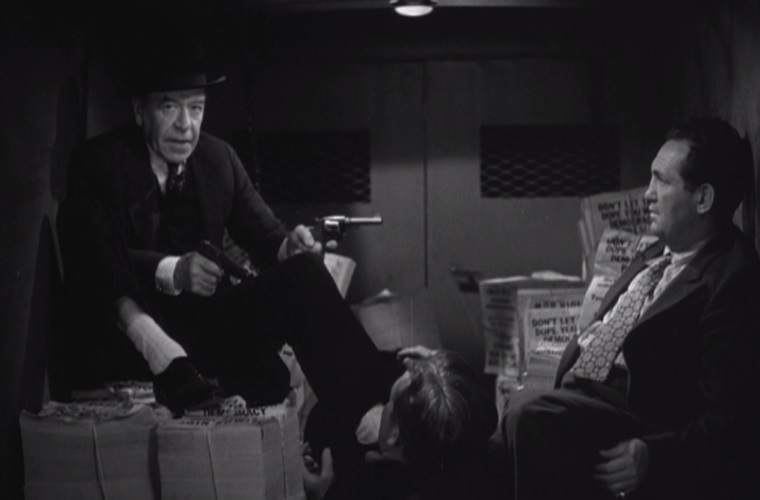
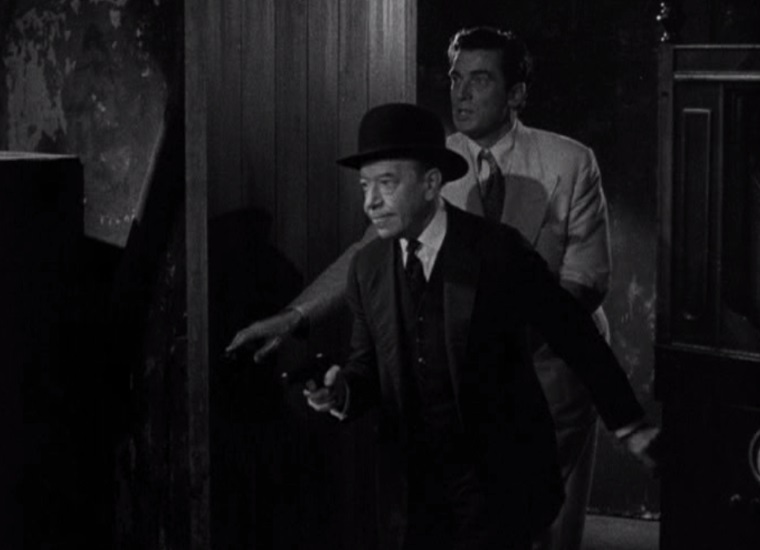
In three movies in the 1940s, Carter had an unlikely sidekick. He was Bartholomew the Bee-Man. As far as I can discern, he has only appeared alongside Nick in these movies, which is a damned shame, but it makes it easier for my purposes, given that watching three movies is much easier than tracking a character through a century of miscellaneous stories in multiple mediums. Portrayed by Donald Meek, Bartholomew is the best thing about these films, even without my bias toward Beekeepers.

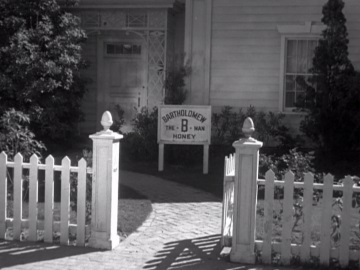
In the first of the trilogy, “Nick Carter, Master Detective”, we meet Batholomew on his bee farm. It just so happens that Nick Carter moves into an inn next door and Bartholomew, being an avid fan of detectives, recognizes him right away. He takes it as fate that Carter wound up there and insists that they become partners. Nick Carter is annoyed with this funny little man, but there is no shaking the beekeeper. Even when Carter seems to successfully ditch him for the movie’s climax, Bartholomew actually just goes to get help from the authorities. In the following movies, “Sky Murder” and “Phantom Raiders”, Nick softens to the guy, nicknaming him “Beeswax” and, though still finding him odd, is more willing to accept his help as he often proves his worth.

So what are his Beekeeping skills like? Well, he’s quick to leave his business to do detective work. When Carter is trying to get rid of him in the first film, he insists that Bartholomew can’t leave his bees. “Could and would, sir. Can and will,” Bartholomew replies. It seems harsh at first. But we must bear in mind a few facts: He has an assistant. His presence on the honey farm is not required at all times. Also, he is shown to still work on the farm between detective cases in the later films. And finally, Bartholomew lists his priorities as “Carter first, and then the bees, but don’t worry, the choicest ones are here.” And indeed Bartholomew does have bees on his person, in his pockets and under his hat, at all times. In no way is his detective side-job an abandonment of his bees. And for the record, his assistant has a traditional beekeeping costume (Bartholomew doesn’t seem to need one) and he is shown using a smoker and spraying pesticides to stop “little bugs” so the ordinary aspects of the job are not beyond him.

But what of the more supernatural abilities and fighting prowess on which I am really rating these Beekeepers? Well, as I said he carries his favorite bees around and they don’t sting him or anything. In fact, he finds all sorts of uses for them. He can flick them at people so they cause pain, he can put them under locked doors if someone is hiding on the other side, or he can even just use them to signal Carter. It’s not quite the same as actually mentally controlling the bees, but it is sort of impressive. As for his fighting prowess, well, for a character who is, let’s face it, comic relief, he acquits himself well. His hand-to-hand technique may be more of the “ducking out of the way so one enemy accidentally punches the other” variety, but it works. And he has no fear of anyone larger than him or of being outnumbered or, really, of anything (His own words: “The Bartholomew courage never falters”). He’s stealthy when he needs to be, but that’s to gain an advantage, not because he is afraid of getting into a scrap.

Furthermore, as I’ve mentioned before, I consider mystery solving just as “badass” as fighting and Bartholomew is all about it. Introducing himself to Nick he says in the third person, “What is it that sets Bartholomew apart from all the rest? Instinct? No. Intuition? Hardly? An extra little kink in the brain perhaps?” Perhaps! Basically, the thing is, Bartholomew loves brain-work. In the latter movies, Bartholomew is more devoted to the cases than Carter is (especially in “Phantom Raiders” where Nick is really just trying to get laid and Bartholomew periodically has to steer him back to doing his job). Simply put: Bartholomew is a detective because he enjoys catching criminals. And I think that’s cool.

Three out of Four. Bartholomew himself said “I’m a Bee Man, a G-Man, and a he-man” and I think he lives up to all three ideals well.

Beekeeper Review: Spidey Super Stories’s Beekeeper

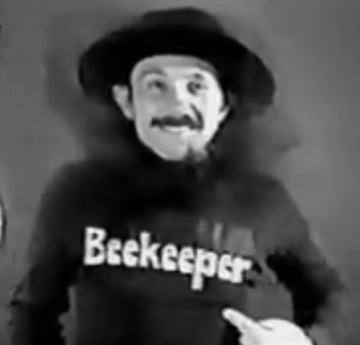
Spidey Super Stories was a segment on a television show called the Electric Company that featured live-action Spider-Man stuff. If you want, you can see the appearance of the Beekeeper on the Youtube. To summarize: there is a villain named the Queen Bee who wants to conquer the world. Spider-Man is opposing her. One of her henchmen is: The Beekeeper. Spider-Man beats the Beekeeper very easily.

He seems like a relatively ordinary guy. Queen Bee and her other henchmen are some kind of half-bee people, and one of the bees in Queen Bee’s hive is named Fang and is said to be “poison” (I assume they mean “venomous”). But the Beekeeper is just a normal human, it seems. And henching? I mean, not to disparage henchmen, but that is definitely a step down from being a regular beekeeper.

Issue #14 of the Spidey Super Stories comic adapts this story, and it isn’t much different. Queen Bee does once refer to him as “the Royal Beekeeper”, but that ain’t what it says on his shirt, so it surely doesn’t count.

One Honeycombs out of Five. Man. I gotta find some more badass beekeepers sometime soon.

Beekeeper Review: Fullan

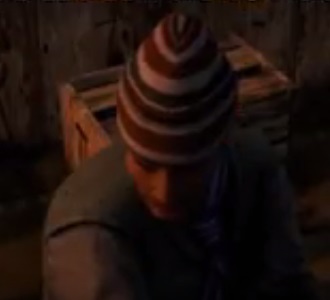
Fullan is a beekeeper who lives in the country of Kyrat, which is the setting of the game Far Cry 4. She was living her peaceful life there until the Royal Army (the game’s bad guys) discovered that there was gold on her property and kicked her off so they could have it for themselves. As the bad guys prepare to destroy Fullan’s hives with a flamethrower, she gets the game’s protagonist to go kill them all.

Fictional beekeeper aficionados (so, basically just me) will notice that this is almost exactly the same deal as Holofernus Meiersdorf. An open world game where a beekeeper is in danger and needs the hero’s help. It should come as no surprise that I, the guy who is trying to spread word that beekeepers are badasses, am not a big fan of that. Still, Fullan was probably perfectly good at being a “normal” beekeeper, and I like to think that when she gets her land back all that gold helps her become even better off. But still, man. Not a big help to my ongoing thesis here.

Two Honeycombs out of Five.

Beekeeper Review: Lord Marmaduke Ffogg

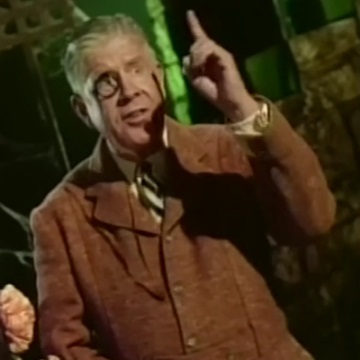
Lord Marmaduke Ffogg is a minor Batman villain who is also a beekeeper. Sounds like a pretty good combination, but unfortunately Ffogg is a bit of a letdown. You see, rather than using beekeeping as the theme of his crimes, Ffogg’s theme is fog. He does, admittedly, make good use of that theme. He lives in a town called “Fogshire” and he’s got a Pipe of Fog that billows forth enough fog to cover his crimes. He’s got exploding pellets than can create a fog that paralyzes people. He’s got a “mind fogging” machine that can mess with people’s minds. Overall, he’s pretty on brand, it’s just not the brand that would get him points in a Beekeeper Review.

And, as Batman villains go, he’s got a sweet set-up. He’s not only got his own henchmen, but his sister and daughter are in on his crimes and use the girls at the “posh girls finishing school” they run as an additional set of henchmen. That’s two henchgroups in this one criminal setup. Pretty good deal.

But Ffogg is a beekeeper as well. Though it seems to be a mere hobby for him. He keeps only a single hive, though it is full of African Death Bees (“One sting and you’re finished”). That’s an impressively badass-sounding type of bee, but the closest he gets to using beekeeping as a part his life of crime is to have his hive set up is a trap for those who might be snooping around his estate. When he showed up in the comics based on the show his bees were not even mentioned (also, there he was called “Professor Ffogg”, so perhaps he lost his Lordship).

I have some theories about Ffogg. He’s from “one of the most aristocratic families in the land” and I feel that this was probably a family with some more respectable beekeepers before Marmaduke came along. Devices like the fog pellets and the fog pipe may have been adapted from technology they used for smoke. That theory will never likely be confirmed either way, but if it were true it means that Ffogg is even more disappointing. Sorry, Marmaduke, but you’re not what we’re looking for.

One Honeycomb out of Five.