Planet Gurx: Swamp Life

Bwotyaxaghev


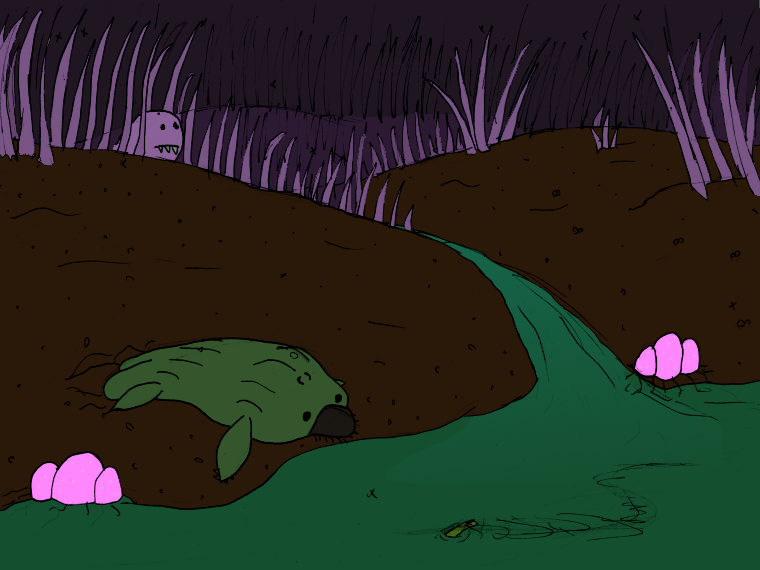
In a swampy region near the slimelands, an Ekilaei returns to the stream while other animals nearby watch for a potential meal.
Ekilaei

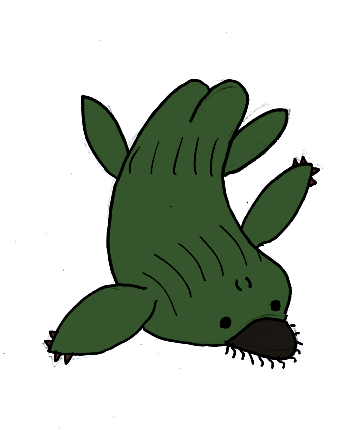
An Ekkpay species that has evolved to live a mostly aquatic life, the Ekilaei still come to land for things such as escaping aquatic predators and, more importantly, burying eggs. Full-grown Ekilaei have barbs on their forelimbs that can deliver a small amount of toxin to a predator, but Ekilaei young hatch under sand then make their way to the nearest body of water, with only luck helpinig them to avoid predators along the way.
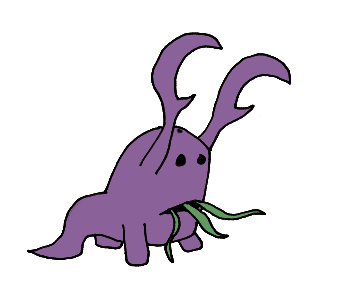
Sesennrel

Lurking among the grassy plants is a Sesennrel, whose name means something close to “Stabtongue” in English. This is because the Rel of the Sesennrel is split into three sharp tendrils, each coated with a paralyzing ooze, that can be used to stab prey. Their primary mode of attack is that of an ambush predator, waiting among foliage until a victim wanders within range, but they are not unwilling to act as scavengers when the opportunity presents itself.
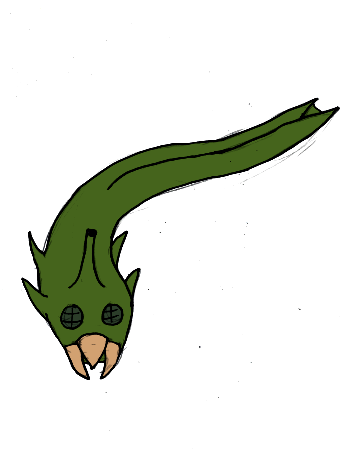
Elleero

Hidden in the water here is an Elleero, a type of air-breathing, river-swimming predator. A cousin of the Ekkpay, the rear end of the Elleero is developed for swift bursts of speed in water and their beaks allow them to grab smaller animals. The flexible snorkel allows them to remain still and wait to pounce, acting as another ambush predator. Things like infant Ekilaei make a good meal to an Elleero.
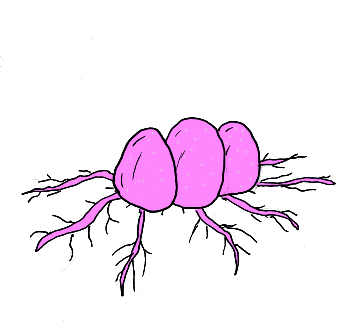
Chirgen

There are a couple more animals in there, but sedentary ones that could be easily mistaken for a weird sort of plant. The Chirgen look like balls of gelatin with tendrils that hold them in place along the flow of rivers and streams. The tendrils extend into the water to leech nutrients from slime runoff. After reaching maturity, about once a day they will deposit a tadpole-like offspring into the water which will swim off to find its own place to anchor, though only a few survive the trip. Mature Chirgen are quite poisonous, but they were a useful ingredient for Strondo medicine in the early days of the species.
Planet Gurx: Attitudes Toward Death

Mev

The Strondovarian word for death is Mev. As you would expect from any intelligent beings, the idea of death holds significant place in Strondo culture, but not in the exact way it does for humanity.

Strondos don’t look forward to their own death by any means. And they absolutely consider the deaths of their loved ones with sadness. But the tragedy they see in death is less tinged by a fear of the unknown, and more seen as an unfortunate end to ongoing work. Certainly, if they find themselves in a situation where imminent demise is threatened, they will fight against it, but unless they are noticeably near death they don’t spend time worrying about it the way many humans do.

It’s may be hard to translate in human terms, but they genuinely see the effects that a person has on the world around them as a part of that person themselves. If people are still talking about a deceased person, they still live on in a way. If the Knowledge Bank has information about the deceased, they are not forgotten. The changes that person made while alive represent proof that they existed. The tragedy is that they are no longer around to make changes.

That’s not to say that belief in the afterlife doesn’t exist on Gurx, but over the thousands of years that the Knowledge Bank has been a fixture there, it has essentially become the dominant religion. Many Strondos posit than in the distant future, after the New Gurx project is finished, perhaps, Strondos may be able to use the information in the Knowledge Bank to recreate individuals and place their minds in new, undying bodies.

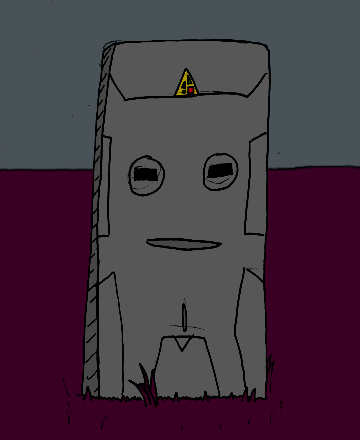
Pictured to the side here is an Eoumbao, a kind of carved stone which could be likened to a tombstone on Earth, but it isn’t really that. It doesn’t mark the location of a corpse, it just serves to remind anyone who notices it that a certain Strondovarian used to exist. The standard Eoumbao depicts the deceased’s face, but the important thing is the Phrob (let’s translate that as “info-icon”), which is the colourful bit embedded into stone. When scanned by a device connected to the Knowledge Bank, it will bring up all the information it can about the person to whom the monument is dedicated. It’s standard practice for the Eoumbao to depict the honouree’s limbs extending off the stone, to represent their continuing ability to effect the world.

All of this, of course, is of no help to the poor underclass on Gurx who get no notability in society, essentially being barred from the afterlife due to a lack of notability. But even they seek to live on in the memories of their families and loved ones.

Bring Back The Annihilator Family

This isn’t going to be a particularly deep one, but I just want to say I think that the Superman villain called the Annihilator and Annihilator Junior should come back.

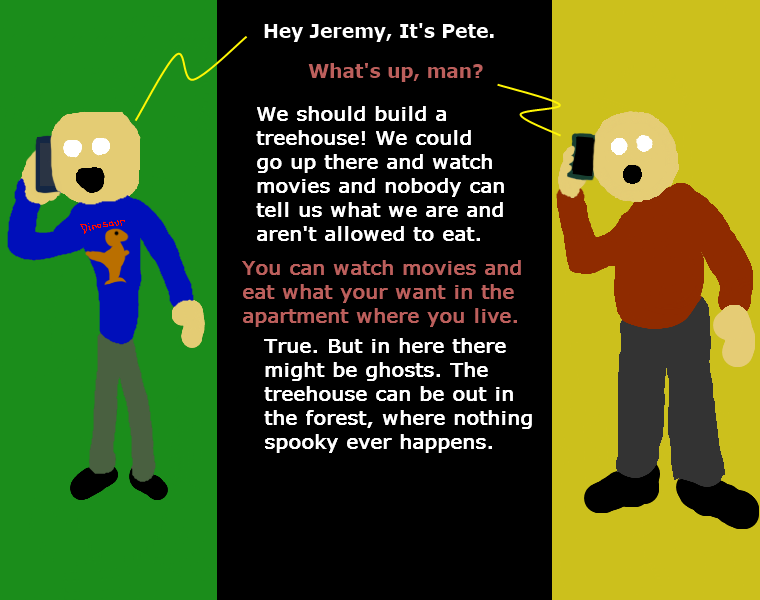
Daddy-O.

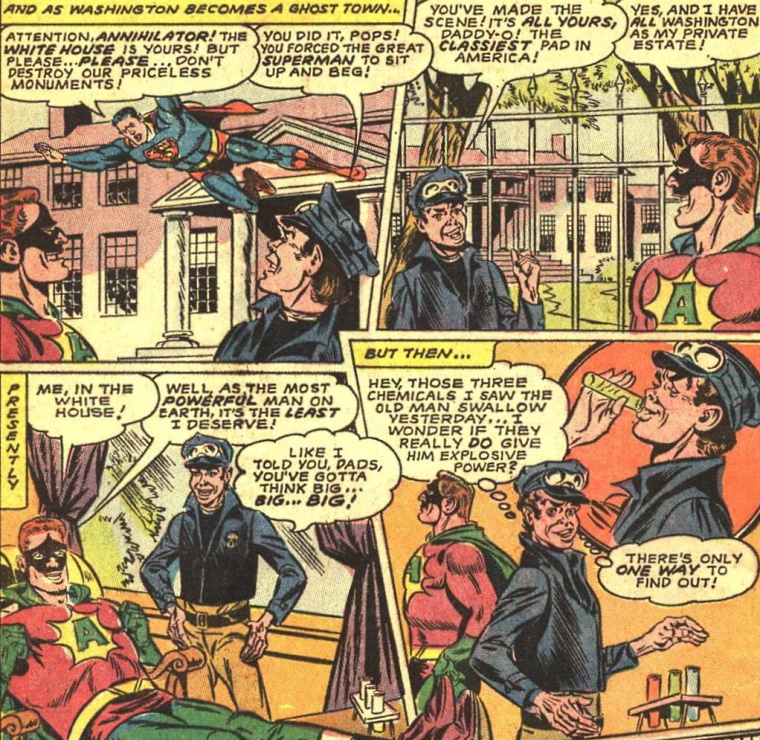
In one multi-part story in the Silver Age comics, the Annihilator was Karl Keller, a Nobel prize winning chemist who used Kryptonian chemicals to fill his body with explosive energy that made him powerful enough to defeat even Superman (because, as I’ve said, people who think Superman is too powerful are too lazy to remember you can just make powerful foes). Annihilator used his powers for a successful supervillain career and, on a whim, adopted a teenage criminal named Pete as his son. They did crime together, even managing to conquer America. It couldn’t last of course, and Annihilator soon realized that the biochemical process that empowered them was bad for their health. He tried to warn Junior, who assumed the old man was turning on him. In the end, somehow Junior was de-aged to a toddler and Annihilator, now reformed, got a chance to raise him right this time. It’s as dumb as the comics of that era always are, but it doesn’t mean there’s not potential for real stories there.

As far as I’m aware the characters have only appeared since in a Jimmy Olsen book that was going for comedy and treated them as jokes. That’s fine, that book was fine, it’s fine. But these characters don’t need to be jokes.

All it would take is for a story that treats the characters more seriously than a Silver Age Superman comic. That’s not difficult. We can keep the idea that Karl is a brilliant scientist who dislikes Superman (a bit overused, but it’s fine), but we need to establish that he’s been raising Pete for more than a week. If he’s a single father trying to raise an adopted son who has been getting into trouble, you wind up with a villain who can go up against the Man of Steel but who has more complicated motives. Does Karl want to keep Pete out of the life of supervillainy? Maybe that could work. Or we could position Karl as an opposite of Pa Kent, actively teaching his son to abuse his power. I’d probably go with that latter take, because it was the fact that Clark is also an adopted child that made me think it’d be good to have the Annihilator(s) around for stories about adoption and family.

Of course, we also need to give them a Super-Pet. Some sort of Annihilator Ferret or something? Look, we can take the stories seriously and still have goofy fun, okay?