Phone Guys: Sincere
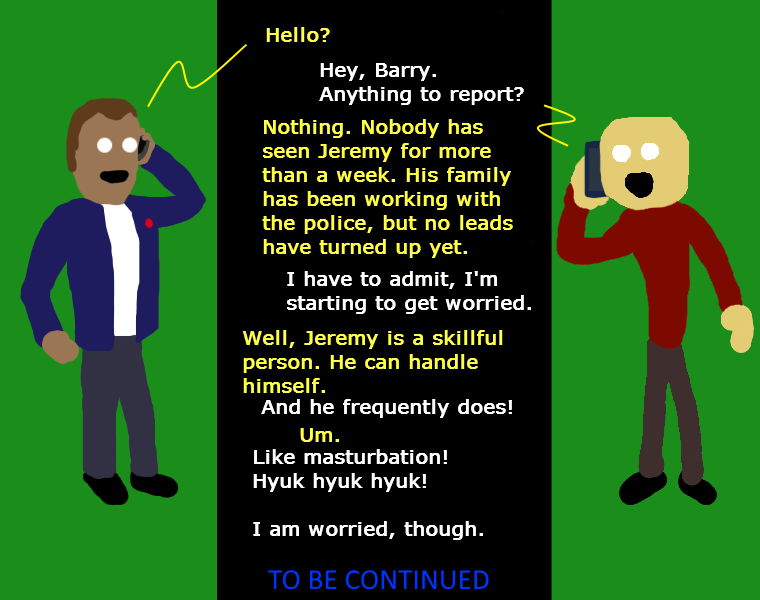
It’s that time of year once again when we start a new “season” or whatever of Phone Guys! Oh gee! What’ll they get up to this time?
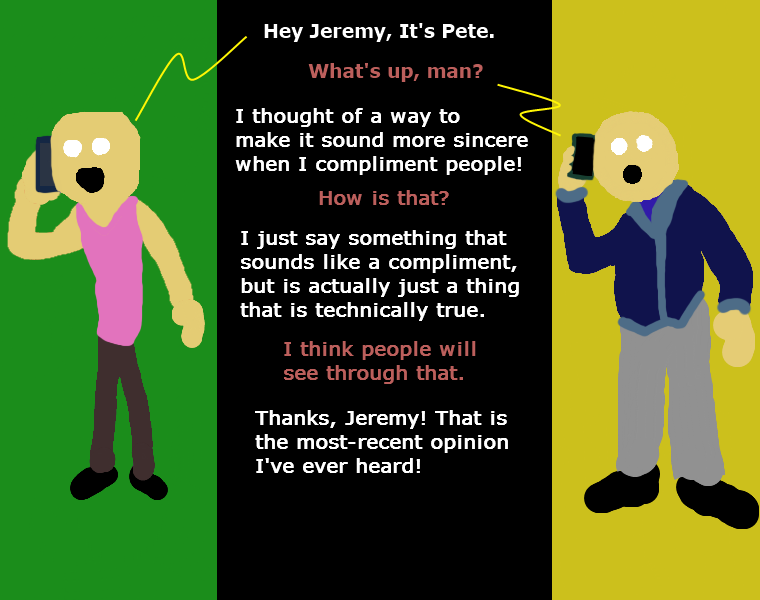

It’s that time of year once again when we start a new “season” or whatever of Phone Guys! Oh gee! What’ll they get up to this time?
It seems too soon to go back to the Scooby Doo franchise for the sake of another Beekeeper Review, but I’ve found yet another one in there and it’s an easy review, so here we go:
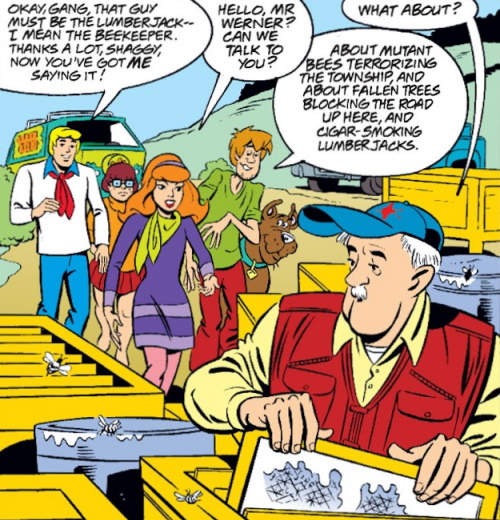
A small town is being ransacked by a bunch of giant monster bees. There are rumours that “the local beekeeper” is the cause of it all by going against nature and developing strange mutant insects. Mr. Werner, the apiarist in question, is being called “the Mad Bee Doctor” (in spite of the fact that he is not actually a doctor). Given the franchise, it should surprise nobody that when Mystery Inc. are brought in to investigate, they discover that Werner is actually being framed by costume-wearing criminals who want to disgrace him so he will be forced to sell the lakefront property on which his farm exists.
Mr. Werner’s Bee Farm seems to be very successful, he sells honey by the barrelful, so that’s a point to him. When he learns that he is being framed, he helps the Gang investigate, rather than waiting at the sidelines like a typical Apiarist in Distress. And his bees help chase and fight the criminals during the climactic confrontation. I do usually give points for a beekeeper that dabbles in science, and Mr. Werner does not, but overall he does rank as an above average beekeeper.

Three Honeycombs out of Five. I actually think this might be the last Beekeeper found in Scooby Doo to date, but I wouldn’t risk money on it.
There was an episode of the ’90s Spider-Man cartoon that had Robert Farrell in it. They never actually call him “the Rocket Racer” in the episode, but he does all the usual Rocket Racer stuff. It’s got to be the most prominent appearance of the character outside of the comics so far, and it’s likely to remain that way for a long time.
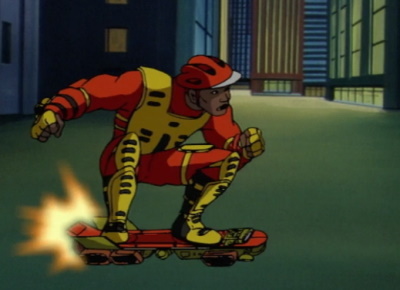
In the fifth episode of the third season, titled “Rocket Racer” we meet Robert Farrell, voiced by Billy ‘Pop’ Atmore.
Watching the episode, I find that we get a lot of the things I want to see in a Rocket Racer story. There’s subtle commentary on race and how ex-criminals aren’t given a fair shot at finding their way back into society. We’re shown Bob struggling to help out his sick mother, whose illness is never identified. We’re shown that the neighbourhood where Bob lives is on his side (a pharmacist gives him a discount on medicine). Bob shows no signs of romantic interest in anyone. We even get the Big Wheel making an appearance. All in all, this is about as faithful an appearance to the comics version as possible. So here’s where I pick out what is different about Rocket Racer here and his usual portrayal in the Marvel Universe.
So that’s my report on the Spider-Man Animated Series episode Rocket Racer. Let’s see what the people on the Internet have to say about it. “This episode and The Spot are considered by most fans to be the two worst episodes of Spider-Man: The Animated Series.” Ah. Well. At least it’s a tie, and not dead last.
Latest SecGov Page:
